







Rhodochrosite: history, healing properties and lithotherapy
Rhodochrosite properties

The name "rhodochrosite" originates from the Greek language, where rhodon means "rose" and chroma means "color," emphasizing the splendor of its rosy hue.
By the late 18th century, notable mineralogists such as Cronstedt, Bergmann, and Kirwan had identified it as "manganese oxidized by aerial acid," marking its first recorded appearances in mineralogical studies. In 1806, René Just Haüy precisely described it as "carbonate of oxidized manganese," paving the way for a deeper understanding of its composition. However, it was Johann Friedrich Ludwig Hausmann who, in 1813, definitively named it rhodochrosite, cementing its identity in the fascinating world of minerals.
Rhodochrosite is also known by various names, reflecting its diversity and significance in mineralogy. These include diallogite, ferrous carbonate of manganese, oxidized carbonate of manganese, manganese oxidized by aerial acid, and torrensite. Each designation provides insight into the different characteristics and contexts in which this mineral is found and studied.
In its purest form, rhodochrosite displays a rare, reddish-pink hue of exceptional beauty, though such specimens are extremely rare. More commonly, it exhibits a palette ranging from delicate pink to light brown, with impurities creating captivating variations. These chromatic nuances often blend with white bands, forming naturally elegant patterns.
Rhodochrosite crystallizes in the trigonal system and frequently appears as well-defined rhombohedra, though stalactitic formations are particularly prized by collectors. With a Mohs hardness of 3.5 to 4, it is softer than quartz and easily scratched by harder minerals. This fragility necessitates careful handling, especially in jewelry, where it is often cut en cabochon or set in protective bezel settings.
Rhodochrosite forms through the deposition of manganese carbonate, enriched with traces of iron, calcium, magnesium, zinc, cobalt, and cadmium, making its mineral composition both fascinating and complex. Manganese, essential to its structure, dissolves in groundwater through infiltration and later recrystallizes with carbonate. This process often occurs in the unique conditions of caves, leading to the formation of magnificent stalactites and enigmatic rock structures. It primarily forms in hydrothermal environments, frequently in association with other manganese-rich minerals such as rhodonite and pyrolusite. It is typically found in metal ore veins rich in copper and lead, precipitating under specific conditions.
The most significant deposits are located in Argentina (notably the famous Capillitas mine), Peru, South Africa, Colorado (Sweet Home Mine), Russia, and Japan. In Argentina, some rhodochrosite specimens originate from ancient formations, resulting from deposits in caves flooded with manganese-rich solutions over millennia. These stalactitic formations display fascinating concentric patterns, unique to this region.
Beyond its ornamental and jewelry applications, whose natural beauty makes it highly sought after, rhodochrosite also plays a crucial role in the metallurgical industry. It serves as a key component in the production of cost-effective stainless steel, offering an economical alternative without compromising quality. Additionally, it is incorporated into certain aluminum alloys, enhancing their mechanical properties and resistance to corrosion.
Some varieties of rhodochrosite exhibit slight fluorescence under shortwave UV light, though this depends on the specific impurity composition. When viewed under polarized light, it may display subtle pleochroism, shifting from pink to pale red depending on the viewing angle.
Rhodochrosite is also sensitive to acids and can partially dissolve upon contact with aggressive substances such as vinegar or hydrochloric acid. Its care requires gentle cleaning, avoiding chemicals and excessive friction to prevent surface alteration.
The Alma King, a rare treasure among rhodochrosite crystals, remains an iconic discovery. Unearthed in 1992 in the lands of Colorado, USA, this remarkable specimen is distinguished by its impressive dimensions, measuring 5.51 x 6.50 in (14 x 16.5 cm). Alongside this renowned piece, other notable specimens such as the Alma Rose have been extracted from the Sweet Home Mine, confirming this region’s status as a global reference for the finest rhodochrosites.
Main deposits: Argentina, Peru, South Africa, Romania, the United States, France, Gabon, Mexico, Russia, Bulgaria, and China.
History, legends and beliefs about rhodochrosite
Rhodochrosite, sometimes nicknamed the "Inca Rose," holds a special place in Incan mythology. For these ancient rulers, it was believed to be the solidified blood of their illustrious leaders, preserving their very essence within the stone. This belief imbues rhodochrosite with an aura of reverence and veneration, deeply rooting its significance in the heart of Incan culture and reflecting its profound spiritual value in Andean history. According to another legend, this stone originated from the crystallized tears of a grieving Incan princess, solidified over the ages as a testament to eternal love.
Rhodochrosite has been discovered and mined for centuries across different regions of the world. In Argentina, the Capillitas mines, located in the province of Catamarca, hold some of the most exquisite specimens of this stone. These mines were already exploited by Pre-Columbian civilizations before being rediscovered by the Spanish in the 16th century. The Incas extracted this pink-patterned stone and carved it into ritual objects and ornaments meant to honor their deities.
Over time, rhodochrosite has traveled across continents, captivating the interest of mineralogists and collectors alike. It holds a prestigious place in the mineral heritage of various nations. Honored as the national stone of Argentina, it embodies the natural wealth and pride of this South American country. Argentine specimens, often recognized by their concentric banding ranging from pale pink to deep red, are highly prized worldwide.
Similarly, rhodochrosite has been designated as the official state gemstone of Colorado in the United States, symbolizing the region’s geological treasures and rich mining tradition.
These distinctions highlight the cultural and historical significance of rhodochrosite, giving it a privileged status within these communities. Its mining and enduring allure continue to this day, attesting to its importance both in history and in the modern world of gemstones and minerals.
Healing properties and benefits of rhodochrosite
Throughout the long history of humanity, various societies have attributed to rhodochrosite a range of properties, virtues, and interpretations of a curative or symbolic nature. The elements presented here are part of a cultural, historical, and descriptive approach, intended to illustrate the symbolic relationship that has gradually developed between this stone and human civilizations over the centuries. As with the previous examples, this information is rooted in a scientific and historical perspective. It does not constitute medical or therapeutic advice and does not reflect personal beliefs.
- In certain traditions, rhodochrosite has been associated with the supporting early childhood development. It was sometimes evoked as a representation of vitality, harmonious growth, and the strengthening of early life forces, within a broader interpretation linked to protection and the gentleness of childhood.
- On a symbolic level related to vital functions, rhodochrosite has been connected to the heart, kidneys, liver, and circulatory system. Some traditions referred to it as promoting smoother circulation, improved oxygenation of tissues, and a general balance of internal functions, particularly in contexts associated with fluctuations in blood pressure or organic fatigue.
- In the domain of respiration, rhodochrosite has at times been associated with the accompaniment of respiratory tract infections. It was also mentioned in contexts related to headaches and migraines, in link with its traditional associations with blood oxygenation, nervous relaxation, and the easing of mental tension.
- Rhodochrosite has also been cited for the relief of lower back pain, particularly in cases of lumbago. In addition, certain traditions linked it to the gallbladder and digestive imbalances, evoking it as a form of overall support aimed at soothing discomfort related to digestion and the management of internal tensions.
- In several traditional interpretations, rhodochrosite is regarded as a support in the context of dependencies. It has notably been associated with eating disorders such as anorexia, as well as with certain forms of emotional dependence, reflecting a search for balance, reconciliation with the body, and inner reconstruction.
- Its soothing influence has frequently been mentioned in relation to stress and deep emotional wounds. Rhodochrosite was perceived as a stone that encourages the gradual release of emotional blockages and the integration of past experiences, helping individuals navigate emotional trauma and restore inner stability.
- In some traditions, its so-called aphrodisiac qualities made rhodochrosite a stone associated with sensuality and passion. It was evoked as fostering emotional fulfillment, openness of the heart, and a more confident relationship with the expression of feelings, contributing to greater harmony in romantic and relational life.
- By facilitating emotional awareness and the release of affective tensions, rhodochrosite has also been associated with states conducive to meditation and introspection. It symbolized a more serene access to self-knowledge, inner listening, and greater emotional coherence.
- Finally, in certain traditions, rhodochrosite has been described as a stone of protection. It was perceived as absorbing negative emotional charges, dissipating internal tensions, and fostering an overall sense of well-being. Within this cultural framework, it is seen as helping to restore lasting inner peace and a gentler, more balanced emotional climate.



 Please note that all healing properties attributed to stones come from ancient traditions and various cultural sources. This information is provided for informational purposes only and does not constitute medical advice. In case of any health concerns, it is recommended to consult a qualified professional.
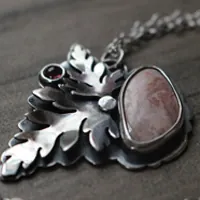
Rhodochrosite jewelry samples
Sold


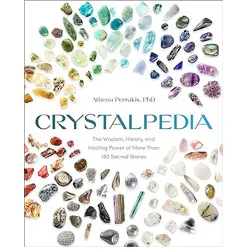
To learn more about litotherapy, we recommend you the following books:


OUR SERVICES
Customer reviews
Custom order
FAQ
Free shipping
Terms and conditions