








Jewelry from Africa and the Middle East: archaeological treasures and history
This page is part of our series exploring the history and archaeology of civilizations around the world, with the aim of reinterpreting some of their works that have inspired us as jewelry. Here, we journey across Africa and the Middle East, from the earliest great civilizations of Antiquity to vast desert landscapes and the still relatively little-known regions of Sub-Saharan Africa.
These regions, marked by immense geographical and cultural diversity, witnessed the emergence of some of the earliest forms of writing and complex human organization, from the cities of Mesopotamia to the banks of the Nile in Egypt. Between powerful kingdoms, caravan routes, and nomadic desert societies, artistic expressions took many forms, deeply connected to beliefs, exchanges, and ways of life. From engraved seals and symbolic jewelry of the ancient Near East to adornments made of beads, metal, or organic materials in African cultures—many of which remain largely underrepresented—these traditions reveal a remarkable aesthetic and spiritual richness. They reflect an intimate relationship with the land, the sacred, and movement, where contrasts between sedentary and nomadic life, between abundance and austerity, give rise to a powerful imagery that continues to inspire contemporary creation.
Africa, in particular, stands out for its exceptional cultural and human richness, still too often approached only partially. It is a land of many facets, where each region and each people develops its own forms of expression, symbols, and craftsmanship. From the vast deserts of the Sahara to the tropical forests of Central Africa, from the Atlas Mountains to the shores of the Indian Ocean, this diversity of landscapes is reflected in the materials, motifs, and uses of objects. Ritual adornments, symbols of status, everyday jewelry, and objects of transmission—all these creations express identities, beliefs, and deep connections with the environment and tradition.
Jewelry of Sub-Saharan Africa
Sub-Saharan Africa reveals a wide range of artistic traditions, whose richness and depth remain too little known. In these societies, adornment holds an essential place—both aesthetic, social, and symbolic. It accompanies the stages of life, marks status, offers protection, and creates connections with ancestors or invisible forces.
Glass or stone beads, worked metals, fibers, shells, and organic materials all reflect a close relationship with the environment, as well as long-standing exchanges between regions. Forms, rhythms, and motifs vary from one people to another, yet they often express a shared attention to the body, movement, and the meaning of objects. These creations, rooted in everyday life yet deeply symbolic, remain a living source of inspiration for contemporary jewelry that seeks to extend these heritages without freezing them in time.
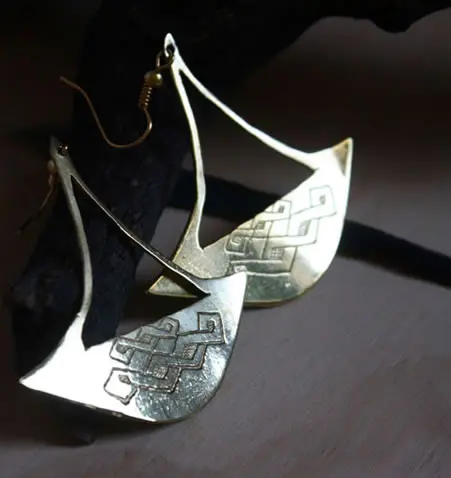
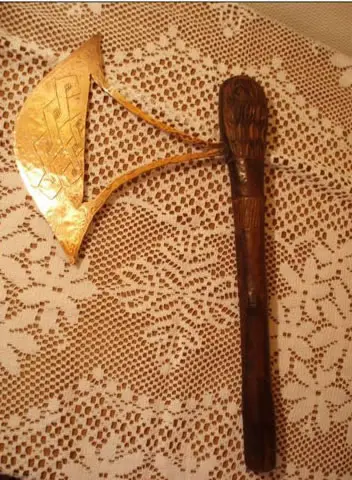
The Katanga earrings are inspired by a copper axe, an emblematic artifact of the Songye ethnic group from the Katanga region in the Democratic Republic of Congo. These axes, with their unique design, reflect exceptional forging skills, showcasing precise control and a deep understanding of metallurgical techniques. Every detail of these axes, from their shape to their finish, is the result of artisanal mastery passed down through generations.
Beyond their utilitarian function, Katanga axes also held significant symbolic and social value. They were often used as currency in major commercial transactions and as prestigious items in ritual ceremonies. They symbolized wealth, power, and authority within the Songye communities and other ethnic groups in the region.
The distinctive shape of these axes, with their semi-circular blade and often ornate handle, inspired the creation of the Katanga earrings. By reinterpreting this ancestral silhouette, we aimed to capture not only the unique aesthetics of the original artifact but also the cultural depth it represents. These earrings are a celebration of African history and craftsmanship, blending tradition with modernity.
Wearing these earrings means carrying a symbol of strength, history, and cultural memory, reminding us of the importance of copper in the economic and spiritual exchanges of ancient Africa. Their metallic shine pays tribute to the Songye blacksmiths, whose skill and craftsmanship have endured through the ages.
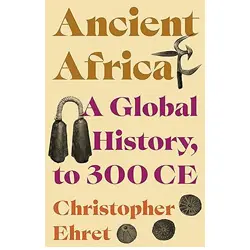
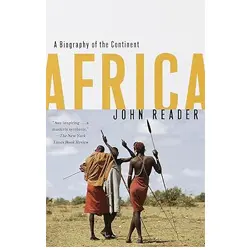
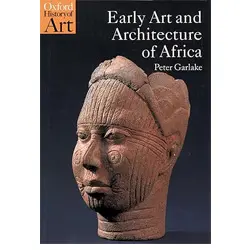
To deepen your knowledge of the art and history of Africa, we recommend the following books:
Ancient Egyptian jewelry
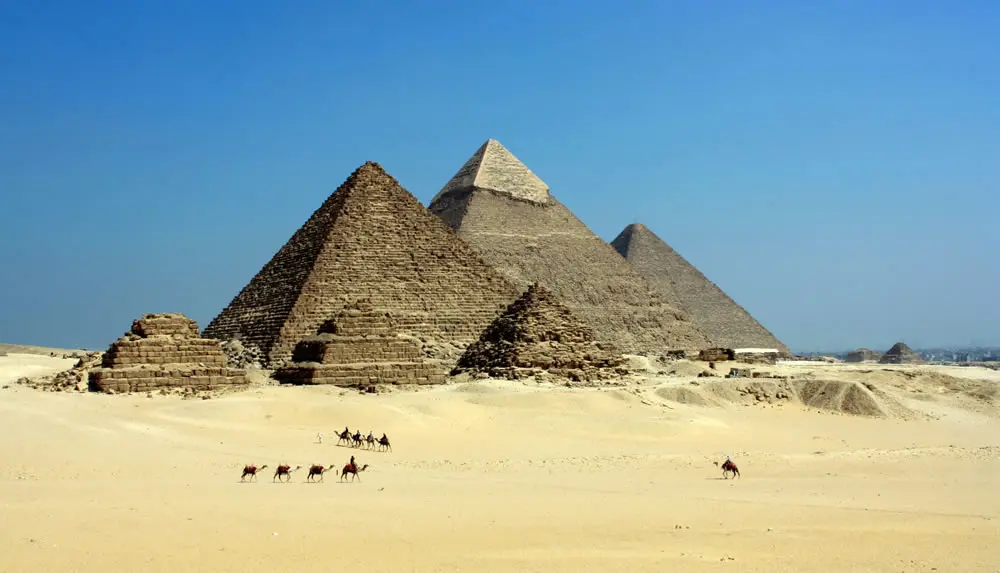
Egypt, much like ancient Greece, is one of the earliest civilizations that continues to captivate history and archaeology enthusiasts for a variety of reasons. Its majestic structures, such as the Pyramids of Giza, built as tombs for the pharaohs, and the temples of Karnak, stand as testaments to its rich architectural heritage and advanced engineering.
The pharaohs, divine rulers of Egypt, left a significant mark on the country’s history through their absolute power, influence on religion, and their cult of the afterlife, symbolized by the lavish tombs in the Valley of the Kings. These tombs were adorned with treasures and artifacts meant to accompany the deceased into the afterlife, reflecting the Egyptian belief in life beyond death.
Egyptian mythology, with its gods and goddesses such as Ra, Osiris, Isis, and Horus, inspired epic tales and deeply rooted beliefs within Egyptian society. Funeral rites, including mummification and elaborate burial rituals, persisted for millennia, highlighting the complexity of religious practices and the quest for immortality.
In sum, ancient Egypt is a true treasure trove of knowledge and discovery for anyone interested in the history of humanity, offering a fascinating glimpse into the culture, beliefs, and practices that shaped one of the most iconic civilizations in history.
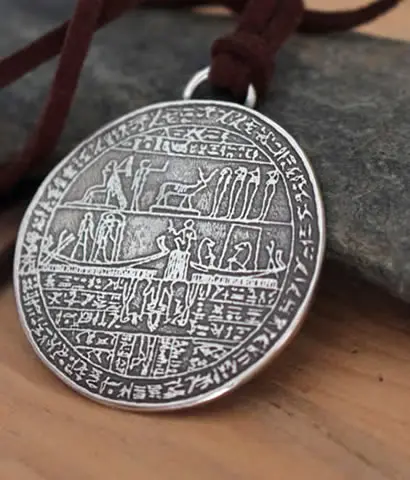
Recently, we had the privilege of discovering a silver jewel of rare singularity, yet little known to the general public: the Hypocephalus. This Egyptian disc, of profound beauty and significance, was carefully placed beneath the heads of mummies, not only to ease their passage into eternity but also to protect them from the demons of the underworld. According to Egyptian belief, once the deceased reached this state, they attained a form of transcendence, becoming a "glorious" being, reflecting the image of the god Ra-Osiris, symbolizing eternal life and rebirth.
This particular necklace, known as the Hypocephalus of Harnetatf, is an exceptionally rare and beautiful piece. The original is currently on display at the British Museum, where it captivates visitors with its rich history and profound symbolism. It is said to have belonged to the priest Hornedjitef, who served at the temple of Amun at Karnak between 246 and 222 BC, a period of great splendor for ancient Egypt.
In the upper section of this object, one can admire the boat of the god Kneph, also known as Chuouphis, a major deity in Egyptian mythology and a form of Osiris, the god of death and rebirth. The carefully engraved four-headed ram holds immense symbolic significance. This ram, a symbol of power and fertility, is often associated with the city of Mendes or the god Amun-Ra, the revered solar deity of ancient Egypt. The figure is depicted being worshiped by baboons, sacred animals in Egyptian religion, representing wisdom and knowledge.
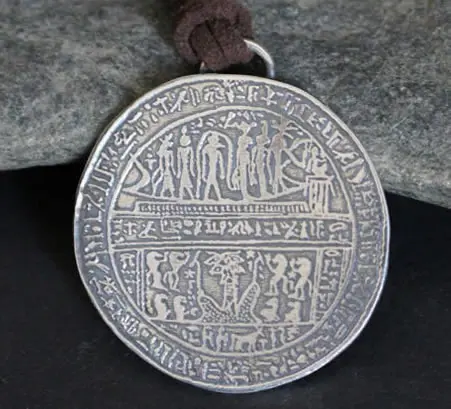
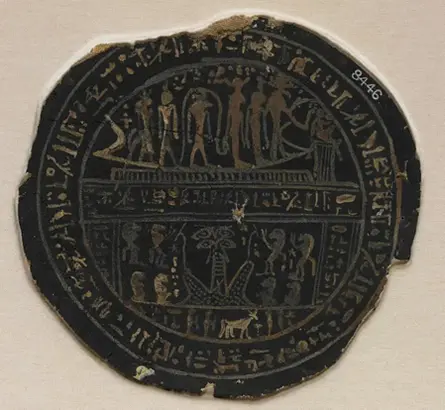
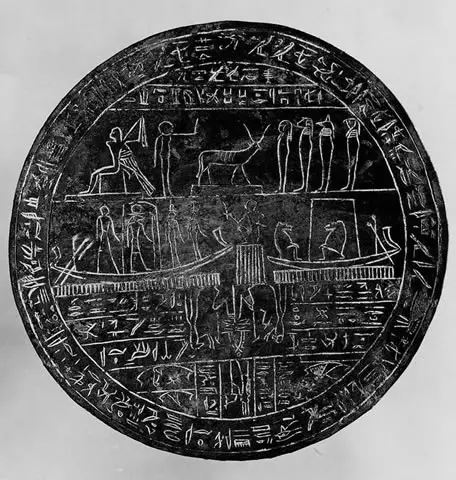
We have created a second necklace inspired by an Egyptian hypocephalus, known as the Hypocephalus of Djed-Hor. This piece showcases an even greater richness of hieroglyphs compared to our first creation. The Hypocephalus of Djed-Hor was discovered in the sacred city of Abydos, a site closely associated with the worship of Osiris, the god of death and resurrection. This piece dates from between 380 and 332 BC and belonged to the priest Djed-Hor. It is now housed at the Museum of Fine Arts in Boston, where it continues to captivate visitors with its artistic beauty and profound symbolism.
The inscription surrounding the motifs of this hypocephalus comes from Spell 162 of the Book of the Dead, a fundamental text in Egyptian religion. This spell, also known as the "Spell of the Heat of Life," was intended to bestow upon the deceased the necessary energy for their resurrection, ensuring their rebirth in the afterlife. This text reflects the central Egyptian belief in the continuation of life after death, where the body needed to be revitalized to navigate the underworld and join the realm of the gods.
This necklace also highlights major symbols such as the four-headed ram, a complex figure often associated with Amon-Ra, the solar deity and creator, as well as the city of Mendes, where the ram represented power and fertility. Carefully engraved, this ram is accompanied by baboons, sacred animals in Egyptian tradition. In this context, the baboons symbolize wisdom, knowledge, and spiritual connection, often associated with the god Thoth, the master of writings and mysteries.
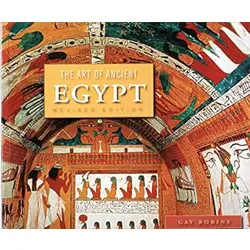
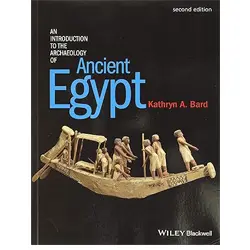
To deepen your knowledge of the art and history of antique Egypt, we recommend the following books:
Mesopotamian jewelry
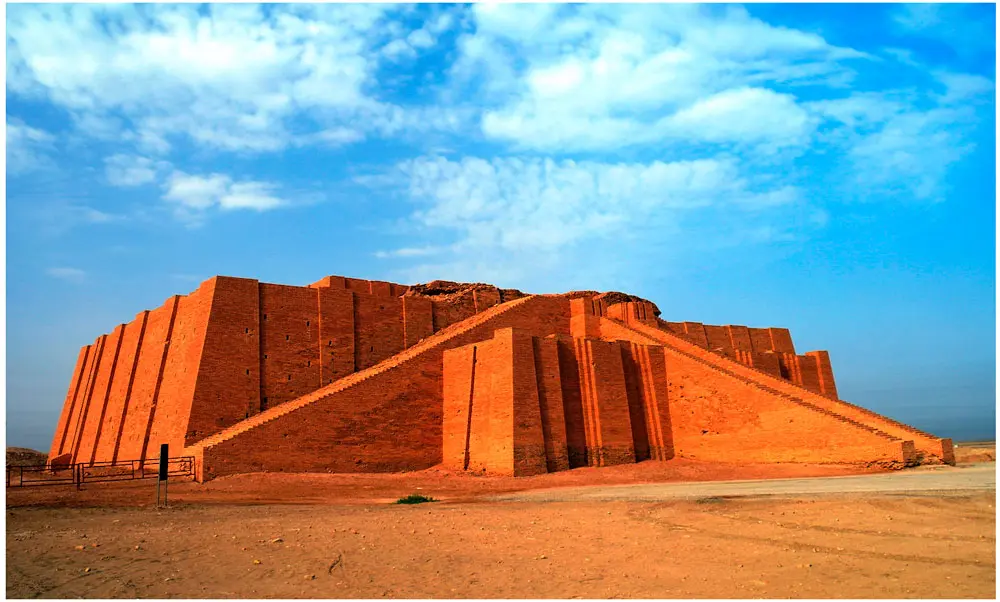
Mesopotamia, often referred to as the "cradle of civilization," experienced remarkable growth during the Neolithic period, marking the beginnings of agriculture and human settlement. This region, situated between the Tigris and Euphrates rivers, witnessed the rise of flourishing cities, sophisticated irrigation systems, and technological advancements that profoundly influenced the development of human civilization.
Yet, despite its historical significance and impact on our modern world, Mesopotamian culture remains largely unknown to the general public. Its contributions to architecture, writing, religion, science, and many other fields are crucial for understanding the evolution of human society.
Mesopotamia, with its city-states such as Ur, Uruk, and Babylon, its epic legends like the Epic of Gilgamesh, and its deities like Marduk and Ishtar, continues to captivate historians, archaeologists, and enthusiasts of ancient history. Its legacy, though sometimes overlooked, is undeniably one of the richest and most influential in the history of humanity.
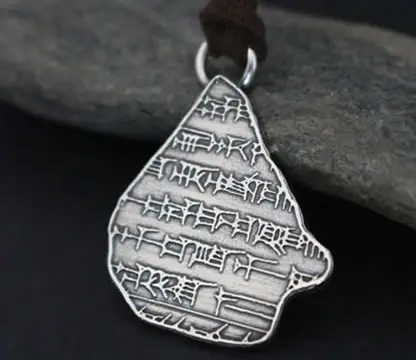
Recently, we delved into the study of early writing systems, focusing particularly on the Epic of Gilgamesh, one of humanity’s foundational texts. This captivating narrative, considered one of the oldest literary works, transports us to a world where gods and humans coexist, where heroes face monumental trials, and where the quest for immortality becomes the center of existential reflections.
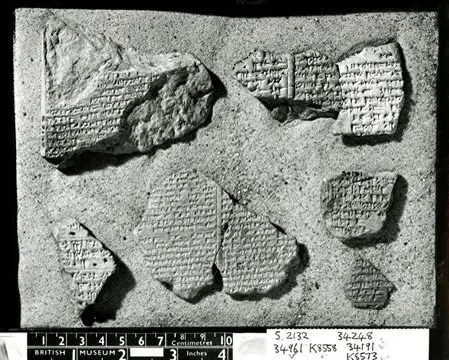
Our creation, the Gilgamesh necklace, is directly inspired by the famous cuneiform tablets. We chose to represent an authentic fragment from a tablet discovered during the excavations at Kouyunjik in Iraq, a site that once housed the library of Ashurbanipal, the last great king of Assyria. This fragment, dating from between 950 and 612 BCE, preserves a valuable portion of Gilgamesh’s adventures, contributing to the transmission of this narrative through the ages.
The Gilgamesh necklace, with its meticulously engraved cuneiform characters, pays tribute to the ancient Mesopotamian scribes, the custodians of knowledge and culture. These inscriptions not only reflect their technical skill but also highlight the significance that Mesopotamian civilization placed on preserving its stories and heritage.
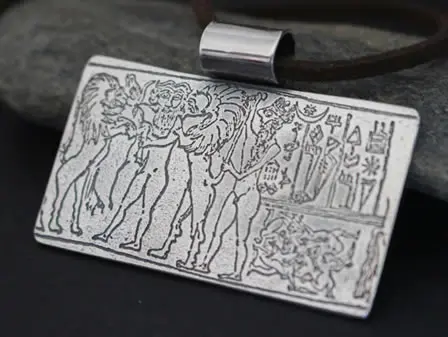
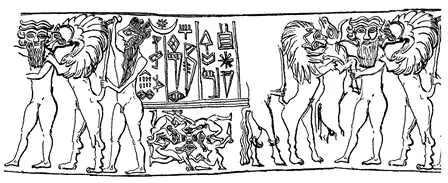
The necklace inspired by The cylinder seal of the king of Kisch is a remarkable example of the impact left by this essential tool of Mesopotamian culture. The cylinder seal played a crucial symbolic and administrative role. Used to seal and authenticate documents and valuable objects, it testified to the power and authority of its owner. Cylinder seals were often worn by kings, dignitaries, and high officials, reflecting their elevated social status.
The cylinder seal we have recreated depicts a major episode from the Epic of Gilgamesh. The engraved scene shows the hero-king Gilgamesh, accompanied by mythical bulls, standing proudly between two lions. This powerful image symbolizes both the bravery, strength, and sovereignty of Gilgamesh. Lions, recurrent figures in Mesopotamian art, were associated with royalty and divine protection, while mythical bulls symbolized abundance and fertility.
This fascinating artifact is currently housed at the University of Pennsylvania Museum of Archaeology and Anthropology, where it continues to captivate visitors with its finely crafted engraving and deep symbolism. Discovered in the tomb of Mesannepada, the first king of the First Dynasty of Ur, this seal cylinder, dating from the 26th century BCE, reflects the splendor and complexity of Mesopotamian civilization.
By choosing to reproduce this cylinder seal fragment in jewelry, we aimed to capture not only the artistic beauty of the original but also the legacy of an era where power, the divine, and administration were intimately intertwined. This necklace is both a celebration of heroic bravery and a testament to the rich cultural heritage of Mesopotamia.
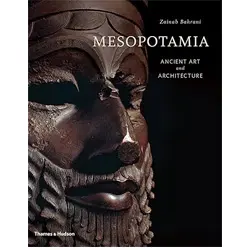
To deepen your knowledge of the art and history of Mesopotamia, we recommend the following books:



OUR SERVICES
Customer reviews
Custom order
FAQ
Free shipping
Terms and conditions