






Jewelry from the Indigenous cultures of North America: history and archaeology
This page is part of our series exploring the history and archaeology of civilizations around the world, with the aim of recreating some of the works that have inspired us in the form of jewelry. Here, we travel across the vast open landscapes of North America, between the United States and Canada.
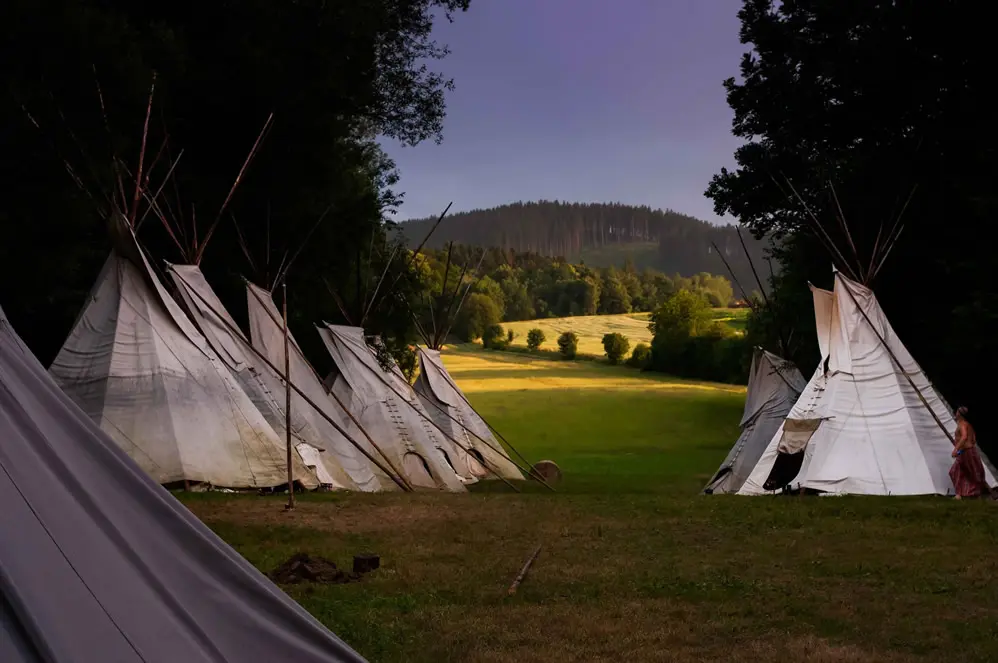
North American Indigenous peoples represent a fascinating diversity of cultures that we also explore. These nomadic tribes, living and traversing vast expanses of land, exemplify life in communion with nature. They respected the seasons and wildlife, taking only what was necessary from nature to survive. Even though much of their beliefs remain unknown today, their creativity undoubtedly captivates.
The Indigenous peoples developed a rich and complex culture, with unique traditions, beliefs, and practices. Their arts, dances, and ceremonies reflect their deep respect for nature and their spiritual connection with the world around them.
Indigenous peoples have also left a lasting legacy in the fields of medicine, agriculture, and craftsmanship. Their knowledge and skills have helped shape the modern world, and their wisdom continues to inspire and guide those who seek to live in harmony with nature. Traditional techniques in weaving, beading, and carving have not only endured through time but have also been adapted and integrated into contemporary art forms, reflecting the richness and resilience of their cultural heritage.
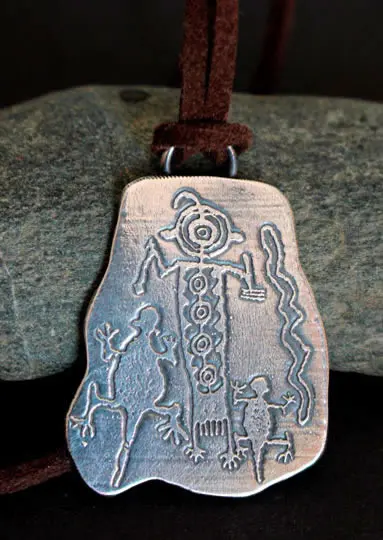
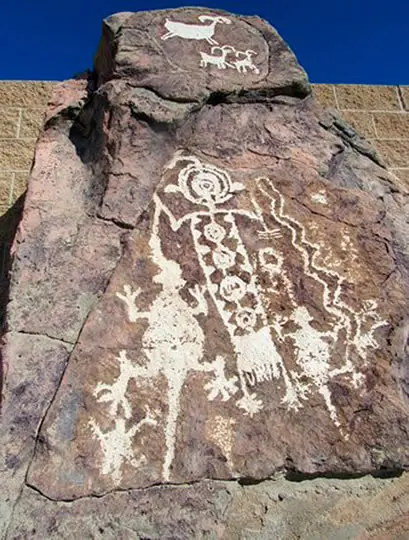
We began our exploration of Indigenous peoples of North America with the creation of the Yahwera necklace. Its design is inspired by a petroglyph found in the Coso Range Reserve, California. This petroglyph, dating back thousands of years, depicts a complex figure often interpreted as a symbol of spiritual connection and shamanic power.
The motif, which appears to represent a totem animal or spirit guide, immerses us in the shamanic vision of Indigenous peoples. In this tradition, shamans play a crucial role as mediators between the spirit world and the earthly realm. Each symbol in petroglyphs is imbued with deep meanings, representing protective deities or spiritual entities linked to specific aspects of life and nature.
This Indigenous American necklace thus embodies the sacred respect for nature, a fundamental value for many Indigenous tribes. Animals, often seen as spiritual partners, are viewed not only as sources of sustenance but also as spiritual guides, symbolizing the sacred connection between humanity and the animal kingdom. This connection is evident in the way these tribes celebrate and honor nature, integrating spiritual elements into their daily practices.
We then traveled to the banks of the Mississippi River to discover a great pre-Hispanic city, challenging the classic—but reductive—image of the fully nomadic North American Indigenous person. This city, covering about 60 hectares, is called Spiro Mounds and is located in Le Flore County, Oklahoma (USA). It was inhabited between the 9th and 15th centuries by a sedentary people who spoke a language from the Caddoan family, like the present-day Wichita, Kichai, Caddo, Pawnee, and Arikara tribes.
Spiro Mounds was part of the vast cultural sphere of the Mississippian civilization—a network of complex societies that built ceremonial earthen mounds, practiced agriculture (especially maize cultivation), and maintained extensive trade networks reaching as far as the Great Lakes, the Rocky Mountains, and the Gulf of Mexico. The Spiro site is especially notable for the richness of the objects uncovered, which bear witness to the influence of a powerful political and religious elite.
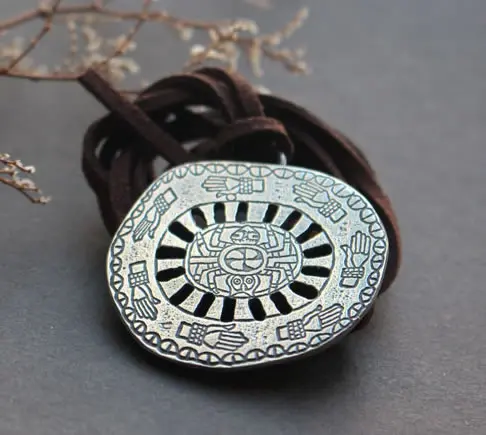
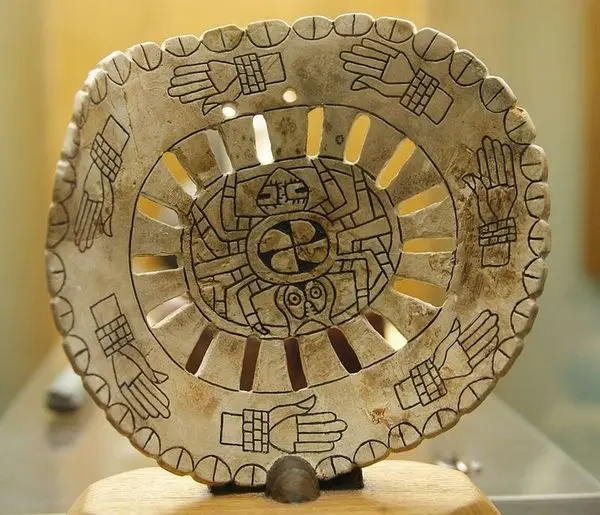
From this exploration was born the necklace Spider of Spiro Mounds, inspired by a ritual pendant found in the site's only funerary mound, known as Craig Mound. This pendant, dated between 1200 and 1450 CE, was engraved on a marine shell (Busycon perversum) originating from the Gulf Coast—evidence of long-distance trade. It depicts a stylized spider at the center, surrounded by a circle of engraved human hands.
The spider is seen as a sacred messenger and a weaver of destiny, an ancient symbol of creativity, patience, femininity, and the connection between visible and invisible worlds. In many Native American cultures, the spider also embodies ancestral wisdom and the art of storytelling—she weaves tales as much as she weaves threads. The circle of hands may evoke transmission, collective identity, or the passage from one world to another, especially in a funerary context.
To deepen your knowledge of the art and history of Native American, we recommend the following books:



OUR SERVICES
Customer reviews
Custom order
FAQ
Free shipping
Terms and conditions