





European Neolithic Jewelry, Bronze Age, Iron Age, Celtic and Druid Traditions
This page is part of our series exploring the history and archaeology of civilizations around the world, with the aim of reinterpreting some of their works that have inspired us in the form of jewelry. Here, we cover a vast period that we have deliberately chosen not to divide too strictly. Indeed, Celtic culture largely inherits from earlier periods, dating back to the Neolithic, and continued to use the same places—particularly sacred ones—sometimes transforming or reinterpreting them. Rather than imposing a rigid structure, we invite you on a journey through European cultures, from the Neolithic to the Celtic world.
The Neolithic, often described as the "agricultural revolution," marks a crucial period in human history. It is during this time that humans began to domesticate plants and animals, developing agriculture and animal husbandry. This shift gradually transformed nomadic groups into settled communities. It was followed, in later periods such as the Bronze Age, by the progressive mastery of metals. At first, humans worked with stone, bone, and wood, but with the transition to the Bronze Age, they began to explore materials such as copper and tin, creating increasingly sophisticated tools and ornaments.
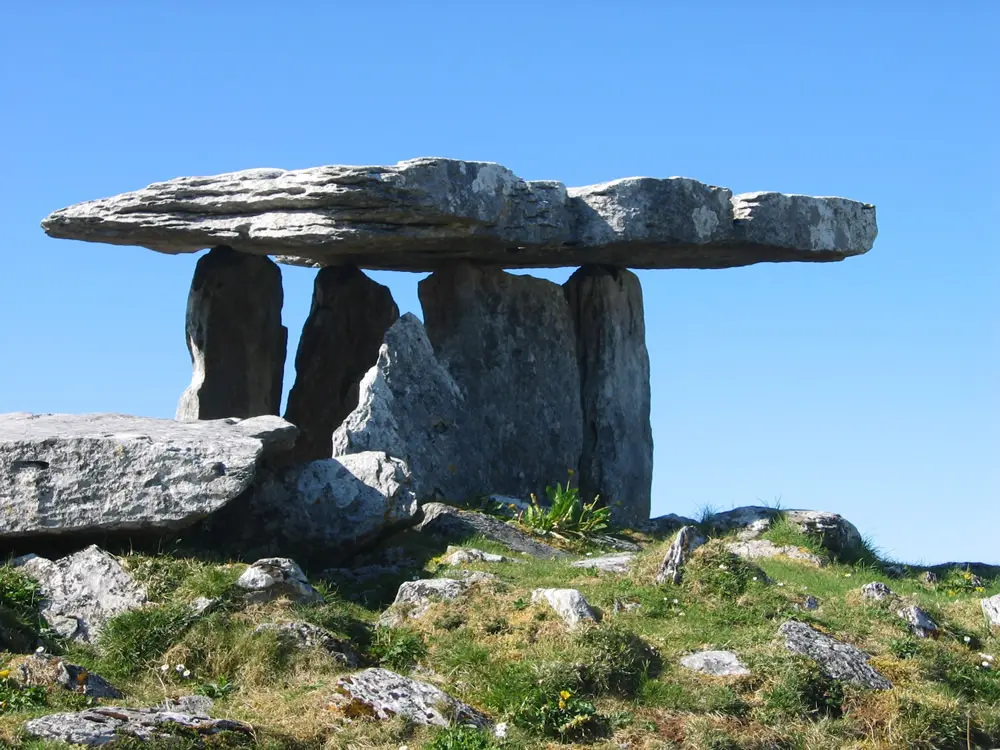
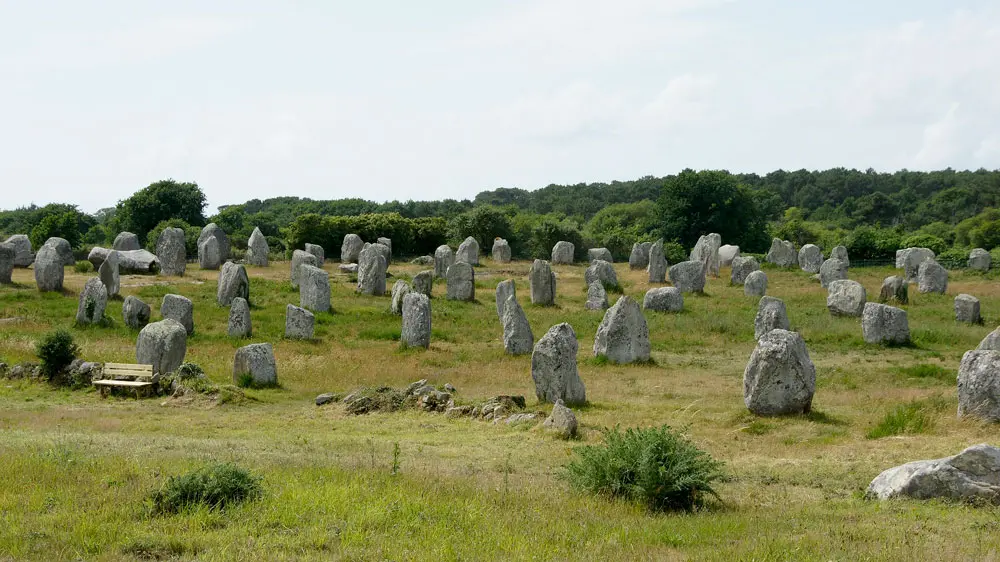
Megalithic monuments such as cromlechs, dolmens, and menhirs began to appear across Europe. These monumental structures, often used for ritual or funerary purposes, reflect the importance given to seasonal cycles and the relationship with the cosmos. Menhirs, in particular, are often interpreted as symbolizing a direct connection between humans and cosmic forces. Their alignments, sometimes linked to astronomical events such as solstices, reveal an advanced understanding of the rhythms of nature.
With the arrival of the Iron Age, the Celts spread across much of Europe and their culture flourished. Celtic jewelry, made of bronze, gold, and sometimes iron, is adorned with geometric patterns and spirals that embody spiritual concepts such as eternity, renewal, and the connection between the physical and spiritual worlds. These motifs often originate from druidic beliefs, in which nature and its cycles hold a central place. Celtic spirals, for example, symbolize the journey of the soul through life, death, and rebirth.
The relationship between humans and nature is a theme that is particularly close to our hearts, as reflected in our page dedicated to “Druid and Druidess: communication with nature.” Druids, central figures in Iron Age Celtic societies, were both sages, healers, and spiritual guides. They possessed deep knowledge of plants, animals, and natural cycles, which they used to guide their communities toward a way of life in harmony with the environment. Their ritual practices, often carried out in sacred forests or near water sources, reflected this reverence for nature as a source of wisdom and spiritual power.
As for our collection, we offer a selection of archaeological reproductions that bear witness to this profound relationship between humans and nature. Among them, we recently added two engraved stelae discovered in cairns, as well as a menhir. These artifacts illustrate how our ancestors sought to express their connection to the spiritual and natural world through symbolic carvings. Cairns, mounds of stones, were often used as burial sites, but also as territorial markers, reflecting the enduring presence of humans within sacred landscapes.
We hope that these reproductions will allow you to better understand and appreciate the richness of this relationship between humans and nature, and that they will inspire you to preserve this precious connection for future generations.
Cairns, Sacred Spaces of Stone
Cairns, stone mounds erected as early as the Neolithic, are among the oldest testimonies of the relationship between humans and the sacred. Often used as burial sites or ritual spaces, they sometimes contain stones engraved with enigmatic motifs: spirals, wavy lines, and geometric shapes whose meanings remain partly mysterious. These carvings, deeply connected to natural cycles, water, and invisible forces, reflect a worldview in which each symbol contributes to a balance between the visible and the unseen. The jewelry inspired by them extends this ancient memory, bringing back to life—through material—these signs carved into stone for millennia.
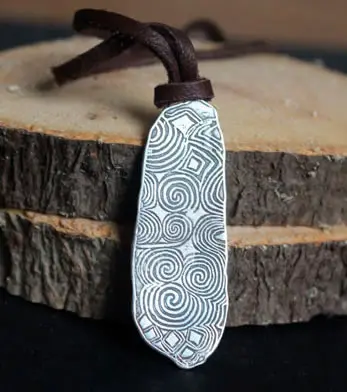
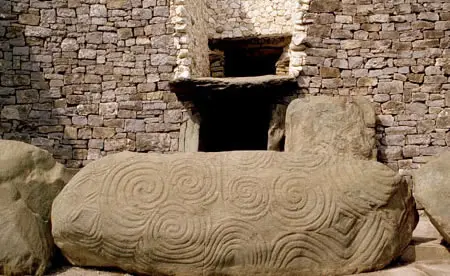
The guardian stone of Newgrange is an Irish archaeological treasure dating from around 3200 BC, which inspired the creation of a unique pendant. Positioned horizontally at the entrance of the Newgrange cairn, a megalithic tumulus located in the Boyne Valley, this massive stone has been dubbed the "Guardian Stone" due to its symbolic protective role. The cairn itself is both a funerary and astronomical monument, aligned with the sunrise on the winter solstice, reflecting the sophisticated understanding of celestial cycles by Neolithic peoples.
The spiral motifs adorning the stone are characteristic of megalithic art and have fascinated archaeologists for centuries. These spirals, often arranged in triples or doubles, remain mysterious in their exact meaning. Some interpretations link them to natural elements such as water, wind, or serpents, symbolizing the flow of vital forces within nature. Other theories suggest they may represent topographical maps, with spirals symbolizing hills, paths, or valleys, marking sacred sites or ancestral routes.
In addition to the complexity of these carvings, it is the strategic position of this stone that gives it its guardian status. Placed at the entrance of the cairn, it appears to have been designed to protect access to the funerary and ritual secrets hidden within the monument. This idea of protection particularly inspired us in creating this pendant, which symbolizes not only physical protection but also the preservation of our ancestors’ memory. By transforming this stone into a piece of jewelry, we aim to honor the connection between humans, nature, and the cosmos, perpetuating the mysteries of the past.
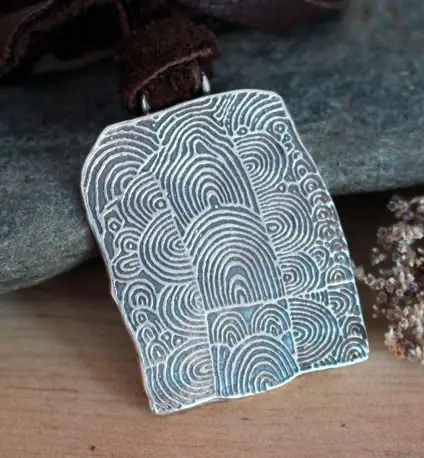
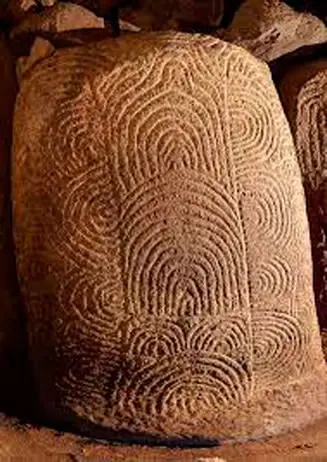
The second pendant we created is inspired by the Cairn of Gavrinis, located in the Gulf of Morbihan, Brittany, France. Erected on a small island about 6000 years ago (4000 BC), this cairn is one of the oldest and most remarkable megalithic monuments in Europe. The long funerary corridor of Gavrinis is adorned with carved stones, and it is one of these orthostats—standing stones with intricate carvings—that inspired this unique pendant.
The decorated stone features a fascinating visual complexity, composed of curvilinear shapes: interlocking arcs, spirals, cupules, as well as serpentine patterns and some straight lines and chevrons. These geometric carvings create a harmonious arrangement, showcasing the artistic skill of Neolithic peoples. Among these motifs, polished axes, emblematic of the Neolithic, are also vertically carved on some of the site’s orthostats, possibly symbolizing power and protection.
Interpretations of these carvings vary. In the case of Gavrinis, archaeologists tend to see representations of water due to the cairn's proximity to the sea. This tumulus, isolated on an island, might have symbolized a spiritual journey to the afterlife or a mystical connection with the forces of the sea and surrounding waters. The wave and spiral carvings evoke this fluid force, possibly paying homage to water spirits or sea gods revered at the time. This link between the engraved forms and the natural environment reflects a profound understanding of natural cycles and the forces of nature among Neolithic peoples.
We chose this stone not only for the unusual arrangement of its curves and serpentine motifs but also for the mystical and geographical significance of the site. The island’s isolation and the presence of such a funerary monument invite the imagination to envision druidic rituals, ceremonies where priests and druids would have traveled to this sacred island to connect with the forces of nature and water spirits. This pendant embodies that mystical journey, and each carved curve on the stone seems to tell a story of spiritual connection between humans and their environment.
Menhirs and stelae, stones gazing toward the sky
Menhirs and standing stelae are among the most emblematic forms of prehistoric European landscapes. Raised at the heart of territories, sometimes in isolation and sometimes as part of larger arrangements, these stone monuments embody both a physical and symbolic presence. Some remain raw and unshaped, while others are carved or engraved with human figures, geometric patterns, or signs that are still difficult to interpret today. Whether connected to funerary rites, territorial markers, or spiritual expressions, they reflect a deep intention to inscribe memory into stone in a lasting way. The jewelry inspired by them echoes this vertical strength and timeless dimension, transforming these ancient silhouettes into symbols that carry a profound connection between humankind and the earth.
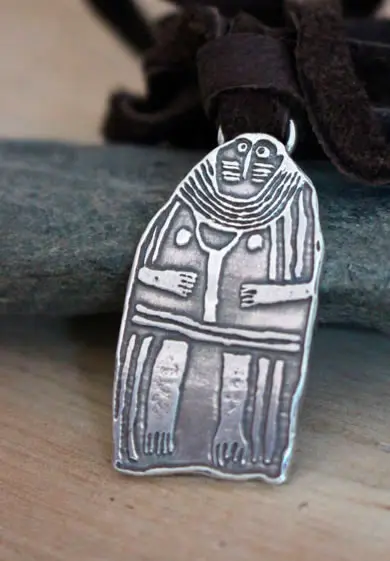
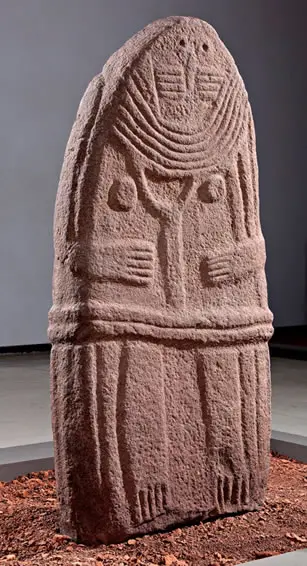
The "Menhir of the lady of Saint Sernin" pendant takes us back to the 3rd millennium BC, showcasing a remarkable stele located in Saint-Sernin-sur-Rance, in the Aveyron department of France. This anthropomorphic stele, dating from the late Neolithic period, represents a female figure with a face engraved with complex patterns, offering a fascinating glimpse into the life and customs of prehistoric Bronze Age societies.
The stele is particularly notable for its rare depiction of a human figure, specifically a woman. The facial tattoo patterns have inspired numerous interpretations. Some researchers suggest that these markings may have had a ritual or symbolic function, related to spiritual beliefs or specific religious practices.
This stele also reflects the significance placed on women in Celtic societies, where they could hold various and influential roles. Archaeological findings indicate that women could serve as priestesses (druidesses), warriors, as well as leaders and advisors. The presence of this anthropomorphic stele highlights the recognition of these important roles and the significant place women occupied in these ancient societies.
In creating this pendant, we aimed to capture not only the beauty and complexity of this ancient artwork but also to honor the memory of these female figures who shaped early European cultures.
Figurines and idols: between fertility, nature, and invisible forces
Figurines and idols are among the most intimate and symbolic expressions of early European societies. Shaped from stone, clay, or bone, they often depict human or animal figures, sometimes highly stylized, yet always imbued with meaning. These objects, frequently associated with ritual practices, evoke fertility, protection, wisdom, or the invisible forces that govern the world. Whether they take the form of feminine silhouettes linked to fecundity or animals rich in symbolic significance, these forms reflect a worldview deeply rooted in nature and its cycles. Jewelry inspired by them extends this symbolic dimension, giving new life to these ancient figures, suspended between memory, mystery, and a profound connection to our origins.
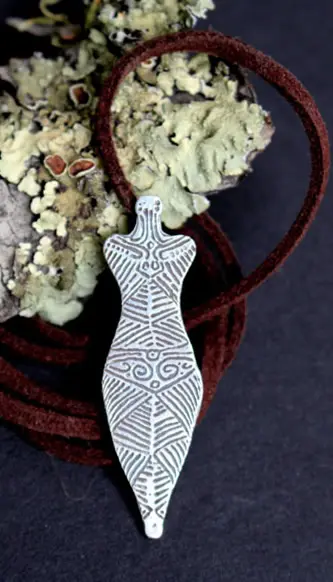
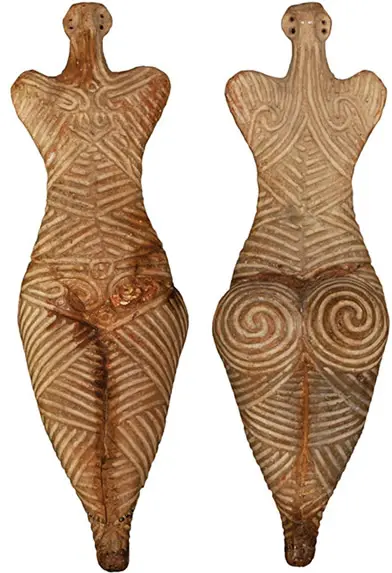
To discover our Neolithic Cucuteni Venus, we embarked on a journey to Eastern Europe, between Ukraine and Romania, where we discovered this Mother Goddess, dating from between 4050 and 3900 BC, belonging to the Cucuteni culture, one of the most advanced civilizations of its time. This culture, also known as Cucuteni-Trypillia, is remarkable for its advances in agriculture, its communal complexes, and its artistic achievements.
The Venus of Drăguşeni, along with other similar figurines discovered in the region, not only illustrates the veneration of fertility but also the sophistication of religious and artistic practices of the Cucuteni culture. Preserved at the Botoşani County Museum in Moldavia region, Romania, this terracotta figurine is a valuable testament to how these ancient societies perceived and honored the forces of nature and fertility.
The Cucuteni Venus symbolizes the deep connection between humanity and nature, and the importance of "fertility" for these new urban centers, whose survival depended on the development of agriculture and animal husbandry. These figurines were likely used in rites and ceremonies aimed at ensuring the prosperity of crops and the fertility of women, reflecting the belief in divine aid to guarantee the growth and prosperity of the communities.
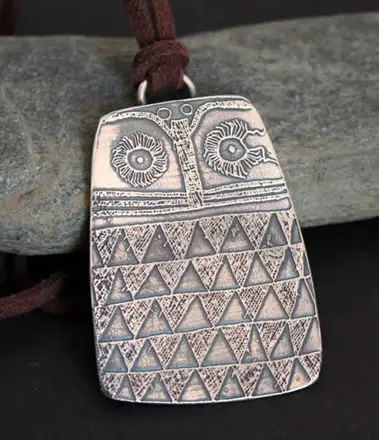
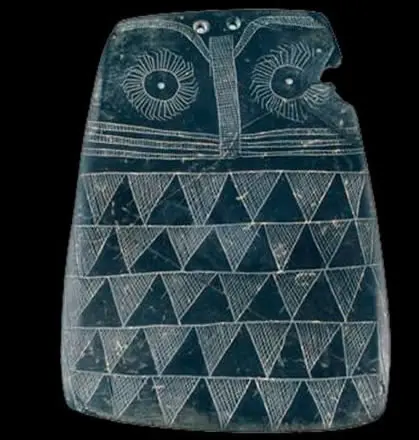
Our Neolithic owl necklace is inspired by a slate tablet found at Cerro de la Cabeza, Valencina de la Concepción, Spain, dating from the Copper Age, between 4500 and 2500 BC. This site, located in the Seville region, is renowned for its archaeological wealth and sophisticated artifacts.
The slate tablets from this period are often adorned with intricate patterns, and this one is no exception. The meticulous and original design of this tablet features an owl, a bird with complex and fascinating symbolism. As a nocturnal creature, the owl is frequently associated with wisdom, inner vision, and protection against evil spirits. In the Neolithic context, it might also be connected to nocturnal deities or spiritual figures responsible for overseeing fertility and the prosperity of the community.
Thus, this tablet could represent a nocturnal fertility goddess, a powerful and mysterious figure who watches over and promotes the growth of crops and the well-being of community members. The choice of this bird as the central motif in our necklace is therefore not only a celebration of Neolithic art and culture but also an evocation of the protective and nurturing role of deities associated with nature and fertility.
Other surprising objects
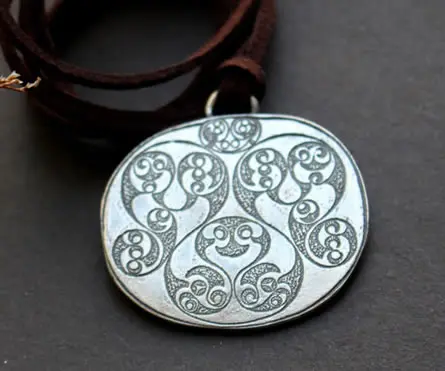
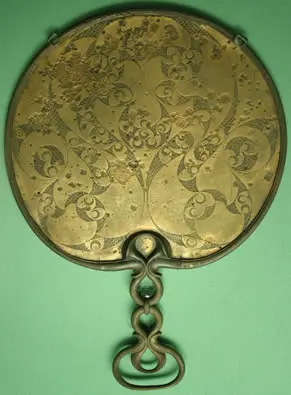
We now take a leap through time, to between 50 BCE and 50 CE, to discover a remarkable object from Celtic Britain: the Desborough Mirror. This type of Celtic bronze artifact is extremely rare outside the British Isles and reflects a distinctive insular tradition. The mirror was discovered in the early 20th century in Northamptonshire, England.
The Desborough Mirror is thought to date from the period known as Insular La Tène—a late phase of British Celtic culture, marked by multiple influences, notably Roman, on the eve of the island’s conquest. It consists of a polished bronze disc forming the reflective surface, extended by an elegantly twisted handle.
We chose to reproduce only the back of the mirror, which is beautifully decorated. It displays typically Celtic motifs: spirals, scrolls, and interlacing patterns unfolding in a masterful balance between textured and untextured areas. This visual interplay seems to echo the nature of reflection and inversion inherent in mirrors, heightening the object’s magical or ritual dimension. The flowing, dynamic design creates a sense of movement and transformation, perhaps reinforcing the idea that the mirror was not merely meant for seeing oneself, but also for seeing beyond—between the visible and invisible worlds.
To deepen your knowledge of the art and history of neolithic, we recommend the following books:



OUR SERVICES
Customer reviews
Custom order
FAQ
Free shipping
Terms and conditions