





Jewelry of the Nordic World: Viking Heritage and Ancient Traditions
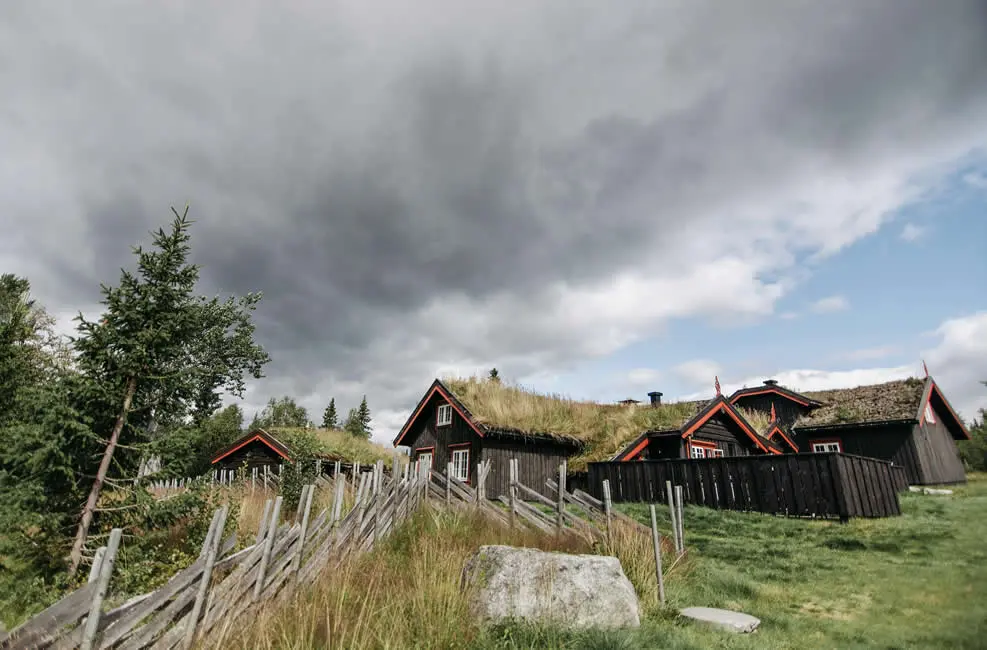
This page is part of our series exploring the history and archaeology of civilizations around the world, with the aim of reinterpreting works that have inspired us in the form of jewelry. Here, we journey through the lands of the North, from the Scandinavian regions to the wild landscapes of Iceland and the Arctic territories of the Sami people.
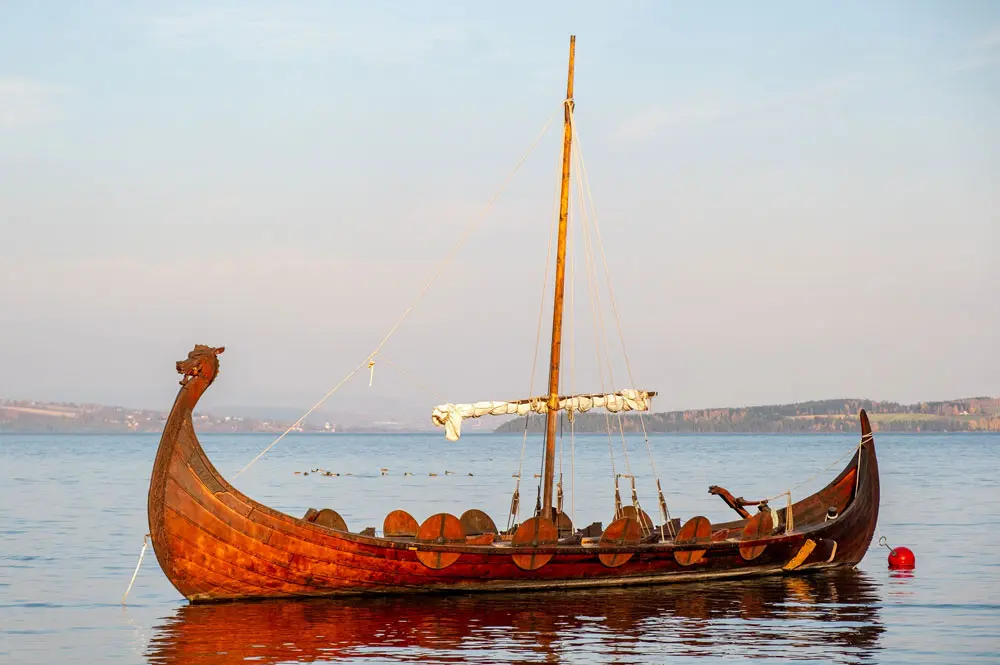
The Nordic tribes, often referred to as “Vikings,” were fearless adventurers and warriors, sailing across the northern seas and exploring distant lands long before the Age of Discovery. The exploits and legacy of these peoples have left a lasting mark on history, and their mythology, rich in gods and heroes, continues to inspire epic tales and works of art.
The Nordic tribes also left behind an impressive material heritage, with finely crafted objects and jewelry of great beauty and refinement. These pieces were often adorned with powerful symbolic motifs, such as interlacing knots, animal figures, and representations of deities. The geometric and intertwined forms typical of Viking art symbolized the connection between the spiritual and earthly worlds, as well as the eternity of life. Motifs of dragons, wolves, and serpents were also common, associated with qualities such as strength and resilience.
The use of precious metals such as silver and gold, often combined with gemstones like amber or garnet, reflected the social rank and status of those who wore these pieces. Amulets such as Thor’s hammers (Mjölnir) or Christian crosses, worn around the neck or on the wrist, offered their wearers divine protection in life and beyond.
It is this cultural richness and aura of mystery that draw us in and inspire us to further explore these fascinating cultures. Our creations take inspiration from these emblematic motifs and reinterpret them in a contemporary style, while respecting the symbolic codes of this era.
Jewelry of the Sami Culture
The Sami culture, deeply rooted in the Arctic regions of Scandinavia, is distinguished by its intimate relationship with nature and the spiritual world. As an indigenous people of northern Europe, the Sami have developed a worldview in which every natural element is inhabited by invisible forces, and where the boundaries between the visible and the invisible remain fluid.
In this universe, objects are never merely simple artifacts. They carry a strong symbolic and spiritual function, often linked to shamanic practices. Drums, in particular, hold a central place: at once ritual instruments, representations of the world, and tools for communicating with spirits. The motifs that adorn them reflect a complex cosmology, where deities, ancestors, and natural forces intersect.
Jewelry inspired by this culture extends this sacred dimension. Through their forms and symbols, these creations evoke the invisible connections that bind humans to nature and to the spiritual realms, while perpetuating an ancient heritage imbued with mystery and wisdom.
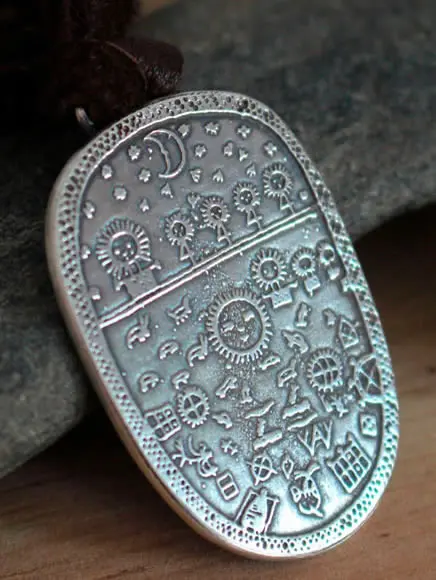
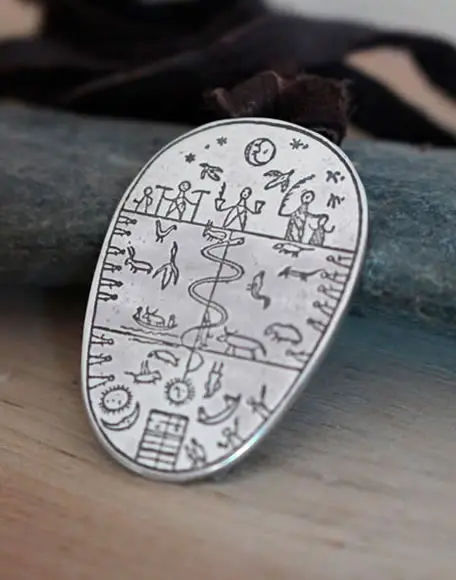
For these creations inspired by Sami culture, we worked with two ancient drum hides, true treasures from Scandinavia. In Sami tradition, the drum is much more than a mere musical instrument. It is a sacred link to the spirits, a guardian of memory, and a representation of the worldview of this northern people. Used by shamans (or noaidi), the drum was employed to enter trance and communicate with the spiritual world, guiding shamans on journeys between different realms: the world of the living, the spirits, and the gods. Adorned with symbolic motifs, these drums guide the shaman in their spiritual journey, allowing them to communicate with the forces of nature and ancestral spirits.
The first drum, named "shaman drum," comes from Lule Lappmark, a region in Sweden. Its hide features the sun, a symbol of life, vital force, and light, accompanied by figures of the deities Ahkka, protectors of the mountains and women, as well as the moon, representing duality, balance, and the transition between the visible and the invisible. In the lower part of the drum, anthropomorphic and theriomorphic figures—part human, part animal—evoke nature spirits and ancestors, whose protection and wisdom were sought by the shaman during rituals.
The second drum, called "Sami drum," is a true work of art depicting a mythical adventure involving the god Thor and the great serpent Eymer. Its hide illustrates three distinct realms: Asgard, the paradise of gods and heroes; Midgard, the land of men; and Niflhel, the realm of the dead, thus highlighting the interconnectedness of worlds in Nordic cosmogony. This epic fresco not only portrays Nordic mythology but also reflects the Sami conception of the universe, where every natural element is endowed with a spirit and partakes in a cosmic balance. These narratives, engraved in the collective memory of Scandinavian peoples, honor their unbreakable connection with their natural and spiritual environment.
Jewelry of Iceland
Iceland, a land of volcanoes and sagas, gave rise to a unique symbolic tradition at the crossroads of Nordic heritage and medieval influences. Ancient Icelandic manuscripts, particularly the grimoires of the 17th century, have preserved traces of mysterious signs known as galdrastafir, used as talismans with protective, healing, or magical properties.
These symbols, often constructed from runic forms, reflect a worldview in which magic, nature, and human destiny are closely intertwined. They were drawn, worn, or invoked to guide, protect, or strengthen those who used them, in a world shaped by natural forces and the dangers of travel.
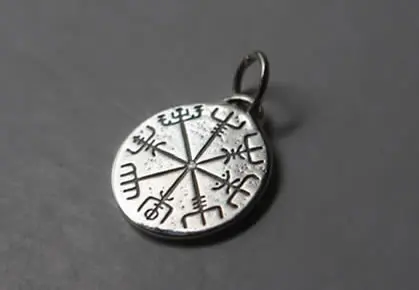
Jewelry inspired by these traditions reinterprets these ancient signs in a contemporary form. Whether it is the Vegvísir, a symbol of guidance, or the Ægishjálmur, associated with protection and power, these motifs continue to fascinate and convey a vision of the world where symbols act as a link between humans and the invisible forces that surround them.
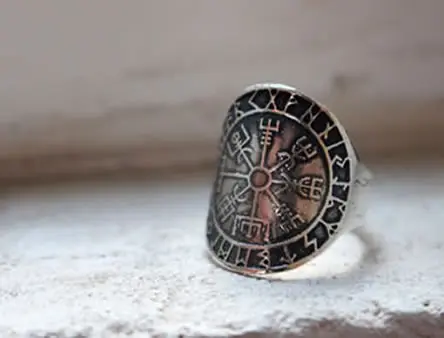
We had the pleasure of exploring Galdrastafir, Icelandic magical symbols of great historical and cultural richness, on two occasions. These symbols, derived from old 17th-century grimoires, likely have roots in much older traditions, dating back to the medieval period or even the Viking era. They are often carved from Nordic runes, rather than Celtic ones as sometimes believed, and are associated with various protective, healing, or magical functions.
The first piece of jewelry, a ring named Vegvisir, features one of the most famous Galdrastafir. This symbol, also known as the "Viking compass," is said to guide its wearer through life’s trials, ensuring a safe and protected journey, even when lost in a storm or facing difficult situations. The Vegvísir is often linked to the idea of finding one’s path, both literally and spiritually.
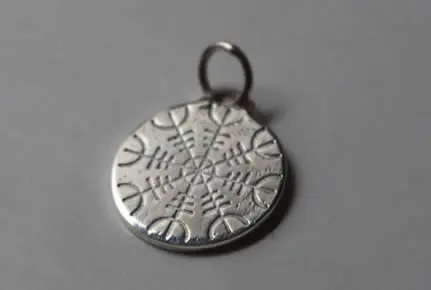
The second piece, a pendant named Iceland Rune, is a powerful talisman that combines two Galdrastafir, one on each side. On the front, we have the Ægishjálmur, also known as the "Helm of Awe." This symbol is renowned in legends for granting invincibility in battle and protecting its bearer by surrounding them with an aura of strength and intimidation against their enemies. On the reverse side, the Vegvísir reappears, providing protection against the dangers of travel and adverse conditions, a reminder of the close connections the ancient Nordics had with the sea and natural elements.
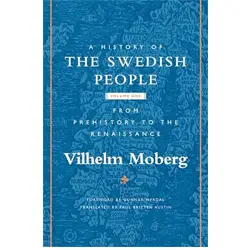
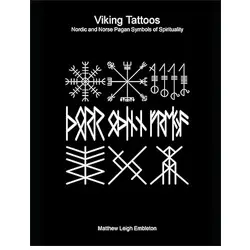
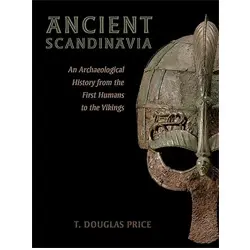
To deepen your knowledge of the art and history of nordic and viking culture, we recommend the following books:



OUR SERVICES
Customer reviews
Custom order
FAQ
Free shipping
Terms and conditions