





Huo bu necklace



Huo bu, imperial Chinese coin necklace in silver
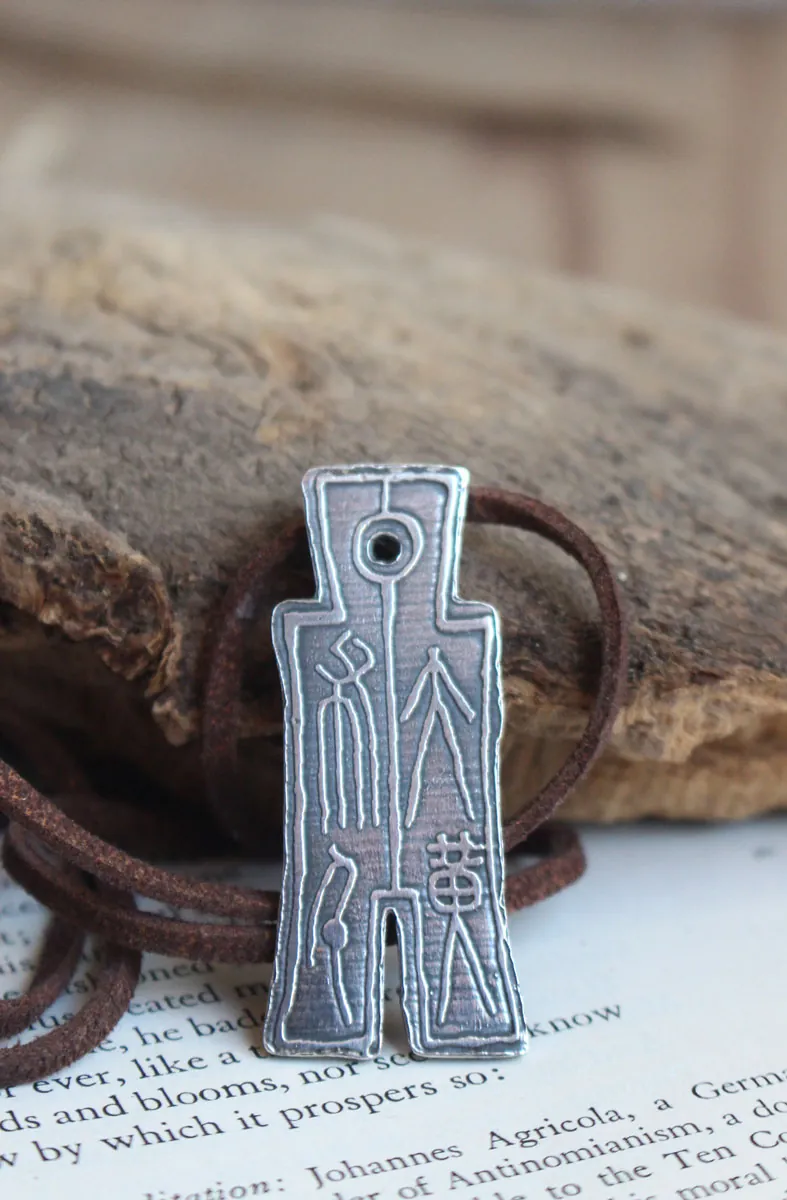
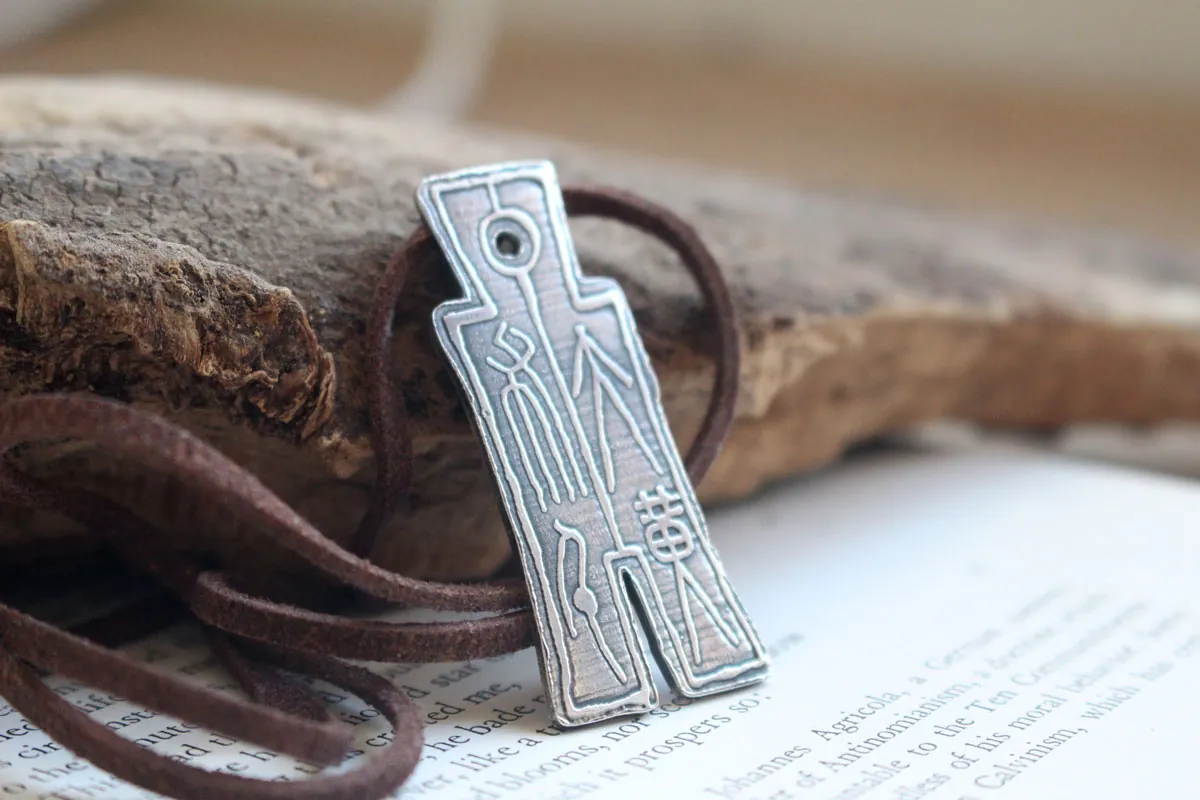
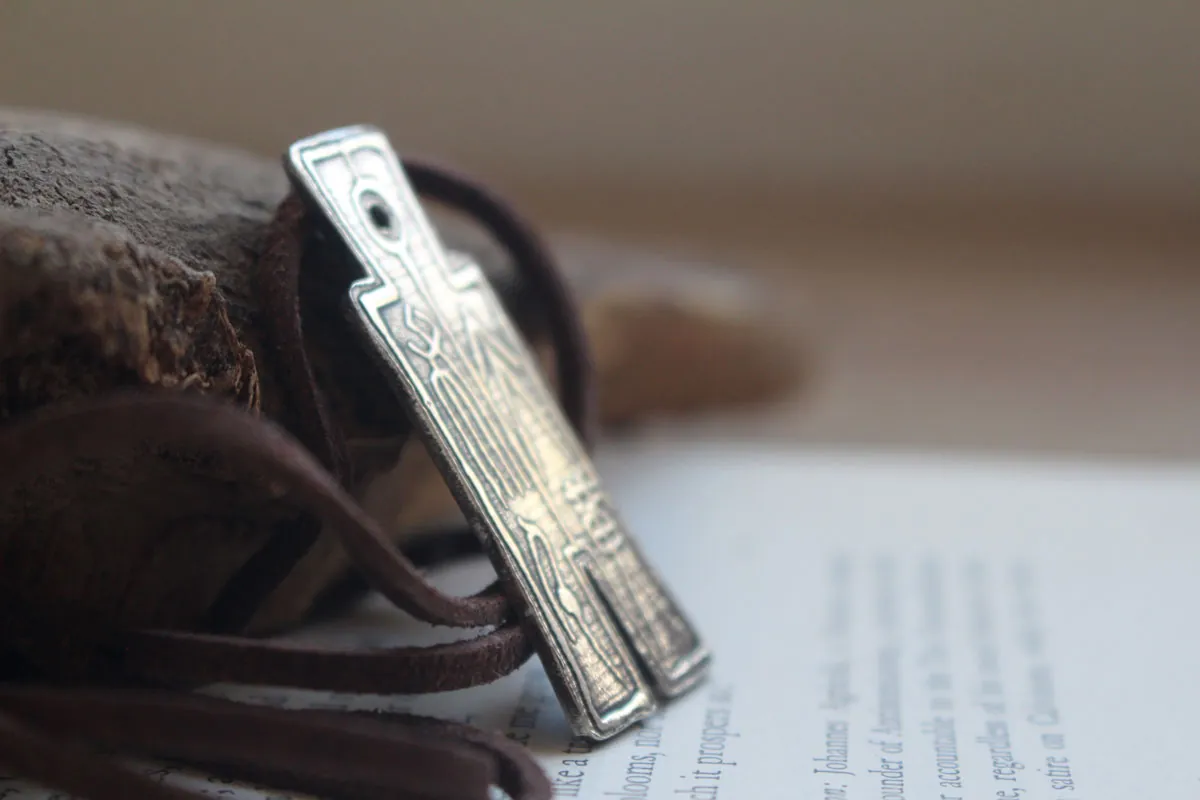
The Huo Bu (貨布) Necklace is an archaeological reproduction of an ancient Chinese coin known as a spade coin. Its shape is both intriguing and visually striking. What first drew our attention was its almost human-like silhouette, like an ancient presence suspended between object and symbolic figure.
Spade coins were first created during the Shang dynasty and were inspired by the spade, an essential agricultural tool at the time. The spade is deeply connected to the earth, to the cycle of seasons, to fertility, and to human labor. These coins therefore carry a very ancient memory, rooted in rural life and the origins of early economies. They developed between the 8th and 3rd centuries BC. Over time, their decoration also evolved, with inscriptions appearing on their surface, sometimes highly stylized, approaching almost abstract forms.
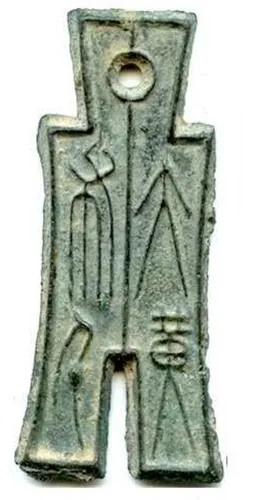
Several styles of spade coins can be found: pointed-foot spades, square-foot spades, and round-foot spades. These variations reflect both a strong regional diversity and a gradual evolution of forms. These coins disappeared before briefly reappearing between 9 and 23 AD during the Xin dynasty, as with the specimen we present here, known as Wang Mang spade coins, named after the emperor who introduced them. Emperor Wang Mang is known for having attempted a radical reform of the Chinese monetary system by reintroducing archaic forms (spades and knife money), in a desire to return to ancient traditions. Although these coins are now admired for their elegant calligraphy and unique design, these complex reforms caused economic disruption at the time, making them all the more fascinating as they are tied to a period of transition and upheaval.
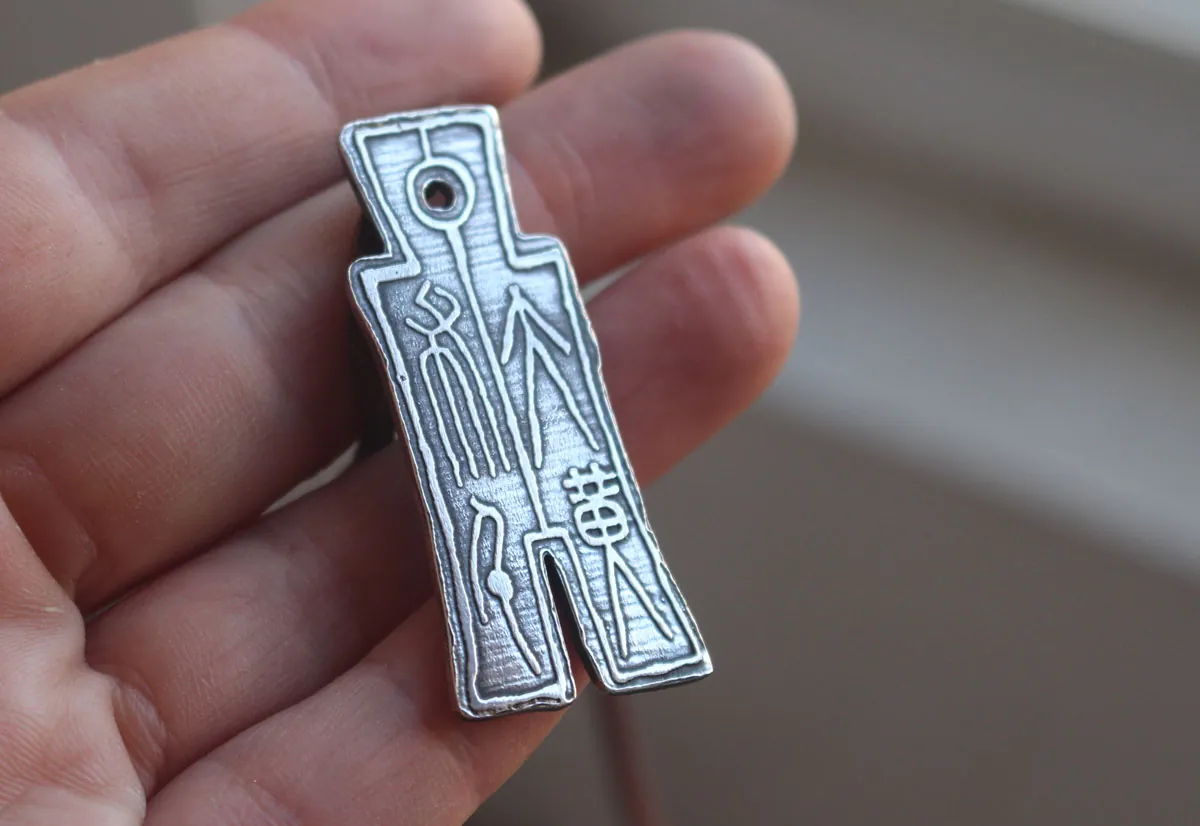
Our Huò bù coin takes the form of a shovel or spade, with a square head and two separated rectangular “legs,” reminiscent of a human silhouette. This shape may evoke a stylized figure, almost like an ancient spirit or protective presence. In the “head,” there is a small circular suspension hole, once used to string several coins together or hang them. This detail recalls ancient practices when coins were threaded onto cords for transport. The piece is vertically divided by a line and bears seal script characters, an ancient form of writing used for seals, known for its elegant and timeless forms.
On the right appears the character Huo (貨), meaning “money,” “wealth,” or “currency.” In ancient script, this character combines elements representing valuable objects, such as the cowrie shell, once used as primitive currency in many civilizations, along with the idea of exchange. On the left appears the character Bu (布), meaning “spade” or “cloth.” The term refers both to the shape of the coin, inspired by an agricultural tool, and to the idea of circulation, as the verb bu can also mean “to spread” or “to distribute.” This coin can thus be seen as embodying movement, exchange, and the transmission of wealth.
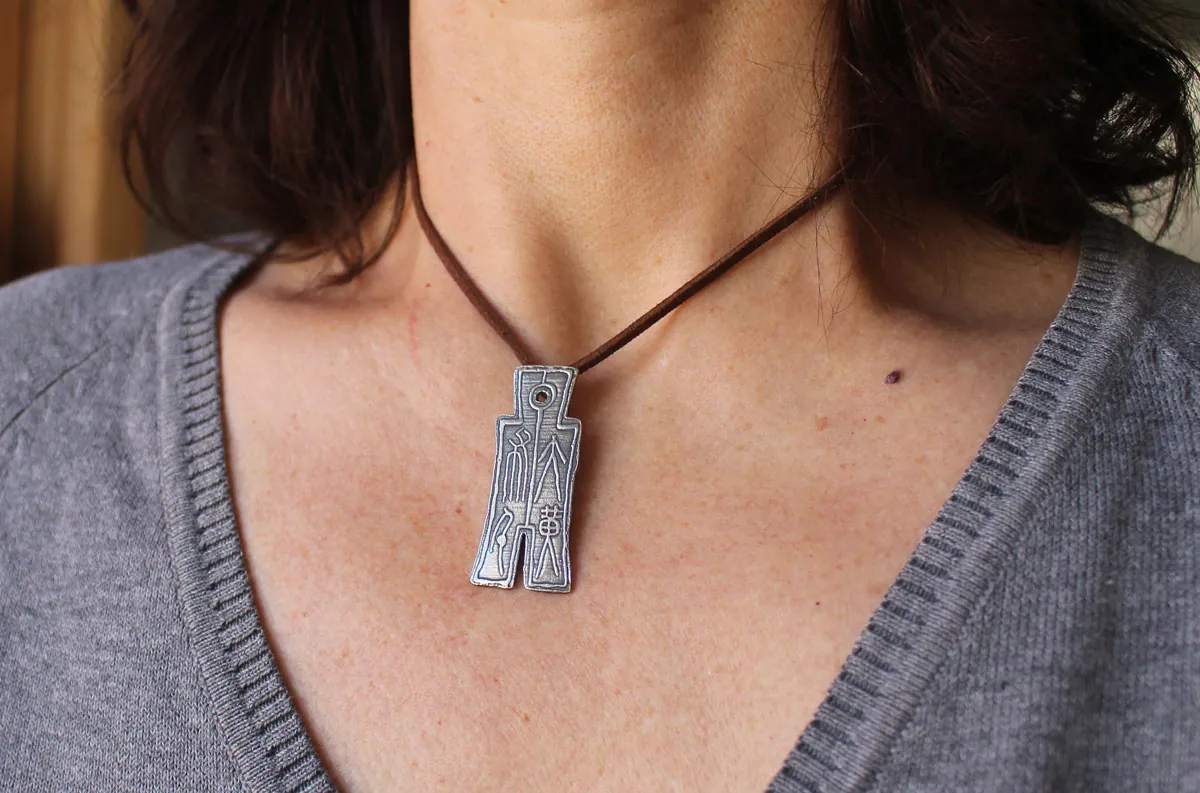
Worn as jewelry, the Huo Bu necklace may evoke prosperity, transformation, and the link between past and present. It can also be perceived as a protective or symbolic object, inspired by a time when everyday items already carried strong spiritual and cultural significance. Its simple and graphic form makes it both discreet and deeply meaningful, like a fragment of archaeology worn on the body.
As a side note, and because we found it amusing, Huo bu can also echo the Chinese idiom huò bù dān xíng (祸不单行), meaning “misfortunes never come alone.” This contrast between wealth and misfortune adds a subtle layer of irony and mystery to this ancient piece, as if it carried multiple possible interpretations within it.
Metal: sterling silver (925).
Dimensions: 1.77 × 0.79 in (4.5 × 2 cm).
A 90 cm vegan suede cord is included with the pendant.
Production time: 5 working days.
As we are based in Mexico, please allow 3 to 6 weeks for delivery to receive your order for free with standard postal service. Thank you for taking this information into account before ordering in our shop. At checkout, you will also have the option of choosing an express shipping. (please read the full shipping terms here).
You have a question? Contact us.
I hope you will love this jewel as much as I enjoyed creating it.
By Emmanuelle Guyon.
Tags: Chinese, coin, currency, China, reproduction, archaeological, history, archaeology, silhouette, Asia, empire, imperial, wealth, prosperity, writing, calligraphy, seal script, agriculture, tool, spade, travel, memory, heritage
Inspired by your search: chinese, necklace, coin
193.00 Euros
(≈ 221.95 USD)
OUR SERVICES
Customer reviews
Custom order
FAQ
Free shipping
Terms and conditions