






Blue agate: history, benefits and healing properties
Blue agate properties
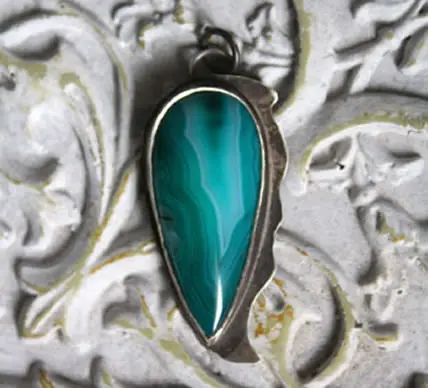
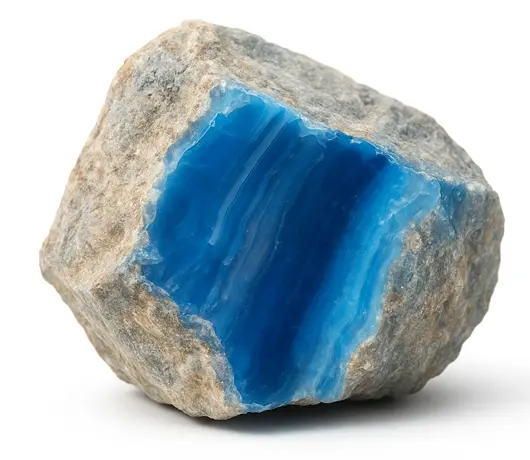
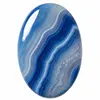
Blue agate, a variety of silica widely used in jewelry, forms through deposits in rock cavities as a result of volcanic processes. It exhibits concentric layers of chalcedony and quartz, offering a varied palette of blue tones.
Blue agate forms when rock cavities, often created by gas bubbles in volcanic rocks, become filled with dissolved silica. Over time, under the influence of pressure and temperature fluctuations, this silica crystallizes into concentric bands. These bands are primarily composed of chalcedony and quartz, and variations in the concentration of metallic oxides, such as iron and titanium, along with other minerals, determine the different shades of blue. This process can take millions of years, with each layer adding new hues, ranging from pale sky blue to deeper, more intense tones. The purity of the blue color, coupled with the transparency or opacity of the agate, gives each stone a uniqueness that makes it a prized gem.
History, beliefs, and legends of blue agate
This exceptionally beautiful stone has a long history, having been used in jewelry and ornamentation since ancient times.
The Egyptians, in particular, skillfully utilized blue agate in the creation of their famous scarabs, symbols of rebirth and protection, which adorned the tombs of pharaohs. These blue agate scarabs carried deep spiritual significance, reflecting the importance of this stone in their culture.
Blue agate was also highly valued in ancient Mesopotamia, where it was used to craft cylinder seals and amulets. These objects, often intricately engraved with complex patterns, symbolized divine protection and were used in sacred rituals, highlighting the protective and sacred role attributed to this stone.
In Roman culture, blue agate was worn to promote eloquence, soothe conflicts, and encourage diplomacy. Orators and politicians regarded it as a precious talisman, believed to enhance their ability to persuade and resolve disputes peacefully. Additionally, blue agate was often used to create refined jewelry, cherished not only for its beauty but also for its calming virtues.
In certain folk beliefs, this stone is placed under the pillow to encourage peaceful dreams and facilitate better expression of emotions. It is also said to help overcome nighttime fears, release repressed emotions, and promote restful sleep. Blue agate, with its gentle and serene qualities, continues to symbolize inner tranquility and clear communication throughout the ages.
Main deposits: Madagascar, Switzerland, Italy, Uruguay, the United States and Brazil.
Healing properties and benefits of blue agate
Throughout the long history of humanity, blue agate has been surrounded by numerous interpretations, whether relating to symbolic properties, supposed virtues, or beliefs connected to well-being. The information presented here is framed within a cultural and historical perspective: it aims to illustrate how different civilizations perceived this stone and assigned it a particular role in their relationship with the world. As with the previous information, these observations are part of a documentary approach, grounded in the history of human representations. They do not constitute therapeutic or medical advice and do not reflect our personal beliefs.
- In several traditions, blue agate worn as a pendant was associated with a form of harmony linked to the throat, an area often considered the seat of speech, expression, and sometimes breath.
- Certain cultures also attributed to this stone an influence over the nervous or circulatory system, regarding it as a support in moments when one sought to release tension or restore a sense of inner flow.
- Recurrent references in historical sources also note its association with relief from headaches, reflecting the place blue agate held in the imagination as a symbol of comfort and calm.
- These interpretations complement the characteristics traditionally attributed to agates in general, often regarded as stones of balance, whether on an emotional level or in the pursuit of inner stability.
- The blue color itself has long carried particular significance in many cultures: it often evoked tranquility, depth, breath, and sometimes the soothing of emotions. This chromatic dimension naturally enhanced the qualities attributed to blue agate, making it a stone associated with serenity and inner calm.



 Please note that all healing properties attributed to stones come from ancient traditions and various cultural sources. This information is provided for informational purposes only and does not constitute medical advice. In case of any health concerns, it is recommended to consult a qualified professional.
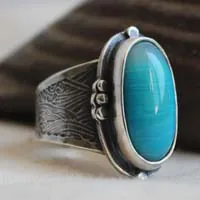
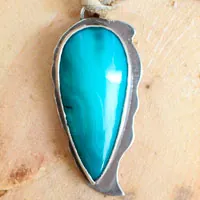
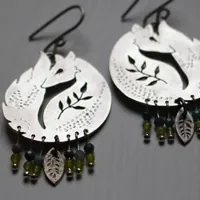
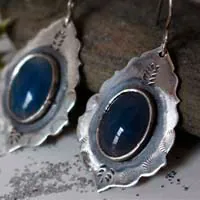
Blue agate jewelry samples
Sold

To learn more about litotherapy, we recommend you the following books:



OUR SERVICES
Customer reviews
Custom order
FAQ
Free shipping
Terms and conditions