






Jewelry of Asia: history and archaeological treasures
This page is part of our exploration series dedicated to the history and archaeology of the world’s civilizations, with the aim of reinterpreting some of their creations that have captivated us into jewelry. Here, we journey across Asia, from the great ancient civilizations to the vast lands of the Eurasian steppes.
Asian cultures have developed richly diverse artistic traditions, ranging from the refined objects of ancient China to the nomadic creations of steppe peoples. From ritual bronzes and carved jade to stylized animal motifs and ornaments inspired by the equestrian world, these traditions reflect a deep connection with nature, unseen forces, and social structures. Whether through the imperial and cosmological symbols of ancient China or the dynamic animal representations characteristic of Eurasian steppe cultures, these worlds have produced a powerful and evocative artistic heritage. The forms, materials, and symbols drawn from these cultures offer a fascinating source of inspiration for contemporary jewelry design.
Jewelry meets ancient China
China is an immense land, shaped by millennia of history, and yet still largely unknown. While its broad outlines are familiar, many of its details remain obscure, as if buried beneath layers of time. In recent decades, advances in archaeology have gradually begun to lift the veil on this ancient civilization, revealing forgotten treasures, imperial tombs, and objects rich with meaning.
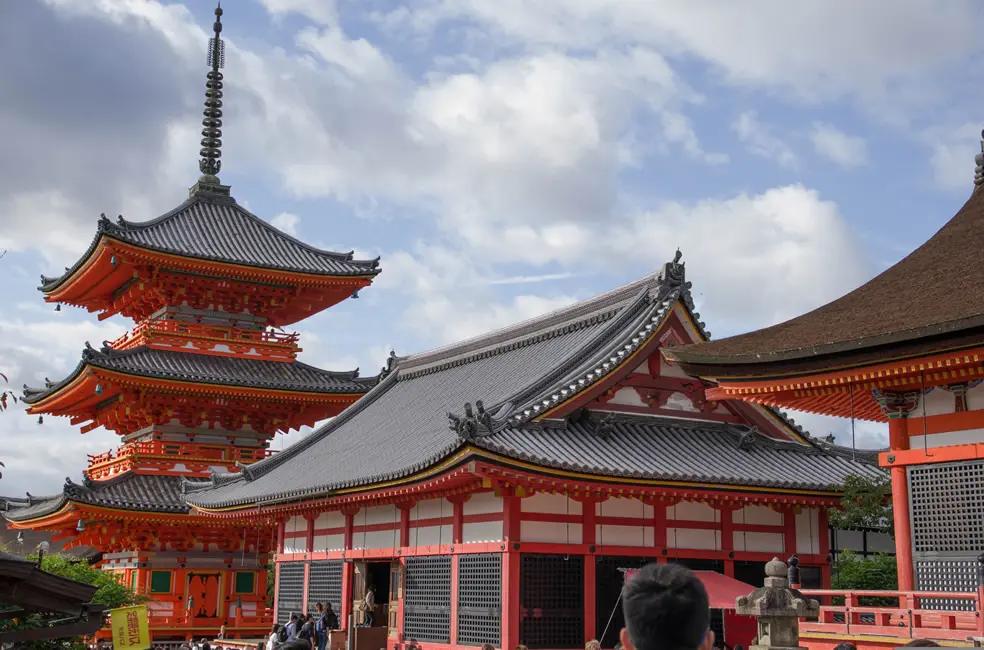
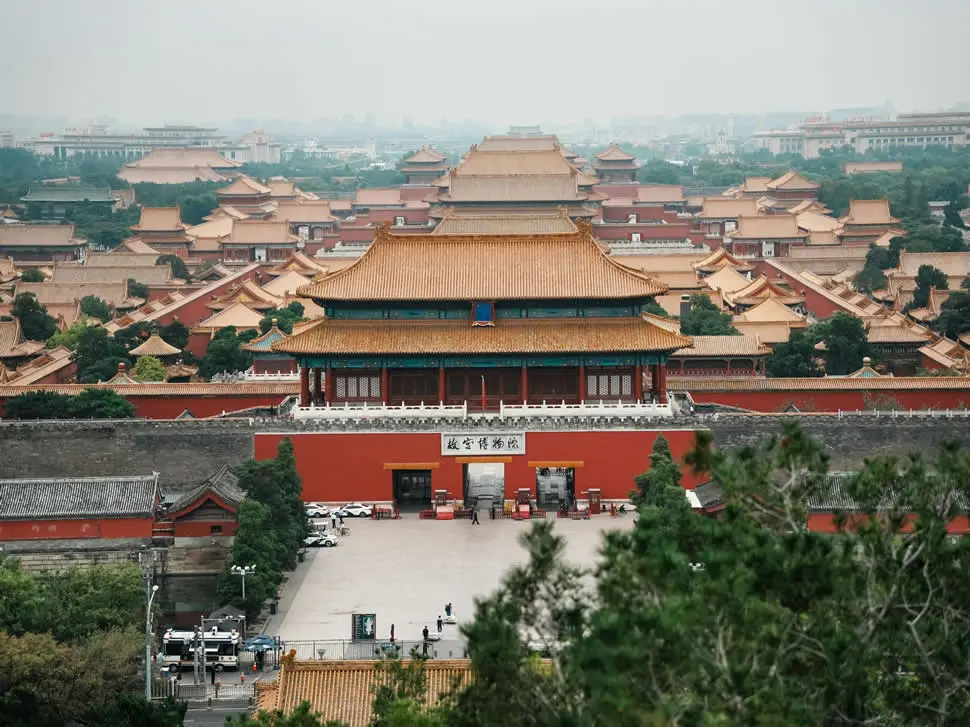
It is a land of vast scale, where people built in proportion to their empire. Among its most iconic achievements are the Great Wall of China, the Forbidden City, the Temple of Heaven, the Terracotta Army of Xi’an, and the Mogao Caves. These sites bear witness not only to remarkable architectural mastery, but also to a profoundly different vision of the world.
With each new discovery, knowledge continues to grow. These findings tell us about early human societies, dynasties, funerary rituals, and ancient beliefs. Every object, every remnant seems to carry a story—sometimes fragmented, often mysterious.
It is a fascinating journey, between power and enigma, where forms, symbols, and ideas drift away from our usual frame of reference. This distance makes ancient China all the more captivating, like a world apart—one we strive to understand without ever fully uncovering its secrets. It invites curiosity, exploration, and a renewed way of looking at the ancient objects that have come down to us.
We began with something small yet essential—currency, particularly surprising in the case of China. Throughout its history, unusual forms of money appeared, striking in their design—spades, knives, circles… a fascinating geometric and symbolic universe, both simple and deeply meaningful.
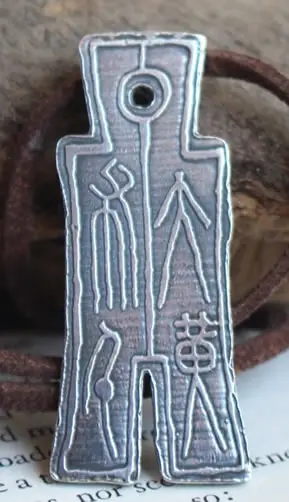
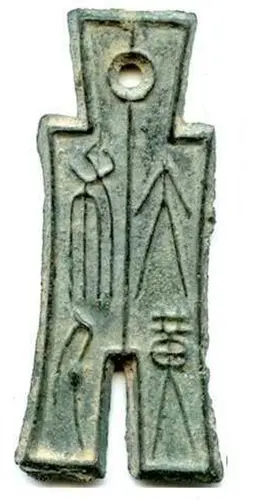
The Huo Bu (貨布) necklace is inspired by an ancient Chinese coin known as a spade coin. This piece is a faithful archaeological reproduction of those early forms. Spade coins originated during the Shang dynasty. Their shape is directly inspired by an essential tool of everyday life: the spade. This agricultural object, tied to working the land, symbolizes sustenance, the cycle of seasons, and the relationship between humans and nature. Through these coins, we encounter one of the earliest forms of wealth connected to the earth and production. They later developed between the 8th and 3rd centuries BCE, with forms and styles evolving across regions and periods.
Over time, these coins diversified. There were pointed-foot spades, square-foot spades, and rounded-foot spades. Their proportions changed, as did their inscriptions, which became increasingly present and stylized. Some pieces grew almost abstract, with markings that exist somewhere between writing and decorative motifs.
These coins gradually disappeared before briefly reappearing between 9 and 23 AD, during the Xin dynasty. This period corresponds to the reign of Emperor Wang Mang, who attempted to profoundly transform the Chinese monetary system. He reintroduced ancient forms such as spade coins and knife money, in an effort to return to earlier traditions. Although ambitious and rich in symbolism, these reforms led to significant economic instability. Today, these coins are primarily appreciated for their unique aesthetic and historical significance, as witnesses to a time of transition.
The Huò bù model we present retains this characteristic spade shape. It features a square upper section and two separated vertical segments at the bottom, which may evoke legs. This structure reinforces the impression of a form that feels almost alive, somewhere between a functional object and a human-like symbol. At the top, a small circular hole once allowed a cord to pass through, enabling several coins to be grouped together or worn. This detail recalls ancient practices, when currency was also something tangible, carried, handled, and accumulated.
The surface of the piece is marked by a central vertical line and by characters in seal script. This ancient form of writing, used notably for official seals, is distinguished by its balanced and elegant shapes, almost timeless in appearance. On the right side appears the character Huo (貨), referring to wealth, value, or currency. Historically, it is linked to precious objects such as cowrie shells, once used as a medium of exchange in early societies. On the left, the character Bu (布) means both “spade” and “cloth.” It refers to the shape of the coin, but also evokes the idea of diffusion and circulation, as something that spreads. Together, these elements can be understood as a representation of the movement of wealth, exchange, and the connections between people.
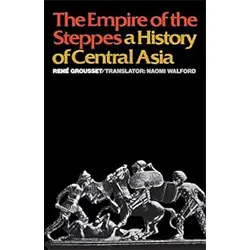
To delve deeper into this journey through China and its history, we recommend the following books:
The Jewelry of the Nomadic Peoples of the Eurasian Steppes
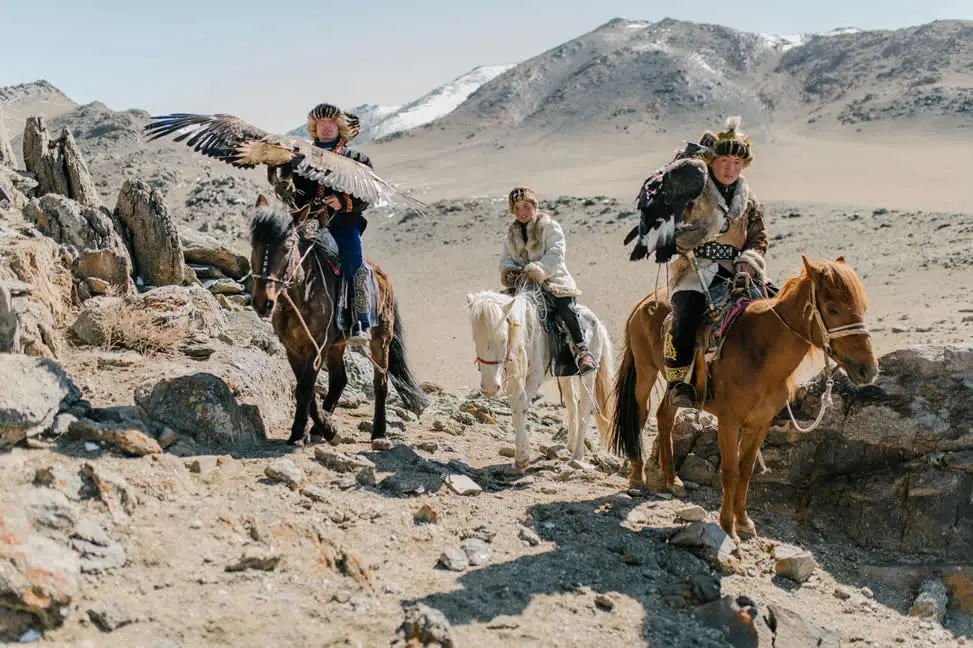
We have been captivated by the nomadic cultures of the Eurasian steppes, which embody a unique vision of freedom and adaptability. These peoples, deeply connected to their horses and the vast expanses they traversed, managed to thrive despite the harsh conditions, such as the intense cold of the steppes. Their lifestyle, often characterized by constant movement and climatic challenges, forged formidable warriors united by an exceptional culture and skills.
The steppes, with their vastness and isolation, provided the backdrop for the emergence of powerful nomadic armies, such as those led by Genghis Khan. These nomads abandoned a sedentary and agricultural way of life around the first millennium BC, opting instead for an extensive pastoral lifestyle. Their mastery of horseback riding, crucial for their survival and military success, enabled them to become elusive warriors, leaving a profound impact on the history of Eurasia.
Over the centuries, various ethnic groups have inhabited these steppes, each contributing its own languages, traditions, and unique contributions. Among these peoples are the Cimmerians, of Iranian or Thracian origin (13th to 8th century BC), the Scythians, also of Iranian origin (9th to 2nd century BC), and the Sarmatians, likewise Iranian (6th to 4th century BC). The Xiongnu, whose origin is uncertain, played a crucial role in the construction of the Great Wall of China, designed to protect the Chinese empire from invasions. Other notable groups include the Kushans (1st century), the Xianbei (156-234), the Hephthalites (6th century), the Huns (4th century), and the Mongols, founded by the legendary Genghis Khan (founded in 1206), among many others.
These peoples have not only shaped history through their conquests but also through their rich and diverse culture, molded by the vast expanses of the Eurasian steppes.
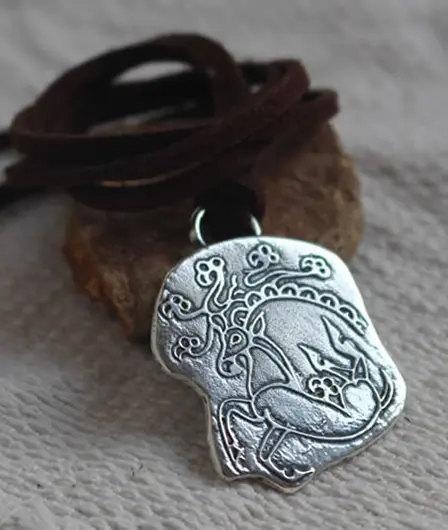
We began our exploration of the Eurasian steppes by focusing on a central symbol of these cultures: the deer. In the early periods of steppe cultures, the deer was one of the most common representations across various artistic media, before being gradually replaced by predatory animals, notably the wolf. Despite its prevalence, the exact significance of the deer remains open to interpretation. It is clear that it served as a totemic guide, often associated with profound spiritual functions. The frequency of its representations in funerary contexts and certain legends suggests that the deer was seen as a soul guide, protecting and accompanying souls on their journey to the heavens.
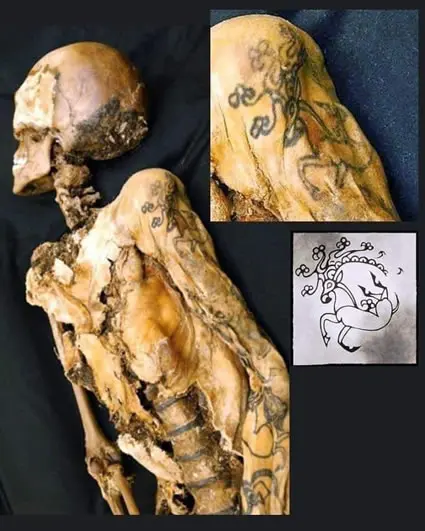
For our first depiction of the deer, we turned to the famous Altai princess, whose tattoos provide valuable clues about the role of the deer in this culture. We chose to focus on a particular tattoo from this Pazyryk culture mummy. This tattoo features an animal with attributes such as antlers ending in flowers and a curved horn, which has led to debates about its precise identification: deer or a mythical creature resembling a Capricorn-griffin. The animal’s hind legs, oriented upwards, reinforce the idea that this being is floating, like a soul guide.
This tattoo, along with other artifacts found in steppe tombs, illustrates the importance of the deer in the spiritual and artistic imagination of nomadic peoples. The meticulous details and complex iconography of these representations reveal how revered and sacred this animal was. As a totem, the deer likely symbolized the connection between the world of the living and that of the spirits, playing a crucial role in funerary rites and beliefs about the afterlife. Jewelry inspired by these ancestral motifs helps preserve and honor this sacred connection.
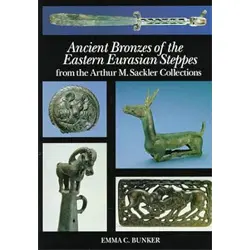
To deepen your knowledge of the art and history of Native American, we recommend the following books:



OUR SERVICES
Customer reviews
Custom order
FAQ
Free shipping
Terms and conditions