



Celtic symbols in jewelry: meaning, history, and inspirations from the Celts
This page is part of a collection highlighting the Celts and the jewelry we have created around their culture. You can explore the full study by following the link below.
In the absence of direct written records, the interpretation of Celtic symbols often remains the subject of passionate debates and varied interpretations. This ambiguity sometimes leads to the use of the term "pseudo-Celtic" to describe certain motifs, as it is undeniable that many popular symbols, widely used today, have been influenced by elements of Christianity or have emerged recently in a commercial context.
This confusion is exacerbated by the fact that many Celtic symbols have been reinterpreted and appropriated over time, often within a modern context of commercialization or Celtic revival. Patterns that were once imbued with deep spiritual meanings may have been distorted or simplified to cater to contemporary aesthetic tastes or commercial imperatives. For example, the growing popularity of these motifs in jewelry, textiles, or decorations can sometimes dilute their original meaning, transforming sacred symbols into consumer goods.
Despite these challenges, scholars and enthusiasts continue to explore and analyze Celtic symbols, relying on archaeological evidence, historical sources, and oral traditions to attempt to decipher their original meaning. The study of ancient inscriptions, archaeological artifacts, and mythological narratives provides valuable clues about the use and significance of symbols in their historical context. While the exact nature of many symbols may remain uncertain, their richness and complexity continue to inspire imagination and captivate minds, reflecting the depth and vitality of Celtic culture through the ages.
These symbols, even when distorted or misinterpreted, remain valuable witnesses to an ancient culture, inviting deeper exploration of their history and significance. They remind us of the richness of Celtic traditions and how they have influenced and continue to influence our understanding of the past and our appreciation of the natural world.
The Celtic cross
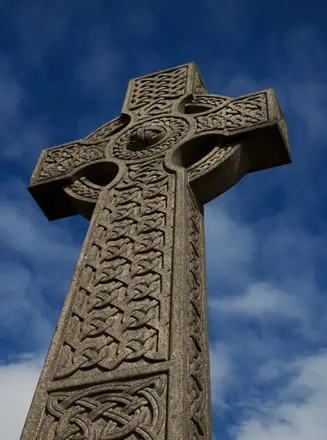
The Celtic cross, also known as the nimbated cross, is a complex symbol that combines a cross with a circle, representing the union of the spiritual and the earthly. This cross has several distinct variations, each carrying its own particular significance:
- The Latin cross integrated into the Celtic design: When one arm of the cross extends noticeably longer than the others, resembling a base or foot, it is referred to as the Latin cross integrated into the Celtic motif. This configuration reflects the Christian influence on Celtic traditions. The extended arm often symbolizes aspects of the Christian faith, such as the Holy Eucharist, the five wounds of Christ, and His Sacred Heart. As early as the 7th century, these crosses served as places of worship in the absence of formal churches, marking the fusion between ancient Celtic beliefs and the emerging Christian faith. This cross also represents the triumph of Christianity over the old pagan traditions.
- The cross with equal arms: If the cross features arms of equal length, it takes on a different meaning. These regular crosses are often associated with specific political and religious contexts of the medieval Christian era. They symbolize balance and harmony and may reflect the issues of power and faith that marked medieval society. Their use in monuments and artifacts attests to the central role of religion in structuring medieval Christian communities.
- The Cross Inscribed in a Circle - Solar Wheel: Ancient motifs feature the cross inscribed within a circle, forming solar wheels. These ancestral symbols date back to the Neolithic era and were revered for their association with the sun and natural cycles. They expressed the deep connection between humans and cosmic forces, illustrating the importance of the sun in Celtic rituals and beliefs. The solar wheel represents the eternal cycle of time and rebirth, emphasizing continuity and renewal in both nature and spiritual life.
The triskelion
The triskelion, also known as the triskèle (or triskell), represents a fascinating variation of the spiral motif, widely used in Celtic art. Although its origins date back long before the Celtic period, it remains one of the most iconic symbols of this ancient culture. The direction of its rotation can vary, adding an additional layer of symbolic interpretation.
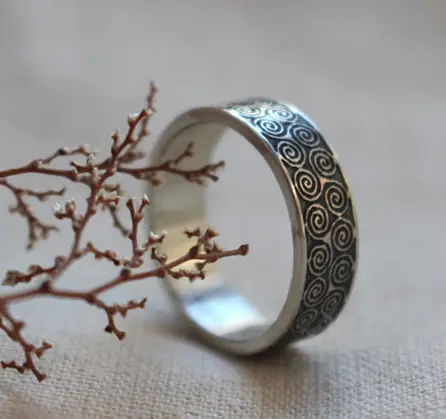
This complex motif is often associated with a multitude of profound meanings:
- The Three Worlds: It could represent the three worlds—physical, spiritual, and celestial—thus evoking the connection between different planes of existence. This interpretation is based on the Celtic belief in a world divided into multiple interconnected layers or realms.
- The Phases of the Sun: It may symbolize the three phases of the sun’s movement—dawn, noon, and dusk—reflecting the daily cycle of light and darkness. This association underscores the importance of the sun in the rhythm of life and Celtic rituals.
- The Primary Elements: The triskelion might represent the three primary elements—water, earth, and fire. These elements were considered essential in Celtic cosmology, representing the fundamental forces that govern the natural world.
- The Celtic Gods: It could also refer to the three principal Celtic gods, Lugh, Ogma, and Dagda, thus embodying the richness of Celtic cosmology. These divine figures symbolize different aspects of power and wisdom in Celtic mythology.
- Time and Life Cycles: The triskelion can also represent time—the past, present, and future. It evokes the stages of life—childhood, adulthood, and old age—emphasizing the importance of natural and human cycles.
- Spiritual Harmony: Other interpretations highlight the spiritual dimension of the triskelion, viewing it as a symbol of perfection and balance between the spirit, body, and soul, thus embodying inner harmony and spiritual fulfillment. This perspective emphasizes the quest for personal balance and wisdom.
- The Sun and Celestial Path: The most commonly accepted version of the triskelion is that associated with the sun. The term "triskelion," literally meaning "three legs," is often considered an Indo-European term describing the sun’s path across the sky (dawn, noon, dusk), underscoring the sun’s significance in Celtic cosmology and spirituality. The spiral form of the triskelion evokes the perpetual motion and cosmic cycle of the sun.
- Social Order: Additionally, the triskelion could reference the traditional social order of Celtic society, divided into three distinct classes: the spiritual, represented by bards and druids; the temporal, embodied by kings; and the material, consisting of peasants and artisans. This interpretation highlights the importance of social organization in the daily life of the Celts and the central place of the triskelion in their worldview. Each branch of the triskelion could symbolize the balance and interdependence of the different social classes in Celtic society.
The love knot
The love knot, also known as the lovers’ knot or the Celtic love knot, is a delicate and intricate motif representing two intertwined hearts. This symbolism evokes an eternal and indestructible bond of love, a spiritual and emotional union between two beings.
According to tradition, the Celts may have exchanged these love knots to seal their union and express their mutual commitment. These knots highlight the importance of love and romance in Celtic culture, emphasizing the depth of human relationships and the value placed on harmony and emotional connection.
- A Symbol of Fidelity and Eternity: The knot’s design, which has no beginning or end, is often interpreted as a symbol of eternal fidelity. The Celts saw in these knots a reflection of the infinity of life’s cycle, where love endures beyond time and death, creating an unbreakable bond.
- Variations and Their Significance: While the love knot is often depicted as two intertwined hearts, there are variations where the motif is more abstract, not directly representing hearts but rather curved and interwoven lines. These designs can symbolize different aspects of union, such as the balance between the individual and the community or the complementarity between masculine and feminine energies.
- Deep Spiritual Roots: In Celtic culture, knots are also associated with profound spiritual concepts. The love knot can thus be seen as a manifestation of the union of souls, reflecting a connection that transcends the material world. This spiritual vision emphasizes the idea that true love is a path to enlightenment and fulfillment.
- Connection to the Trinity: Some scholars see in the Celtic love knot a reference to the trinity, a recurring concept in Celtic symbolism (like the triskelion). The intertwined motif could symbolize the three aspects of love—physical, emotional, and spiritual—that come together to form a complete and harmonious union.
Beyond their romantic significance, love knots can also represent strong and enduring family ties, symbolizing affection and loyalty between parents, children, and close relatives. Their complex and intertwined design reflects the intricacies of human relationships and the beauty of unity in diversity.
In a broader context, love knots can also evoke communal bonds, highlighting the importance of solidarity and mutual support in Celtic society. The interwoven motifs remind us that each individual is an integral part of a greater whole, where every bond contributes to the strength and resilience of the community.
The shield of protection
The shield of protection, an ancient symbol of defense and security, was believed to be worn by the Celts to safeguard against a multitude of dangers, whether they were physical threats such as enemies on the battlefield or more subtle perils such as evil spirits or diseases that haunted the Celtic imagination. Beyond its martial function, the Celtic shield was often perceived as a symbolic barrier between the physical and spiritual worlds. It served not only to repel visible attacks but also to protect the bearer from invisible influences, such as curses or bad omens.
Often rectangular in shape, this sacred shield held deep significance as a protective amulet, granting its bearer an aura of security and strength in the face of life’s challenges. While Celtic shields were often rectangular, they could also take oval or circular forms, each shape associated with particular meanings. The materials used—whether wood, leather, or metal—added another layer of symbolism, with iron, for instance, being perceived as a metal capable of warding off dark forces.
As an amulet, the shield was often decorated with sacred patterns or magical symbols, imbued with power and meaning. These ornaments served to enhance the shield’s protective effectiveness by attracting positive energies and repelling malevolent forces. Commonly used motifs included spirals, triskelions, and interlaced designs, each with a protective function. Spirals symbolized continuity and the cycle of life, while triskelions represented balance and harmony between opposing forces. The interlaced designs, with their endless intertwined lines, symbolized the interconnectedness of all things and offered protection against disunity and spiritual disintegration.
It is likely that shields, as protective amulets, were activated or consecrated during Druidic rituals. These rituals might have included prayers, incantations, and the use of sacred herbs, conferring the shield with its protective properties. Druids, as guardians of occult knowledge, played a key role in the creation and blessing of these objects.
The Tree of Life
The Tree of Life, sometimes referred to as Crann Bethadh, holds immense importance in Celtic symbolism, as we have already explored through the theme of trees. This iconic representation of life is often depicted as a tree with intertwined branches spreading out on one side, contrasting with tangled roots on the other, all enclosed within a sacred circle.
The image of the Tree of Life, with its branches and roots in perfect symmetry, represents the balance between the opposing forces of the cosmos, such as life and death, light and darkness, or the material and the spiritual. The surrounding circle symbolizes the eternal cycle of life, with no beginning or end, and emphasizes the interdependence of all elements of the universe.
The Tree of Life embodies the sacred and intimate connection between heaven, earth, and the world of the ancestors. It symbolizes the vitality of nature and the eternal cycle of life, evoking the deep connection between humanity and its natural environment. The Tree of Life can also be interpreted through the triple division of the Celtic universe: the sky (where the gods reside), the earth (the domain of mortals), and the Otherworld (where spirits and ancestors continue to exist). Each part of the tree corresponds to one of these dimensions, thus unifying the cosmos in a harmonious structure.
Additionally, it expresses concepts of rebirth, immortality, and fertility, reminding each person of the promise of renewal and constant growth. The Tree of Life played a central role in Druidic rituals, where it was often considered a sacred axis, or "axis mundi," connecting the physical and spiritual worlds. Druids, as mediators between humans and the gods, often used the tree as a focal point during ceremonies, invoking the energies of nature to guide and protect the community.
Beyond its physical representation, the Tree of Life evokes spiritual and intellectual qualities such as wisdom, strength, and longevity. It is regarded as a guardian of ancient knowledge, its branches reaching towards the heavens to capture divine wisdom, while its roots delve deep into the earth, grounded in ancestral truths.
The Celtic Tree of Life is also a powerful symbol of regeneration, not only on a physical level but also on a spiritual one. It serves as a reminder that life is a continuous cycle of death and rebirth, where every end is the prelude to a new beginning. The roots reach into the past, while the branches strive towards the future, symbolizing the transmission of wisdom across generations.
Celtic spirals
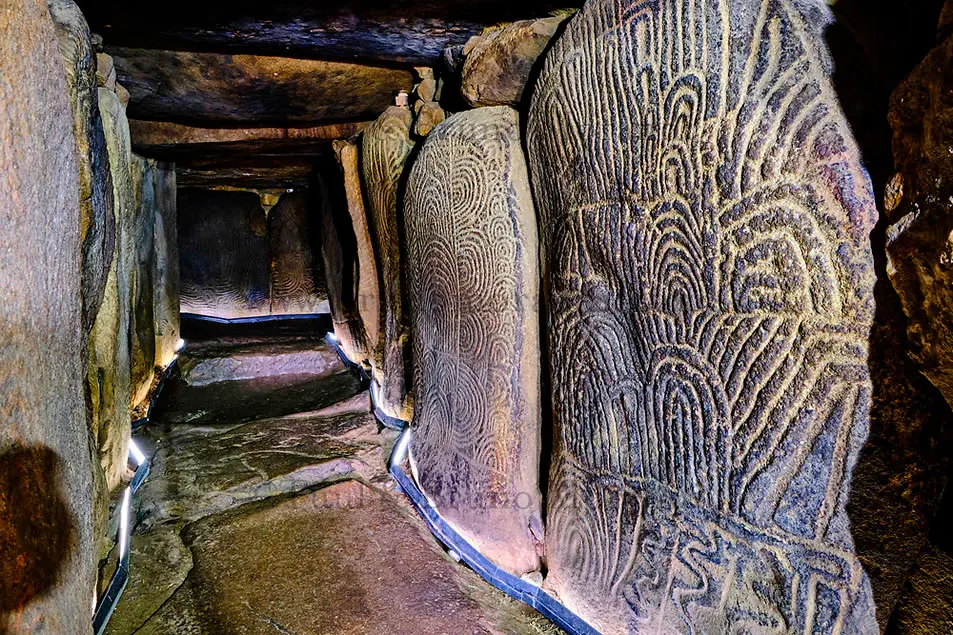
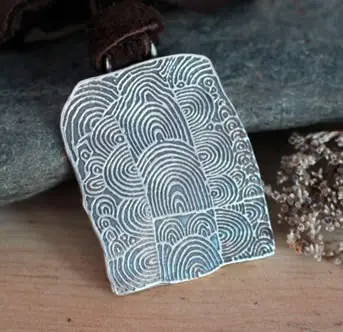
Celtic spirals, iconic motifs of great antiquity, bear witness to profound wisdom and symbolism, having endured from prehistoric times through the Celtic era. Their presence dates back to the Neolithic period, leaving their mark on majestic megaliths like Newgrange and Gavrinis, where they were intricately carved into stone with remarkable precision.
These enigmatic spirals, true testaments to the artistic and spiritual genius of the ancient Celts, are often interpreted as representations of the vital energy emanating from the sun or as manifestations of the radiant light of the Celtic goddess of the dawn. They also evoke cosmic harmony, symbolizing the ebb and flow of the natural forces that govern the universe.
Spirals may also represent water, a sacred element for the Celts. They recall the currents of rivers and oceans, as well as the sacred springs where the Celts would come to purify themselves or communicate with the spirit world. This association with water reinforces the idea that spirals are symbols of flow, constant movement, and transformation.
Celtic spirals are often perceived as guides toward consciousness and spirituality, representing an inner journey toward self-knowledge and understanding of the universe. They can also be interpreted as a symbolic map of the landscape, stars, and planets, highlighting the sacred connection between humanity and its environment.
The triquetra
The triquetra, also known as the Celtic triangle, is a motif composed of three interlaced ovals forming a triangle, often accompanied by an embedded or surrounding circle that symbolizes the eternal and unchanging nature of life’s cycles and their interconnectedness. The shape of the triquetra, with its three interwoven ovals, not only illustrates interconnection but also embodies the idea that distinct elements can combine to form a harmonious whole. This concept is fundamental in Celtic spirituality, where the diversity of natural and spiritual forces is seen as complementary and interdependent.
Over the centuries, this complex symbol has inspired many interpretations. Some view the triquetra as a protection against death, while others associate it with the triple goddess, representing the maiden, the mother, and the crone, the three aspects of the Celtic goddess. In this context, the triquetra symbolizes the cycles of life, fertility, and nature, reinforcing the idea of continuity and perpetual renewal. Other interpretations link the triquetra to natural elements or human relationships. The three points of the symbol could represent the three realms of earth, sea, and sky, or the three fundamental elements of the universe: water, earth, and fire. This symbolic versatility reflects the deep connection between the triquetra and the forces of nature.
The triquetra may also have been used in ritual practices to invoke the protection of the three realms or to balance the elements in a person’s life, serving as a talisman for those seeking to align their lives with natural and spiritual forces.
Though often associated with Celtic culture, the origin of the triquetra remains debated. The motif appears on runestones in Northern Europe and on Germanic coins, suggesting a Germanic rather than strictly Celtic. This symbol’s ability to transcend cultural boundaries demonstrates its universality and timelessness. Its adoption by Christianity as the "Trinity Knot," representing the Father, the Son, and the Holy Spirit, illustrates how pagan motifs were reinterpreted to fit into new spiritualities.
The sailor’s knot
The sailor’s knot, also known as the love knot or union knot, is a simple yet powerful representation of two interwoven strands. This entwined band symbolizes love, friendship, affection, and harmony, capturing the idea of unity and deep connection between individuals. Beyond its immediate significance, the sailor’s knot also embodies the strength and resilience of human relationships. Just as the strands intertwine to form a strong knot, people bound by this symbol are united in an indissoluble relationship, capable of overcoming life’s trials and challenges together.
Historically, this simple yet evocative motif finds its roots in maritime traditions, where it symbolized loyalty and camaraderie among sailors. In this context, the sailor’s knot reflects mutual trust and assistance, crucial values for those sharing the hardships of life at sea. This symbol is often used in ceremonies to represent solemn commitments, marking the importance of bonds forged in adversity.
Celtic knots
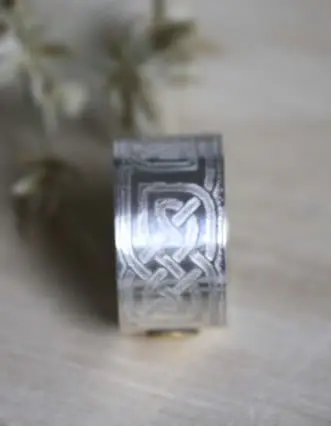
Celtic knots, sometimes referred to as infinity knots, are iconic motifs of Celtic culture, characterized by their uniqueness and complexity. Each knot is formed from a single, continuous line with no apparent beginning or end, elegantly looping and intertwining to create an infinite array of decorative patterns. Although these knots are closely associated with Celtic culture, their history dates back long before the Celtic era. The earliest examples of these designs appear as early as the 3rd century BCE among the Romans, attesting to their antiquity and universality.
Over time, Celtic knots were adopted and adapted by the Celts, becoming a central element of their craftsmanship and artistic expression. Symbolizing eternity and the interdependence of life, these patterns capture the essence of Celtic philosophy, emphasizing the deep connection between all living beings and nature. Their continuous, unbroken form evokes the endless cycle of life, death, and renewal, reminding us of the constancy and permanence of the universal forces that govern the world.
In Celtic culture, knots are not merely decorative; they are often regarded as protective talismans, reinforcing the notion of continuity and protection in daily life. They were carved on tombstones, inscribed on jewelry, or incorporated into embroidery to ensure the protection and blessing of the gods.
Beyond their philosophical and spiritual symbolism, Celtic knots are also admired for their aesthetic beauty and geometric complexity. Their presence on Christian monuments and manuscripts from the 5th century CE onwards attests to their significance in medieval European art and culture. They were often used to embellish sacred art, such as the Lindisfarne Gospels or the Book of Kells, where they expressed the deep spirituality of the time and served to glorify sacred texts.
The Claddagh ring
The Claddagh ring is an iconic piece often mentioned among Celtic symbols. This distinctive ring features a heart topped with a crown, held by two gracefully intertwined hands, creating a symbol rich in meaning and tradition. Traditionally, this ring represents friendship, love, and loyalty, with each element carrying its own deep significance.
Although the original design of the Claddagh ring is not strictly Celtic, it is inextricably linked to Irish heritage. This piece of jewelry has its roots in a humble fishing village in 17th-century Ireland, and its name, "Claddagh," derives from the area where it was created, near the city of Galway. Since then, this iconic ring has transcended the boundaries of its modest origins to become a universal symbol of affection, loyalty, and emotional connection.
The heart at the center of the ring represents love, the crown symbolizes loyalty, and the hands holding the heart embody friendship. The combination of these elements reflects the essential values that defined human relationships at the time and continue to resonate today. When given as a gift, the way the ring is worn can also carry special significance: worn on the right hand with the heart facing away from the wearer, it indicates that the wearer’s heart is free; worn on the right hand with the heart facing inward, it signifies that the wearer is in a committed relationship; finally, worn on the left hand with the heart facing inward, it symbolizes marriage and mutual commitment.
The Awen
The Awen, an iconic symbol of Neo-Druidism, embodies the essence of Celtic spirituality. Composed of three small circles from which three lines emerge, all enclosed within a larger circle, the Awen goes beyond mere decorative design to reflect a profound connection with the divine and celestial inspiration.
The term "Awen" comes from Celtic languages such as Breton and Welsh, where it denotes divine inspiration granted to bards. This sacred symbol thus represents the very essence of spiritual illumination and inner awakening, opening the doors to communication with the gods and the mystical forces of the universe. Druidic tradition associates it with the voice of the ancients, the ancestral wisdom that guides and inspires individuals on their spiritual path.
Each element of the Awen carries rich symbolic meaning: the three circles may represent the three Celtic worlds—the world of ancestors, the world of the living, and the world of spirits—or the three fundamental elements of nature: earth, water, and sky. The three lines that emanate from them can evoke the three rays of divine light, the aspects of knowledge—wisdom, truth, and understanding—or even the three essential qualities of the bard: inspiration, imagination, and creativity. These lines, extending from the circles, also symbolize the flows of spiritual energy that traverse the universe.
The circle surrounding the entire design represents unity and harmony, underscoring the interconnectedness of all existence and the cyclical nature of life. It reminds those who contemplate the Awen of their sacred bond with the divine, nature, and the source of all inspiration. This symbol is thus a constant call to seek inner harmony and to celebrate the spiritual light that illuminates our journey.
Runes
Runes, often mistakenly associated with the Celts, actually have their origins in the northern and Scandinavian lands, where they served as a writing system for centuries. This confusion about their origin dates back to the 17th century when a renewed interest in ancient cultures led to the blending and inaccurate assimilation of different European traditions.
The Celts, on the other hand, used several alphabets for writing, reflecting the cultural diversity of their peoples. Among these systems were Lepontic, Celtiberian, Greek, and Latin. However, Ogham remains the most emblematic of Celtic writing systems. Ogham, an ancient alphabet, is characterized by lines and marks engraved on sticks or stones, with each symbol representing a letter of the Celtic alphabet.
Though distinct, runes and Ogham share similarities in their symbolic and magical usage. Both systems were often associated with divinatory practices and mystical rituals. They were used to communicate with the gods, predict the future, or invoke supernatural powers. This convergence in practices and symbolism highlights the importance of writing in Celtic and Nordic societies, as well as their shared belief in the mystical power of symbols and words.
Runes are particularly known for their use in inscriptions on stones and various objects, as well as for their role in the magical and divinatory practices of Germanic and Nordic cultures. Ogham inscriptions, often found on megalithic stones in Ireland and Britain, reveal another facet of the cultural and spiritual richness of the ancient Celts.
To learn more about Celtics symbols, we recommend you the following books:



OUR SERVICES
Customer reviews
Custom order
FAQ
Free shipping
Terms and conditions