







Cordierite or iolite: history, healing properties and lithotherapy
Cordierite (iolite) properties
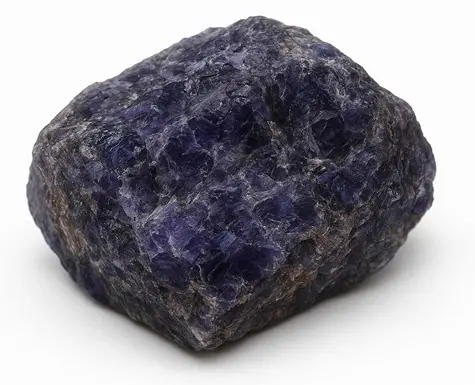
Cordierite, a prominent member of the silicates, combines magnesium and aluminum to create a vitreous stone with shades of blue and a unique play of colors. Its chemical formula is generally (Mg,Fe)2Al4Si5O18, placing it in the cyclic silicate class. The presence of iron in its structure can affect the stone’s color, which can vary from deep blue to more grayish or yellowish hues.
Its pleochroism reveals changing shades, ranging from blue to yellow and violet depending on the viewing angle. This fascinating property is triaxial, meaning iolite can display three different colors depending on the direction of observation: an intense violet-blue, a light gray or yellowish tint, and a deep blue. This color play makes it a highly sought-after gemstone for its visual effects.
Cordierite crystals can reach impressive sizes, with cut specimens as large as 7 inches (18 cm). One of the largest faceted pieces, on display at the British Museum, weighs 855 carats, highlighting its rarity and beauty.
First described by the mineralogist Lucas in 1813, cordierite was named after the French mineralogist Louis Cordier, who named it "dichroite" in 1809 in reference to its pleochroism. The term comes from the Greek words "dis," meaning "twice," and "kroma," meaning "color," referring to its ability to change hues. It is also known as iolite, from the Greek "iol," meaning "violet," in reference to its characteristic shade. Other lesser-known names include "New Zealand blue quartz," "water sapphire" (Buffon) (a now prohibited name), or "Steinheilite" (Pansner), recalling the rich history of this stone.
However, identifying cordierite can sometimes be challenging, as it is sometimes mistaken for other gems such as amethyst, quartz, tanzanite, or serpentine due to their similar colors.
Cordierite also possesses significant resistance to external agents. It is relatively resistant to acids and can withstand high temperatures, making it a stable and durable stone while maintaining its mystery and charm in the world of precious gems.
Stories, beliefs and legends about cordierite (iolite)
Cordierite, sometimes associated with Athena, the Greek goddess of war and wisdom, is mentioned as a symbolic stone, although historical evidence for this remains limited. There are no ancient texts specifically establishing this connection, but the blue color and depth of this stone might evoke qualities associated with Athena: clarity of mind, strategic vision, and intelligence.
However, the most famous legend surrounding cordierite is its possible association with the Vikings. This stone is often identified as the legendary "sunstone" (or "Solstein" in Old Norse). Some researchers suggest that cordierite might have been used as a "natural compass" by these Nordic navigators. Thanks to its pleochroism, it allowed them to locate the position of the sun, even through dense cloud cover or when the sun was below the horizon. When correctly oriented, the stone reveals polarized light, which could help deduce the direction of the sun, thus guiding ships across the northern seas. Although direct archaeological evidence is still lacking to confirm this use, modern experiments have shown that iolite could indeed function in this way.
In some Native American cultures, iolite is seen as a stone that enables access to altered states of consciousness, useful for shamanic journeys. During rituals, it is used to guide the shaman’s spirit through different spiritual planes, helping to find answers in the invisible world. Its pleochroism, with its play of colors, is perceived as a symbol of the ability to see beyond the illusions of the physical world.
In certain Tibetan Buddhist traditions, blue and violet stones, such as iolite, are associated with spiritual clarity and the activation of the third eye. Iolite is used to enhance meditation, increasing intuition and the ability to connect with higher spiritual dimensions.
Cordierite has carried its mysticism through the centuries. It is also celebrated as the stone commemorating the 21st wedding anniversary, representing durability, stability, and harmony in a long-term relationship. This romantic symbolism is reflected in the depth of its colors, where blue and violet remind us of trust and fidelity.
Main deposits: Germany, Algeria, Canada, France, Italy, Burma, Sri Lanka, India, Madagascar, USA, Norway, Brazil.
Healing properties and benefits of cordierite (iolite)
Throughout the long history of humanity, iolite, also known as cordierite, has been attributed a variety of properties, virtues, and symbolic uses. The elements presented here are part of a historical and cultural approach, intended to illustrate how this stone has been perceived and employed across different periods and traditions. As with the stones discussed previously, this information belongs to a documentary and symbolic framework and does not constitute medical or therapeutic advice, nor the expression of affirmed beliefs.
- Cordierite has traditionally been associated with liver support in several ancient cultures. In certain accounts, it appears as a stone linked to processes of purification and detoxification, encouraging more harmonious liver function and helping to prevent imbalances related to toxic overload.
- Known for its soothing qualities in traditions, iolite is often described as a stone that encourages inner calm. It is associated with mental relaxation and the creation of conditions favorable to deeper, more restorative sleep, particularly for individuals whose sleep disturbances are linked to stress or persistent mental agitation.
- In connection with its association with the liver and gallbladder, iolite is also mentioned as a support for smoother digestion. Some traditions attribute to it a role in easing bloating and digestive discomfort, thereby contributing to a metabolism perceived as more balanced and to improved overall vitality.
- Cordierite is sometimes cited in traditional knowledge as a stone related to the health of the nervous system. It is associated with support for the nerves and with accompanying phases of recovery, particularly after nerve-related issues or periods of prolonged physical weakness.
- Its supposed ability to contribute to the balance of bodily acidity has led certain traditions to associate cordierite with the relief of joint discomfort. It thus appears in contexts related to rheumatism and gout, where it is perceived as a stone that encourages flexibility and improved mobility.
- Iolite is also mentioned for its connection with iron absorption. In some traditional approaches, it is associated with the prevention of anemia and the maintenance of stable energy levels, contributing to better blood oxygenation and an increased sense of vitality.
- Cordierite is sometimes used to soothe sore throats and chronic sinus conditions. It is associated with enhanced respiratory comfort and relief from issues linked to seasonal allergies or upper respiratory infections.
- Thanks to properties traditionally described as calming and analgesic, iolite is often mentioned as a support in cases of headaches and persistent pain. It is sometimes considered a alternative to medicinal solutions, particularly within gentle and complementary approaches.
- In certain traditions, cordierite is associated with the regulation of body fat. It is perceived as an aid in maintaining balanced weight, especially when integrated into an overall lifestyle focused on moderation and equilibrium.
- Cordierite also appears in some traditional beauty rituals. It is associated with stimulating the growth and vitality of hair and nails, helping to strengthen hair and limit fragility.
- Ancient texts and popular beliefs finally attribute to iolite a role in accompanying fevers and, more rarely, in the context of malaria. Although these uses stem from ancient traditions and require critical perspective in light of modern knowledge, they testify to the cultural and richness associated with this stone throughout history.
- In addition to these uses, iolite is sometimes associated with mental clarity and inner orientation. Its optical ability to change color depending on the angle of observation has inspired interpretations linked to lucidity, discernment, and thoughtful decision-making, reinforcing its image as a stone of balance and understanding.



 Please note that all healing properties attributed to stones come from ancient traditions and various cultural sources. This information is provided for informational purposes only and does not constitute medical advice. In case of any health concerns, it is recommended to consult a qualified professional.
Cordierite jewelry samples
Personalized
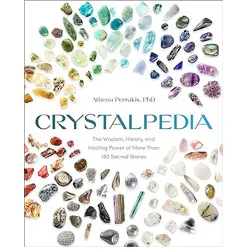
To learn more about litotherapy, we recommend you the following books:


OUR SERVICES
Customer reviews
Custom order
FAQ
Free shipping
Terms and conditions