







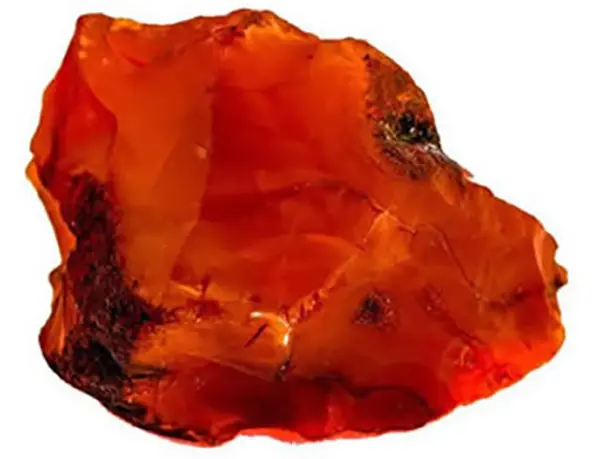
Carnelian: history, healing properties and lithotherapy
Carnelian properties
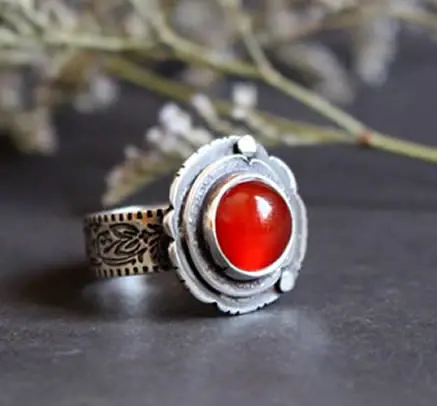
The etymology of the name carnelian is still a subject of debate. Some suggest that its name comes from the Medieval Latin "corneolus," derived from the Latin "cornum," associated with the cornelian cherry tree, due to its resemblance to the translucent fruit.
Others propose an origin linked to the Latin "caro" or "carnis," meaning "flesh," in reference to its distinctive color, often perceived as the hue of living flesh. The reddish-orange appearance of carnelian also evokes the warmth of blood, further reinforcing this symbolism.
In the time of Pliny the Elder, it was known as "Sard," associated with the city of Sardes in Lydia (modern-day Sardis in Anatolia, a major center of ancient trade), or possibly derived from the Persian word "sered," meaning "yellowish-red." In ancient classifications, the distinction between sard and carnelian was sometimes ambiguous, with sard generally referring to a darker variety of carnelian, often brownish-red in hue.
Carnelian is also known as the "Mecca stone," highlighting its characteristic color that resonates with the sacred hues of certain Muslim rites. This name reflects its traditional use in the making of talismans or amulets worn during pilgrimages.
Although sometimes referred to as the Sadoine stone, it should be noted that "Sadoine" differs slightly from carnelian, primarily by having a darker shade, though the distinction is subtle. The Sadoine stone, lesser-known, is often considered a historical variant of carnelian, with local legends placing it at the heart of ancient rituals.
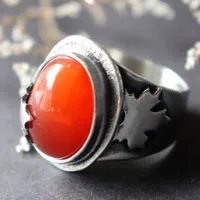
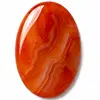
Carnelian is a translucent variety of chalcedony, displaying a spectrum of colors ranging from orange to red. These vibrant hues are due to the presence of iron oxide impurities within the stone’s crystalline structure. Depending on the concentration of these impurities, carnelian can exhibit shades ranging from yellow-orange to reddish-brown. It is traditionally known that heat treatment can enhance or alter these colors, as the iron impurities react to heat, intensifying the red tones. This method has been used since antiquity, particularly in Egypt and Mesopotamia, to enhance the stone’s color.
Due to its popularity, carnelian is one of the most frequently counterfeited stones. Often, agates are altered by soaking them in a ferric nitrate solution to mimic carnelian, a technique that produces a similar color, but often with less saturation and distinct patterns. These dyed agates typically reveal multicolored lines and irregular banding, in contrast to the uniformity of natural carnelian, which shows a consistent color. However, this distinction can be subtle to the untrained eye, making careful evaluation essential when purchasing. Experts recommend sourcing stones from reputable deposits, such as those in India or Brazil, to ensure authenticity.
Stories, beliefs and legends about carnelian
Carnelian, a significant gemstone, has left its mark on various civilizations around the world, particularly in regions where it was abundant.
Traces of carnelian date back to the Neolithic period, notably at the site of Mehrgarh in Pakistan, dating from the 5th to the 4th millennium BCE. Perforated pieces found at this site highlight its early use as a material for jewelry-making, underscoring both its aesthetic and symbolic appeal.
Its use also extends to the Minoan Bronze Age, where archaeological discoveries in the palace of Knossos in Crete revealed the early use of carnelian for the production of seals, likely used to mark trade exchanges or as symbols of authority. This stone was often engraved, a practice that became widespread across ancient civilizations.
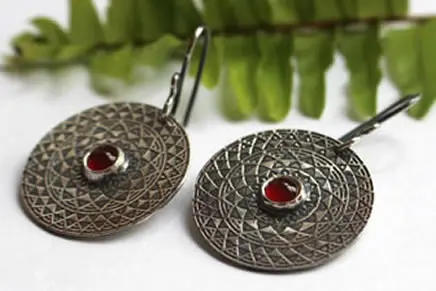
Carnelian played a significant role among the Sumerians, as evidenced by the discovery of carnelian jewelry in the tomb of Queen Puabi of Ur, dating to around 2600 BCE. This precious stone was valued for both its aesthetic and symbolic significance, reflecting the wealth and spirituality of Sumerian culture. Carnelian was believed to have the power to preserve the soul after death and promote prosperity in the afterlife, connecting the gem to funerary rituals.
In ancient Egypt, carnelian held major religious importance. The goddess Isis used it to protect the dead on their journey to the afterlife, linking it to rebirth and eternal life. Egyptians inscribed parts of the Book of the Dead onto carnelian amulets, which were believed to ease the souls' passage into the next world. These amulets, often shaped like hearts, symbolized truth and justice during the weighing of the souls. Additionally, carnelian was worn by architects to denote their social rank, emphasizing the high status of these builders in Egyptian society.
The Egyptians also referred to carnelian as the setting sun because of its red color, symbolic of blood and life, which made it central in their beliefs, particularly in rituals related to the life, death, and rebirth cycle.
Among the Romans, carnelian was used not only in jewelry but also in seal rings, as hot wax did not stick to the stone. This made carnelian an ideal material for signet rings, which often bore engraved images such as wild animals, symbols of protection and luck. Carnelian rings were commonly used by nobles and merchants to authenticate documents.
Both Greeks and Romans frequently wore carnelian-engraved signet rings, some featuring figures of the god Sarapis or the goddess Isis, both associated with time and death. These symbolic figures reinforced the mystical dimension of carnelian, linking it to spiritual protection and guidance in the afterlife.
The Hebrews believed that carnelian offered protection against the plague.
In the Bible, carnelian is one of the precious stones adorning the breastplate of the high priest Aaron, as described in the Book of Exodus. Its presence on this sacred garment underscored its religious and spiritual significance in the Jewish tradition, as well as its associations with purification and protection.
In Christianity, carnelian was also the symbol of the apostle Philip. According to the archbishop of Mainz, it represented the blood of martyrs, linking carnelian to themes of sacrifice and faith.
In Islam, the seal of the prophet Muhammad was a carved carnelian set in a silver ring, symbolizing his spiritual and religious authority. In Islamic tradition, carnelian is still revered and worn by some believers as spiritual protection. It is also credited with healing properties, including the ability to stop bleeding.
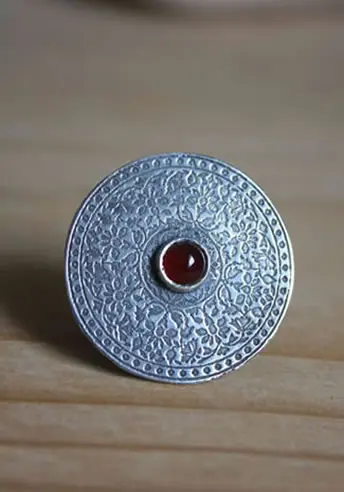
In Arab tradition, carnelian was believed to have the power to stop bleeding, thereby reinforcing its association with vitality and the preservation of life.
Medieval alchemists regarded carnelian as a "hot stone," believing in its ability to activate the properties of other stones. They considered it a catalyst for mineral energies and a powerful tool in the transmutation of metals.
Today, Buddhists in China, India, and Tibet continue to revere carnelian for its protective powers. They uphold the Egyptian tradition by associating it with turquoise and lapis lazuli, a practice aimed at amplifying its beneficial properties. In Tibetan Buddhism, carnelian is often used in the creation of malas (prayer beads), as it is considered an emotional stabilizer that helps calm the mind and enhance concentration during meditation.
Main deposits: Saudi Arabia, Australia, Brazil, India, Uruguay and the United States.
Healing properties and benefits of carnelian
Throughout the long history of humanity, carnelian has been attributed a wide range of properties, virtues, and healing beliefs. The information presented here is shared from a cultural and historical perspective, aiming to illustrate the symbolic relationship that has developed between this stone and various civilizations over the centuries. Like the elements discussed previously, these references are part of a scientific and historical approach. They do not constitute medical or therapeutic advice and do not reflect our own beliefs.
- Considered in many traditions as an ally of health, this stone has been associated with the purification of both the blood and the kidneys, promoting better circulation and the proper functioning of the excretory organs. Carnelian is also reputed to support the production of red blood cells, helping to revitalize the body and strengthen overall vitality.
- This gemstone is also credited with the ability to release energetic blockages and to ease pain linked to various conditions such as fever, neuralgia, nosebleeds, infections, and muscle pain. Its presence is traditionally said to soothe physical discomfort, offering relief during times of distress. Through its action on the so-called etheric body, carnelian is believed to help restore energetic circulation and maintain balance between the different subtle bodies.
- Carnelian is often closely associated with sexuality and vitality. It is said to nourish passion and encourage fertility. In some traditions, it is also reputed to help overcome difficulties related to impotence or frigidity, offering support to couples seeking to deepen their intimacy. By enhancing creative energy, it is likewise used to balance desire and harmonize relationships.
- Its scarlet color has long evoked menstruation, and it has been traditionally credited with the ability to ease menstrual pain, providing comfort during the feminine cycle. Carnelian is often mentioned as a stone used to help regulate menstrual cycles and alleviate premenstrual symptoms, contributing to a more harmonious experience of femininity.
- Carnelian is also associated with regenerative effects on bodily tissues. It is traditionally said to relieve muscle spasms, accelerate wound healing, and support conditions such as arthritis and rheumatism. In lithotherapy, it is frequently used to energize recovery processes following surgery or physical trauma.
- It is further described as beneficial in relation to liver and pancreatic disorders, supporting detoxification and the proper functioning of these organs. Carnelian has often been employed in purification rituals intended to support liver function and encourage the elimination of toxins from the body.
- On a metabolic level, carnelian is said in traditional accounts to play a role in helping reduce elevated cholesterol and triglyceride levels, thereby contributing to a balanced lipid profile. By supporting metabolic harmony, it is also associated with weight management and the stabilization of energy levels.
- In addition, it is reputed to offer benefits for digestion, easing abdominal discomfort and supporting a balanced digestive system. Its calming association with the solar plexus is believed to help release emotional tensions that often manifest as digestive disturbances.
- Carnelian is also described as having a positive influence on uric acid levels, helping to prevent conditions such as gout. Through its purifying symbolism, it is considered useful for individuals prone to the accumulation of purine-related toxins traditionally associated with this condition.
- Beyond its associations with physical well-being, carnelian is widely celebrated as a stone of creativity. By stimulating imagination and encouraging artistic expression, it is said to inspire innovation and support the development of new ideas and projects. Artists, writers, and creators have often turned to carnelian to overcome creative blocks and open new perspectives.
- Carnelian is also known for its influence on self-confidence. By helping to overcome shyness and fear, it is associated with greater assertiveness and personal expression. Linked to courage and motivation, it supports bold decision-making and the ability to bring ambitions into reality.



 Please note that all healing properties attributed to stones come from ancient traditions and various cultural sources. This information is provided for informational purposes only and does not constitute medical advice. In case of any health concerns, it is recommended to consult a qualified professional.
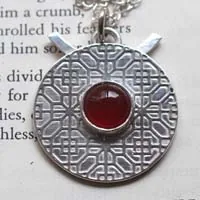
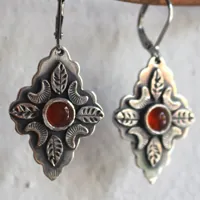
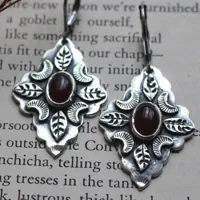
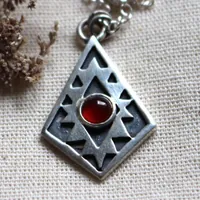
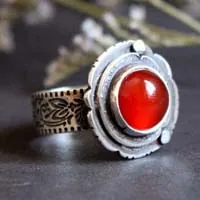
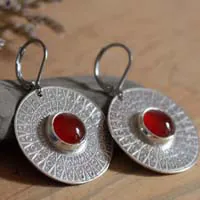
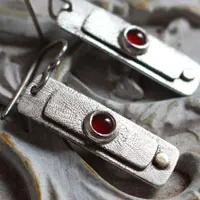
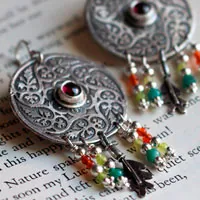
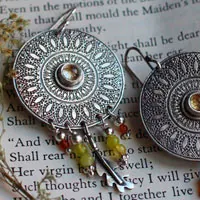
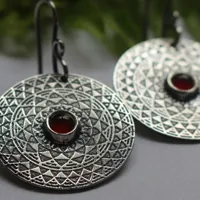
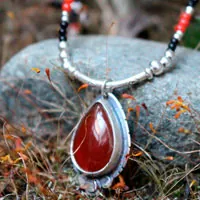
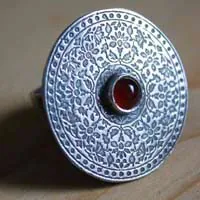
Carnelian jewelry samples
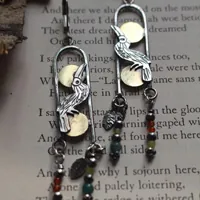
147.00 €
(≈ 167.58 USD)
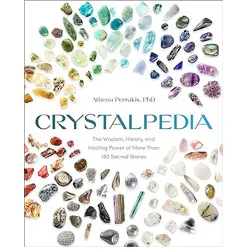
To learn more about litotherapy, we recommend you the following books:


OUR SERVICES
Customer reviews
Custom order
FAQ
Free shipping
Terms and conditions