







Diopside: history, healing properties and lithotherapy
Diopside properties
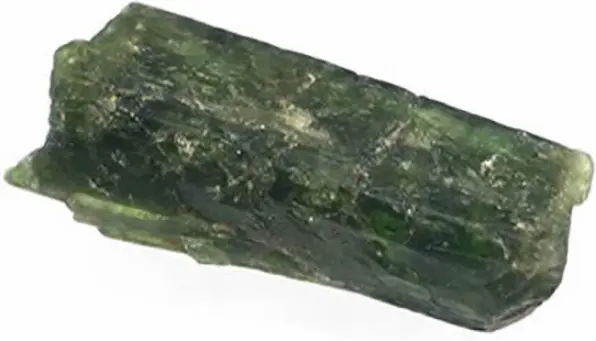
Diopside, a mineral from the pyroxene group, belongs to the group of calcium and magnesium silicates. It is particularly known for its prismatic crystals, which can reach impressive sizes, sometimes up to 50 cm in length, a rare feat in the mineral world. This mineral forms under metamorphic conditions or in magmatic environments, often associated with ultramafic rocks, such as peridotites, or calcium-rich metamorphic rocks. It is also found in meteorites, enhancing its interest in the scientific field.
Its name derives from the Greek "Di," meaning "two," and "Opsis," meaning "vision," referring to the way its crystal faces appear in two directions.
Diopside is available in a wide range of colors: light green to black for the most common specimens, but also yellow, blue, gray, purple, white, and occasionally colorless. These colors reflect the chemical elements present in its structure, such as chromium for green varieties and iron for darker hues. The stone’s vitreous luster, coupled with its variable transparency, makes diopside an attractive gem, used both in jewelry and mineral collections.
The visual complexity of diopside and the diversity of its varieties have given rise to a multitude of names over time. Some of these names are linked to specific localities or subtle chemical distinctions between specimens: Acantoide, Alalite (a name associated with a variety extracted from the Alal region in Italy), Coccolith, Dekalbite, Fassaite (though sometimes confused, this refers to another variety of pyroxene rich in aluminum), Kokkolith, Leucaugite, Maclurite, Malacolite, Mussite, Prothéite, Pyrgome, White Pyroxene, Granular Pyroxene, Greenish-gray Pyroxene, and Sahlite. These synonyms and regional names highlight the geological and historical significance of diopside across the world.
The hardness of diopside ranges from 5.5 to 6.5 on the Mohs scale, placing it in the medium hardness category. Although not as fragile as some other stones, this level of hardness makes it sensitive to scratches and impacts, especially when exposed to daily wear or handled in less protected conditions. For this reason, it is recommended to use diopside in less exposed jewelry pieces, such as pendants or earrings, where it is less likely to experience frequent friction or impacts.
Varieties of diopside
- Baikalite: A dark variety often extracted near Lake Baikal in Siberia.
- Chrome Diopside (or Chromiferous Diopside): With its vibrant green color, this variety is the most widespread and sought after in jewelry. The chrome, responsible for its intense green hue, evokes the visual richness of emerald, making it a popular gemstone in jewelry.
- Tashmarin: A unique variety extracted in China, where the green color is softer due to a lower concentration of chrome.
- Lavrovite: A very rare apple-green variety, known for its exceptional brightness.
- Violane: Ranging from pale blue to violet, this variety is exclusive to Italy, particularly in the Val d'Ala region, giving it a special aura as a local stone.
- Black Star Diopside: Although often mistaken for Black Star Sapphire, this variety features inclusions that create an asterism effect, with a four- or six-rayed star visible under light.
- Fedorovite
- Schefferite
- Traversellite
Some varieties of diopside, notably the Black Star Diopside, are valued for their rare inclusions, which create fascinating visual effects. Asterism, primarily observed in black diopsides, is caused by rutile inclusions, which align light to form a star. This rare and sought-after phenomenon is reminiscent of star sapphires, but at a more affordable price, making it a popular alternative in jewelry. Interestingly, this variety is often mistakenly called Indian Black Star Sapphire.
Chrome diopside, in particular, is gaining popularity in the jewelry world due to its striking resemblance to emerald. As its extraction expands, this once gemstone has gradually acquired the status of a precious gem, especially for its optical qualities and more accessible price point. Violane, with its distinctive violet hue, also attracts the attention of collectors and jewelers, despite its rarity in the market.
Stories, beliefs and legends about diopside
Diopside was officially described for the first time in 1800 by Brazilian geologist and naturalist José Bonifacio de Andrada e Silva, renowned for his numerous contributions to mineralogy. The discovery and description of diopside marked a turning point in mineralogical exploration, as this previously unknown stone began to attract the attention of collectors and scientists due to its complex crystalline structure and fascinating optical properties.
Although its discovery dates back over two centuries, chrome diopside, one of the most prized varieties, did not truly enter the jewelry market until later, especially after the opening of Russian borders following the end of the Cold War in 1989. Before that period, this stone was little used in jewelry outside geological and academic circles. With the collapse of the Soviet bloc and the fall of the Berlin Wall, Russia, which holds some of the most significant deposits, began to distribute this stone, positioning it as an affordable alternative to more expensive green stones like emerald, tsavorite, peridot, or green tourmaline.
One of the reasons for its growing popularity is the depth of its green color, which is especially vibrant in smaller sizes. However, larger specimens can become darker, losing some of their brilliance, which limits their use in jewelry to sizes under 2 carats. Gem cutters often employ specific cutting techniques to maximize the brilliance of diopside, playing on light dispersion and reflection angles.
The first significant deposits of chrome diopside were discovered in Siberia, in the Yakutia region, known for its extreme climatic conditions. These deposits are difficult to access, making diopside extraction costly and challenging. Extraction usually takes place during the summer months when the ground is not frozen. Other deposits have been found in Pakistan, notably in the Gilgit-Baltistan region, and more recently in Madagascar, where green diopside presents a slightly different hue, often softer.
Despite being relatively recent in the world of mineralogy, diopside has quickly inspired legends. However, many of these stories seem apocryphal, if not entirely invented for commercial purposes during the 1980s and 1990s when the stone gained popularity. It is conceivable that diopside may have been known and used in the past, perhaps under another name now forgotten. Additionally, no reliable sources confirm these legends, which are often repeated without specifying their cultural or geographical origin.
One of the most widespread beliefs is that green diopside is a stone of peace and tranquility, an idea stemming from its association with the color green, symbolizing regeneration and balance in many cultures. This belief is reinforced by the idea that diopside was used to promote peaceful dreams. Placing a piece of diopside on the forehead before sleeping was said to help connect with higher spiritual realms, bringing clear visions and deep inner serenity.
The legend of the tree of life links diopside to notions of rebirth and continuity. The idea that this stone should accompany the deceased in their tombs to ensure the cycle of life is a powerful metaphor resonating with ancient beliefs about nature’s regeneration and the perpetuity of the soul. This association may be explained by the natural formation of diopside deep within the Earth, giving the impression that it was a "fruit" of the underworld’s roots.
Main deposits: it is quite common in the Earth’s crust, Germany, Austria, Finland, India, Italy, Madagascar, South Africa, Sri Lanka, United States, Russia, Myanmar.
Healing properties and benefits of diopside
Throughout the long history of humanity, various cultures have attributed to diopside a wide range of properties, virtues, and interpretations of a healing nature. The elements presented here are part of a cultural, historical, and descriptive approach, whose purpose is to illustrate the symbolic relationship that has been built between this stone and human societies over the centuries. As with the materials mentioned previously, this information does not in any way constitute a therapeutic or medical recommendation, nor does it reflect our beliefs, but rather bears witness to traditions, observations, and ancient knowledge.
- Diopside is traditionally associated with the vitality of the blood and, more specifically, with red blood cells. In some approaches, it is mentioned as a stone linked to circulation and to improved oxygenation of the tissues. This symbolism has led to its association with physical endurance, support during states of fatigue, and accompaniment during periods of recovery following exertion or convalescence.
- This mineral is also mentioned in certain traditions for its connection with the immune system. It is sometimes associated with the balance of white blood cells and with the body’s natural ability to defend itself against external aggressions. This symbolic dimension has made it a stone often evoked to accompany individuals prone to recurrent infections or to a decrease in general resistance.
- In ancient accounts and in some contemporary practices, diopside is cited in relation to coagulation disorders. In this context, it is perceived as a mineral that promotes a more harmonious blood balance, especially in cases of heavy bleeding or capillary fragility. This association has led to it being mentioned as a symbolic support for healing processes and for limiting the appearance of bruising, within a symbolic reading of the body and its natural mechanisms.
- Diopside is also evoked for its connection with growth and development, particularly during childhood. Some traditions associate it with the strengthening of teeth and oral health, integrating it into a symbolism of solidity and structural formation. In this way, this stone is sometimes mentioned as accompanying the stages of growth and the formation of the body.
- With regard to the organs of elimination, diopside is traditionally associated with the kidneys. It is evoked as a symbolic support for filtration and elimination functions, contributing to the balance of bodily fluids. This dimension has led to it being mentioned in contexts related to purification and the maintenance of harmonious kidney function.
- In certain ancient approaches, diopside is linked to the endocrine system and hormonal balance. It is thus associated with the regulation of cycles and the accompaniment of transitional periods, such as menopause or hormonal imbalances. This stone is sometimes mentioned for its symbolic capacity to promote emotional soothing and greater inner stability during these sensitive phases.
- Diopside is also mentioned in relation to bone structure. Traditionally, it is associated with recalcification and the strengthening of the skeleton, which has led to its evocation as a companion after fractures or in the prevention of bone fragility linked to the passage of time. This symbolism of solidity makes it a stone frequently cited in contexts of long-term bodily support.
- Finally, on the muscular level, diopside is often associated with the relief of cramps and spasms. It is evoked as a stone that promotes muscle relaxation and improved circulation within tissues, thereby helping to enhance mobility and reduce physical tension. This dimension is part of a broader vision in which diopside accompanies the harmony between the nervous system, muscles, and movement.



 Please note that all healing properties attributed to stones come from ancient traditions and various cultural sources. This information is provided for informational purposes only and does not constitute medical advice. In case of any health concerns, it is recommended to consult a qualified professional.
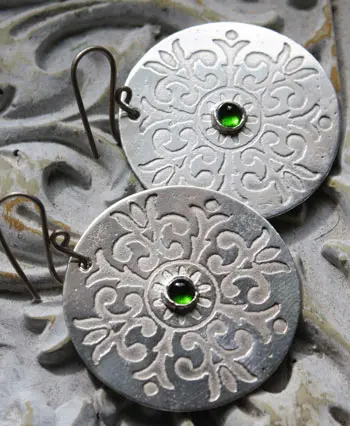
Diopside jewelry samples
To learn more about litotherapy, we recommend you the following books:


OUR SERVICES
Customer reviews
Custom order
FAQ
Free shipping
Terms and conditions