







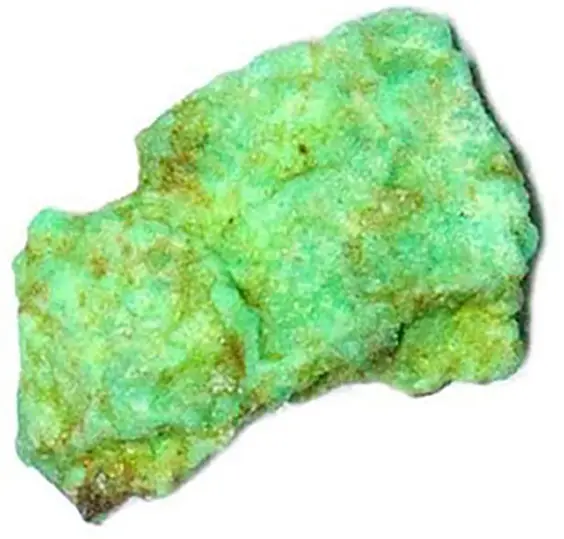
Gaspeite: history, healing properties and lithotherapy
Gaspeite properties

Gaspeite, named after the Gaspé Peninsula in Canada, where it was discovered in 1966 by mineralogists Kohls and Rodda, is a rare treasure of the mineral kingdom.
This unique mineral, part of the calcite group, is nickel carbonate (NiCO₃), sometimes containing iron or magnesium, giving the stone its distinctive green color. Once considered a negligible byproduct of nickel extraction, gaspeite has since been recognized for its distinctive appearance and rarity. Its shades, ranging from earthy green and brown tones to pale green and bright apple green, accented with brownish veins, make it a captivating stone with a diverse color palette.
The nickel in gaspeite’s chemical structure not only colors the stone but also influences some of its metaphysical properties. This mineral belongs to the trigonal crystal system, which gives a characteristic symmetry to the mineral, though it rarely forms well-defined crystals. However, gaspeite is most commonly found in compact masses.
With a hardness of 4.5 to 5 on the Mohs scale, it is a relatively soft stone, requiring care when used in jewelry or decorative objects. Under certain conditions, it also exhibits fluorescence under ultraviolet light, though this glow is not always visible.
Although first discovered on the Gaspé Peninsula, gaspeite is now primarily mined in nickel deposits in Australia, adding to its rarity and appeal for collectors. This status as a rare gemstone, combined with its limited geographic origins, makes it a highly sought-after specimen in the mineral world.
Stories, legends and beliefs about gaspeite
Although gaspeite stands out among gemstones due to its relatively recent discovery, it holds a unique connection to the beliefs of Indigenous Australian peoples. First discovered in 1966 on the Gaspé Peninsula in Canada, it is now primarily mined in Australia, where it has gained spiritual significance within certain Aboriginal communities.
For Aboriginal peoples of Australia, gaspeite symbolized a link between the earth and spiritual healing. Considered a medicinal stone, it was used as a tool to detect sources of illness, both physical and spiritual, and to ward off negative energies that could impact health. Gaspeite was often worn as a talisman to attract luck, well-being, and prosperity, strengthening the bond with nature and ancestral spirits.
In Aboriginal culture, there is a strong belief in the power of earth spirits, and gaspeite, with its green color reminiscent of Australian vegetation and natural landscapes, was seen as a link with these spirits. It is believed to have been used in purification rituals to drive away malevolent forces and promote harmony.
Main deposits: South Africa, Germany, Australia, Bosnia and Herzegovina, Canada, Greece, Italy, Zimbabwe, Mexico
Healing properties and benefits of gaspeite
Throughout history, gaspeite has been attributed various properties, virtues and curative interpretations to this stone. The information presented here is offered within a cultural and historical perspective, aiming to illustrate the symbolic relationship that has gradually developed between this stone and certain well-being traditions. As with the previous elements, these interpretations belong to a descriptive and interpretative approach and do not constitute, under any circumstances, a therapeutic or medical recommendation, nor the expression of personal beliefs.
- Gaspeite is traditionally associated with support for the heart, the gallbladder and the lungs. In some interpretations, it is described as a stone that may accompany the balance of the cardiorespiratory system, encouraging better physical endurance and a more harmonious circulation. These associations reflect a holistic vision of the connection between breathing, vitality and bodily energy.
- Thanks to its reputed calming qualities, gaspeite is also mentioned in certain traditions as an accompaniment for digestive discomfort. It is then associated with the easing of gastrointestinal disturbances, nausea or sensations of heaviness, and with the pursuit of a more fluid and balanced digestive function.
- Within the framework of lithotherapy, gaspeite is sometimes linked to metabolism. It is described as a stone that may accompany the regulation of appetite and the maintenance of a harmonious metabolism, particularly within a broader approach focused on weight balance and a more conscious relationship with food.
- Gaspeite is also mentioned in some traditions for its connection with blood sugar regulation. It is then associated, in an interpretative sense, with support for the endocrine system and the search for stability in functions related to sugar and energy, especially in contexts of metabolic vulnerability.
- On an emotional level, gaspeite is often described as a grounding stone. Its green hue connects it to the earth, stability and rootedness. It is associated with a sense of inner security and improved emotional regulation, encouraging openness of the heart, kindness and the strengthening of emotional bonds.
- It is also referred to as a stone of emotional release. In certain interpretations, gaspeite accompanies work on resentment, anger or past emotional wounds, supporting a process of letting go and inner reconciliation. This symbolic dimension is linked to the pursuit of lasting calm and emotional well-being.
- Finally, within lithotherapy traditions, gaspeite is sometimes associated with luck, prosperity and abundance. Used in meditation or as an intention stone, it is described as accompanying an openness to abundance in its various forms, whether material, relational or inner, and as reinforcing feelings of gratitude and personal fulfillment.



 Please note that all healing properties attributed to stones come from ancient traditions and various cultural sources. This information is provided for informational purposes only and does not constitute medical advice. In case of any health concerns, it is recommended to consult a qualified professional.
Gaspeite jewelry samples
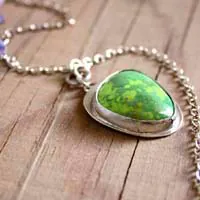
Sold
To learn more about litotherapy, we recommend you the following books:


OUR SERVICES
Customer reviews
Custom order
FAQ
Free shipping
Terms and conditions