







Howlite: history, healing properties and lithotherapy
Howlite properties
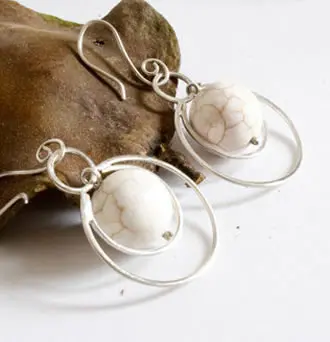
Howlite, often mistaken for turquoise because of its visual similarity, is a fascinating gemstone.
Discovered by Canadian chemist Henry How in 1868 in Nova Scotia, it is also known as white turquoise, khaulite, silicoborocalcite, winkworthite, or turquenite.
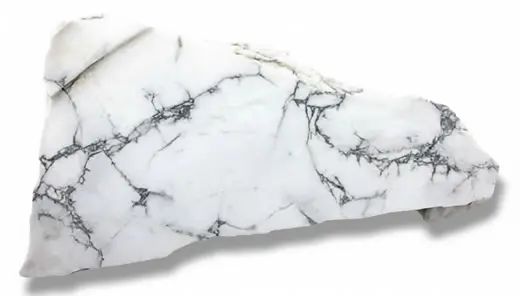
This calcium borosilicate hydroxide is distinguished by its gray or white hue, with a delicate porcelain-like appearance and dark or black veins that trace its porous and relatively soft surface.
Belonging to the borate family, howlite has a hardness of 3.5 on the Mohs scale, making it relatively soft but pleasant to the touch, thanks to its silky texture. It often forms in compact nodules, while its crystals are rarely well-defined, a distinctive trait that adds to its charm.
The random dark or gray veins in howlite give it a sought-after marbled appearance in jewelry. Its natural porosity also makes it ideal for absorbing dyes, allowing artisans to transform it into a variety of vibrant colors. As such, it is commonly found in hues that imitate precious stones, such as turquoise (dyed blue), coral (dyed red), or lapis lazuli. These qualities make it a popular and affordable alternative to rare stones while maintaining its gentle, elegant structure.
Chemically, howlite is composed primarily of calcium, oxygen, boron, silicon, and hydrogen. This composition accounts for its natural white color and slightly satin, pearly luster, which subtly captures light and enhances its aesthetic appeal.
History, legends and beliefs about howlite
Discovered in 1868, howlite is a relatively recent stone in the field of mineralogy and therefore lacks a long history of use in ancient civilizations. However, it quickly captured attention due to its resemblance to precious stones and its spiritual symbolism.
Among Native Americans, it was known as the "sacred bison stone" or "white buffalo stone." Its white color and dark veins resemble the white buffalo, a rare and sacred animal to these peoples, symbolizing peace, wisdom, and fertility. Encountering a white buffalo was seen as a sign of blessing and divine protection, and Native Americans regarded howlite as a stone capable of conveying this sacred connection to nature and spiritual forces.
Although few specific legends are directly associated with howlite, its connection to the white buffalo makes it a symbol of purity and spiritual power. In Native American culture, it served as a grounding tool for prayer and for connecting with the protective energies of nature—a role that still gives it a privileged place in modern spiritual and esoteric practices.
Main deposits: Canada, the United States, Turkey, Germany, Mexico, Russia.
Healing properties and benefits of howlite
Throughout the long history of humanity, various cultures have attributed to howlite a range of properties, virtues, and interpretations of a curative nature. The elements presented here are part of a cultural and historical approach, aiming to highlight the symbolic relationship that has gradually developed between this stone and human societies. As with other stones, these interpretations stem from a descriptive and interpretative perspective, grounded in traditional uses and ancient representations. They do not constitute any therapeutic or medical recommendation, nor do they reflect personal beliefs.
- Howlite is often mentioned for its association with mental calmness. In certain traditions, it is linked to the reduction of stress and anxiety, encouraging a state of inner tranquility. This reading has made it a stone frequently evoked to accompany periods of nervousness, irritability, or emotional fluctuations. It is also associated with patience and more measured communication, contributing to the easing of relational tensions.
- Owing to its reputation for calming qualities, howlite is sometimes connected with the support of memory and concentration. It is mentioned in some contexts as a stone that may accompany phases of learning or reflection, helping to clarify the mind and to soothe intrusive thoughts. This association reflects a broader search for mental clarity and improved organization of ideas.
- In other traditional interpretations, howlite is evoked for its connection with the relief of bodily tension. It is sometimes associated with the easing of muscular discomfort, cramps, or stress-related tension. Applied to certain areas of the body, it forms part of a holistic approach aimed at encouraging physical relaxation, complementing its calming dimension on the mental level.
- Howlite is also associated, in some traditions, with the balance of calcium. From this perspective, it is linked to the support of bone and dental health. This interpretation connects the stone to ideas of solidity, structure, and bodily stability, while also evoking the soothing of discomfort that may affect these areas.
- Placing howlite under a pillow or near the bed is an old practice mentioned in certain popular traditions. It is associated with an improvement in the quality of sleep, particularly when falling asleep is disturbed by restless thoughts or everyday concerns. In this context, the stone is evoked as an accompaniment to deeper and more restorative sleep, within a broader search for mental and emotional rest.
- On a symbolic level, howlite is sometimes associated with the elevation of consciousness and the development of intuition. Used in meditative practices, it is mentioned as a stone that encourages introspection, inner listening, and a calmer connection with natural rhythms. This dimension fits within a contemplative approach, oriented toward the search for inner harmony and spiritual clarity, without any explicit esoteric claims.
- Finally, some cultural interpretations associate howlite with moderation and self-mastery. It is occasionally evoked as a stone that accompanies processes of recentring, temperance, and personal discipline, particularly during periods of change or self-reflection. This symbolism completes its image as a gentle stone, oriented toward the overall balance of body and mind.



 Please note that all healing properties attributed to stones come from ancient traditions and various cultural sources. This information is provided for informational purposes only and does not constitute medical advice. In case of any health concerns, it is recommended to consult a qualified professional.
Howlite jewelry samples
Sold
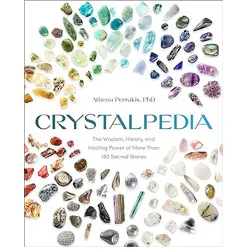
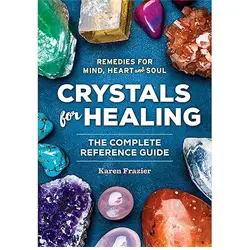
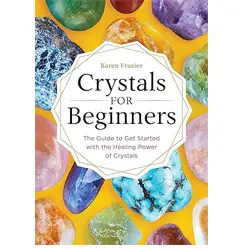
To learn more about litotherapy, we recommend you the following books:
OUR SERVICES
Customer reviews
Custom order
FAQ
Free shipping
Terms and conditions