







Malachite: history, healing properties and lithotherapy
Malachite properties
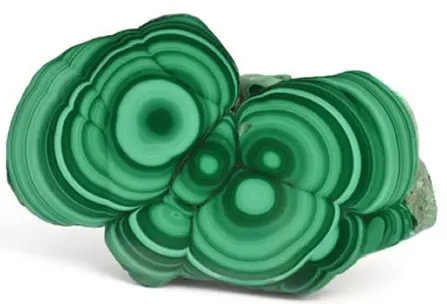
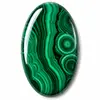
Malachite is a mineral belonging to the carbonate class, primarily composed of basic copper carbonate with the chemical formula Cu₂CO₃(OH)₂. Its vibrant green color is attributed to the presence of copper, a key element that also contributes to the formation of its unique patterns, such as concentric circles or bands. These designs often resemble tree rings or eyes, adding to its visual appeal.
This mineral forms mainly in the oxidation zones of copper deposits, often accompanied by other minerals such as azurite, chrysocolla, and turquoise. Although malachite crystals are rare, they can take prismatic or acicular shapes, but it is more commonly found in massive, botryoidal, or stalactitic forms.
Malachite is a soft stone, with a hardness of 3.5 to 4 on the Mohs scale, making it a delicate material requiring careful handling. It is also sensitive to acidity, which can cause degradation upon contact with corrosive substances. For this reason, it is often protected through treatments or finishes when used in jewelry or decorative objects.
Although first mentioned by Pliny the Elder in 77 AD, malachite was known well before that, testifying to its ancient origins and long-standing use.
The origin of malachite’s name continues to intrigue historians and linguists. While the Greek word "malakos" (soft) reflects its texture and malleability, the hypothesis linking its name to "mallow," a plant with green leaves, enriches its natural symbolism. This dual etymology highlights both its artisanal qualities and its connection to the vegetal world, reinforcing its symbolic link to nature.
In addition to its primary name, malachite is known by a variety of other names, including green chrysocolla, green carbonate of copper, silky copper, green copper flower, green copper oxide, verdigris, ferruginous green copper, and mountain green.
The most famous malachite deposits are located in the Ural Mountains of Russia, the Democratic Republic of Congo (notably in Kolwezi), Namibia, Australia, and Arizona (USA). The Ural deposits, in particular, produced gigantic blocks that left a significant mark on history, such as a 260-ton block. These blocks were often used to create large-scale art and decorative objects, illustrating the opulence of imperial eras.
In Saint Petersburg, an impressive piece of malachite measuring 89 cm in length and nearly 50 cm in width stands as a testament to the majesty of this stone. In 1835, Russian miners from the Urals unearthed an exceptional quality malachite block weighing over 260 tons. Their tireless work over nine years to extract this enormous block, followed by an additional 12 years to bring it to the surface, underscores the value and challenges associated with mining this gem.
Malachite has always been a preferred material in both decoration and jewelry. It adorns tables, boxes, countertops, and columns, adding a touch of sophistication to any environment. Architectural masterpieces like the Hermitage Museum in Saint Petersburg showcase this stone in spectacular ways. The malachite columns in the Throne Room are a dazzling demonstration of Russian imperial opulence. These carefully polished columns reflect radiant light, highlighting the grandeur of the space.
At the Palace of Versailles, malachite is featured in decorative objects, including imposing vases and ornate clocks, underscoring its role in the luxury of European courts. The Vatican also houses malachite objects, such as altars and decorative elements that enrich the artistic and religious heritage of the Renaissance.
The FIFA World Cup trophy, adorned with two pieces of malachite at its base, represents a contemporary use of this stone, combining its natural beauty with symbols of glory and universality.
Malachite powder, used in certain cosmetic products, is valued for its antioxidant properties for skin cells and its detoxifying power, offering a natural glow and revitalized skin.
In Europe, malachite was highly valued as early as Ancient Rome, not only for its beauty but also for its supposed protective properties against evil spirits. During the Middle Ages, it was also used as a green pigment in paintings, although its sensitivity to moisture limited its durability.
Stories, legends and beliefs about malachite
Malachite, one of the oldest gemstones, has been used for millennia in ornaments. A malachite disk unearthed in Iraq’s Shanidar Valley dates back to the Neanderthal culture, nearly 10,500 years ago, revealing the long history of this fascinating stone.
Malachite beads discovered in the ancient city of Jericho in Israel are approximately 9,000 years old, attesting to its early use in adornments.
In antiquity, malachite was also used as a mineral pigment to create vibrant blue-green hues. However, this mineral-based paint, though striking initially, tends to fade and change color over time.
Malachite was a symbol of power and prestige in ancient civilizations. It was inlaid in the pectorals of Assyrian governors and adorned the scepters of priests, embodying wealth and authority.
The Egyptians were among the first to intensively mine malachite, as early as 4000 BCE. They regarded the stone as a symbol of joy, closely associating it with their goddess Hathor, the protector of miners and the deity of love, music, and motherhood.
The Phoenicians carried malachite amulets during their sea voyages, firmly believing in its ability to shield them from the perils of the ocean.
In ancient Greece and Rome, malachite was highly prized and used to create luxurious jewelry, refined ornaments, and even eye makeup. It was also used in powdered form as a medicinal remedy, believed to have healing properties for various ailments.
Greek generals considered malachite a talisman, guiding their strategic decisions on the battlefield.
In architecture, malachite left its mark as well. The Temple of Artemis at Ephesus, one of the Seven Wonders of the Ancient World, was said to have been decorated with malachite, reflecting the wealth and grandeur of the structure.
During the Middle Ages, malachite was believed to protect against misfortune and illness. It was used to ward off the evil eye, protect children from nightmares, and relieve stomach aches. In some Alpine regions such as Savoy and Switzerland, malachite crosses were given as talismans to pregnant women and mothers.
In Christianity, malachite is mentioned in some translations of the New Testament as the eighth cornerstone of the New Jerusalem, symbolizing stability and spiritual protection. It is also associated with Saint Francis of Assisi, who was believed to possess the ability to understand the language of animals through this stone, thus strengthening his spiritual connection with nature and God’s creatures.
Malachite played a remarkable role at the court of the Russian tsars, especially in the lavish decoration of their palaces. Initially used as a simple button for clothing, its use quickly expanded thanks to the technique of mosaic. This method allowed Russian artisans to cover vast surfaces with thin slices of malachite, creating unique and spectacular patterns.
Under the First French Empire, Napoleon Bonaparte possessed a remarkable collection of malachite objects, gifted by the Russian tsars after the Treaty of Tilsit. This collection, which included a table, chandeliers, and a bowl, symbolized the diplomatic ties between the two empires and the importance of this stone as a prestigious gift.
Main deposits: Namibia, Russia, Hungary, Chile, Australia, Brazil, France, Mexico, Colombia, the United States and the Republic of Congo.
Healing properties and benefits of malachite
Throughout the long history of humankind, different societies have attributed to malachite a variety of properties, virtues, and uses of a curative or symbolic nature. The elements presented here follow a cultural and historical approach, intended to illustrate the symbolic relationship that has gradually developed between this stone and human civilizations over the centuries. As with the previous examples, these interpretations belong to a descriptive, scientific, and historical perspective. They do not constitute medical or therapeutic advice in any way and do not reflect our personal beliefs.
- In certain ancient traditions, malachite is associated with the proper functioning of the digestive system. It is sometimes mentioned in historical accounts as a stone linked to digestive disorders, intestinal infections, or the regulation of sugar metabolism, contributing to digestive balance and harmony.
- Malachite is also evoked in several cultures as a stone associated with the respiratory system. It appears in traditional practices intended to support breathing and to strengthen resistance against pulmonary conditions or imbalances affecting the airways.
- Some traditions attribute to malachite a connection with the endocrine glands, particularly the thyroid and the thymus. In this context, malachite is described as a stone contributing to the overall balance of these centers, considered essential to the proper functioning of the body.
- In traditional uses, malachite is sometimes associated with the soothing of sleep disorders. It is mentioned as encouraging more peaceful falling asleep and a rest perceived as more restorative, in connection with a broader search for physical and mental calm.
- Malachite is also cited in ancient traditions as a stone linked to the bladder and the pancreas. These symbolic associations refer to the idea of supporting the proper functioning of internal organs and the balance of bodily fluids.
- In certain historical accounts, malachite is reputed for its connection with eye health. It is mentioned as accompanying the prevention or relief of certain ocular disorders, particularly in civilizations where the stone was ground and used in the form of pigments or ointments.
- The notion of regeneration is frequently associated with malachite in ancient traditions. It is then described as a stone symbolizing tissue renewal, healing, and the body’s capacity to recover after injuries or trauma.
- In several cultures, malachite is associated with the female cycle. It is traditionally mentioned as accompanying the regulation of menstrual cycles and the relief of pain or cramps, which has sometimes led to it being described as a stone linked to femininity and the natural rhythms of the body.
- Malachite is also cited in folk traditions for its association with joint pain, particularly that related to osteoarthritis. It is often linked to the spine and the joints, due to its symbolism of support and solidity.
- Some traditional sources evoke the use of malachite in the context of chronic respiratory disorders, such as asthma. It is then perceived as an accompaniment intended to facilitate breathing and reduce sensations of tightness or oppression.
- In more recent interpretations, malachite is sometimes associated with the balance of the cardiovascular system. It is cited in traditions aiming to support the regulation of blood pressure and blood circulation.
- Malachite also appears in certain historical accounts as a stone used in the accompaniment of neurological disorders, including epilepsy. These uses stem from ancient beliefs and testify to the important place the stone once held in traditional healing practices.
- In the context of travel and movement, malachite is traditionally associated with protection against discomforts such as vertigo or nausea. It is sometimes described as a traveler’s protective stone, used to accompany journeys.
- In the field of cosmetics, malachite is now incorporated into certain skincare products for its mineral richness and copper content. It is valued for its antioxidant properties and is associated with beauty rituals aimed at revitalizing the skin, supporting its regeneration, and preserving its natural radiance.
- On a symbolic level, malachite is often described as a protective stone. In many cultures, it is associated with the neutralization of influences considered negative and with the strengthening of positive energies, serving as a talisman or amulet.
- Malachite is also perceived as a stone of transformation. It is traditionally associated with periods of change, helping to overcome fears, inner resistance, and emotional blockages, while encouraging openness of the heart and acceptance of life’s transformations.
- In certain traditions, malachite is mentioned for its role in emotional balance. It is associated with the harmonization of feelings, the awakening of compassion, and the development of a more universal and soothing form of love.
- In meditation or introspective practices, malachite is sometimes used as a support for reflection. Its natural patterns, evoking forests, lush landscapes, or organic movements, are associated with the exploration of buried memories, the understanding of emotional wounds, and a reconnection with nature.
- Finally, malachite is often described as a stone with a calming influence on the mind. It is associated with the reduction of stress and anxiety and is sometimes mentioned as a support for creativity and imagination, encouraging a gradual release from intrusive or overwhelming thoughts.
- As malachite is a stone rich in copper, some of its traditional uses and interpretations can be related to those attributed to this mineral. It is therefore possible to consult the cultural and historical virtues associated with copper in order to better understand the symbolism linked to malachite.



 Please note that all healing properties attributed to stones come from ancient traditions and various cultural sources. This information is provided for informational purposes only and does not constitute medical advice. In case of any health concerns, it is recommended to consult a qualified professional.
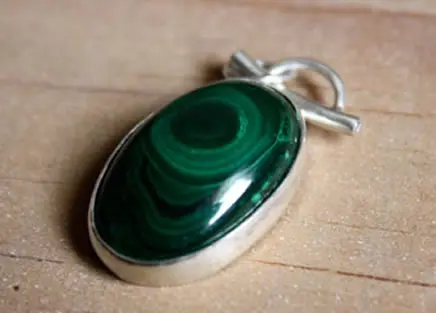
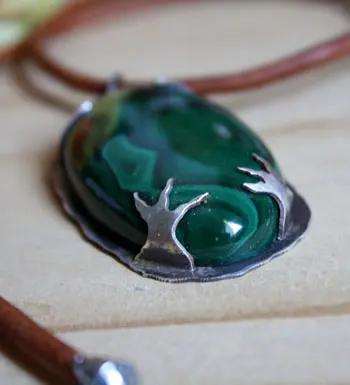
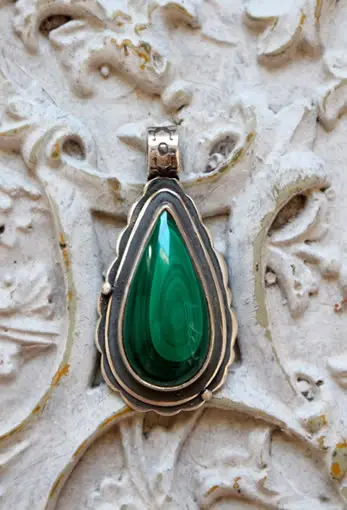
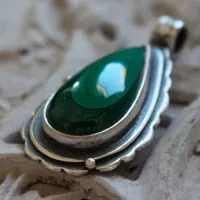
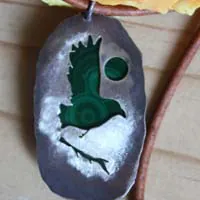
Malachite jewelry samples

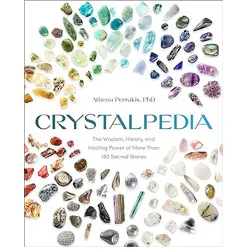
To learn more about litotherapy, we recommend you the following books:


OUR SERVICES
Customer reviews
Custom order
FAQ
Free shipping
Terms and conditions