







Smithsonite: history, healing properties and lithotherapy
Smithsonite properties

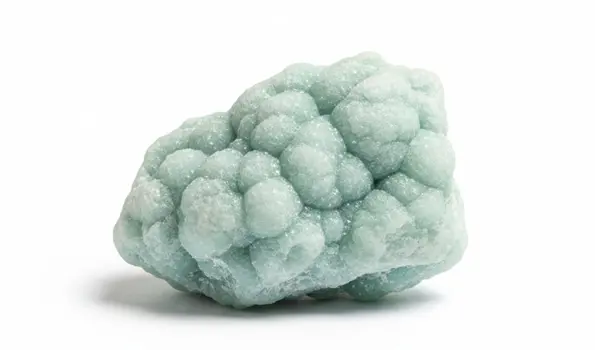
Smithsonite is a rare and valuable mineral belonging to the carbonate group. It was identified and named in 1832 by François Sulpice Beudant, who distinguished it from other zinc minerals. Its name was given in honor of James Smithson, a British scientist and philanthropist known for founding the Smithsonian Institution in Washington, D.C. He is also recognized for demonstrating the distinction between smithsonite and hemimorphite, another zinc-containing mineral with which it had long been confused.
Also known as bonamite, calamine, or zinc carbonate, smithsonite is a zinc carbonate mineral with the chemical formula ZnCO₃. It is an important secondary ore in zinc mining, forming primarily in the oxidation zone of zinc deposits. It results from the alteration of other zinc-rich minerals, particularly sphalerite, through the action of groundwater containing dissolved carbon dioxide.
Crystallographically, smithsonite belongs to the rhombohedral system and exhibits a trigonal-symmetric structure. However, it is most commonly found in botryoidal (grape-like), mammillary, or stalactitic formations, with surfaces that may be smooth or porous. Well-developed crystals are rare and usually small, adopting rhombohedral or scalenohedral shapes.
With a hardness of 4 to 4.5 on the Mohs scale, smithsonite is relatively fragile and sensitive to impact. Its luster ranges from vitreous to pearly, and it has a conchoidal to subconchoidal fracture. Its density, between 4.3 and 4.5, is relatively high for a carbonate due to its significant zinc content.
Smithsonite is particularly valued for its wide range of colors, which are influenced by trace elements in its composition:
- Blue to green shades when associated with copper.
- Pink to red due to traces of cobalt.
- Yellow to orange when cadmium is present.
- Gray to brown when iron or manganese impurities are included.
Some smithsonite varieties exhibit fluorescence under ultraviolet light, typically in pale green or light blue hues, a phenomenon linked to impurities in its crystal structure.
Although often overlooked, this mineral plays a key role in the study of geological processes involved in zinc deposit formation and remains highly sought after by collectors for its beauty and unique properties.
Main deposits: England, Belgium, Canada, France, Namibia, Spain, Mexico, Madagascar, Greece, the United States and Italy.
History, legends and beliefs about smithsonite
Smithsonite has been known since antiquity in Europe under the name calamine, a term that historically encompassed several zinc-rich minerals. Early miners and metallurgists did not distinguish between smithsonite and other zinc minerals, as they shared similar characteristics and were often extracted from the same deposits.
Ancient Romans were already using these zinc ores to produce brass, an alloy of copper and zinc obtained by heating calamine ore with copper. This technique was used long before modern methods for extracting metallic zinc were discovered. Brass artifacts from this era have been found in Asia Minor, Greece, and Italy, attesting to the ancient use of these minerals in metallurgy.
During the Middle Ages and the Renaissance, calamine continued to be mined, particularly in European deposits located in Saxony (Germany), Belgium, England, and Poland. It was primarily used to enrich copper and manufacture brass, which was employed in coin minting, decorative objects, and scientific instruments.
It was not until the 18th century that scientists began to differentiate the various zinc ores.
In some esoteric traditions and ancient beliefs, calamine ores were sometimes associated with protective properties. It was thought that brass objects made from these minerals possessed purifying and energetic qualities. Some medieval alchemists considered zinc an intermediate metal between lead and silver, attributing to it transmutation and regenerative properties.
Today, smithsonite is primarily valued for its beauty and scientific significance in understanding the oxidation processes of zinc deposits. It remains prized by mineral collectors and is also used in jewelry, although its relative fragility limits its use to protected ornamental pieces.
Healing properties and benefits of smithsonite
Throughout the long history of humanity, various societies have attributed to smithsonite a range of properties, virtues, and interpretations of symbolic or healing significance. The information presented here is framed within a cultural and historical perspective, aiming to highlight the symbolic relationship that gradually developed between this stone and human civilizations over the centuries. As with previous examples, these insights stem from a process of observation and the transmission of traditional knowledge. They do not constitute any form of therapeutic or medical recommendation, nor do they reflect personal beliefs.
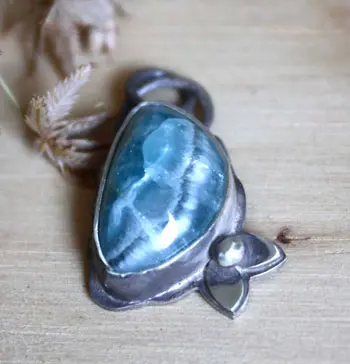
- Smithsonite is often recognized for its association with supporting the immune system, helping to strengthen the body’s capacity to defend itself against infections and seasonal illnesses. This connection is reflected in certain ancient traditions, where the stone was regarded as an ally of the body against external challenges.
- It is sometimes cited for its influence on blood circulation and the tonicity of the vessels. Smithsonite is thought to promote better tissue oxygenation and overall support for the cardiovascular system, contributing to the idea of a balanced and harmonious body.
- Due to its zinc content, smithsonite is also linked to skin health. It is traditionally considered helpful for supporting skin regeneration, soothing irritations, rashes, or slow-healing wounds, reflecting longstanding mineral-based care practices.
- The stone is sometimes associated with the strengthening of bones and teeth, and in certain contexts, it is mentioned as supportive for bone-related concerns such as osteoporosis, reflecting the concept of a solid and balanced physical structure.
- Within the digestive system, smithsonite has been viewed as facilitating digestive comfort, helping to relieve bloating, indigestion, or nutrient assimilation difficulties, in line with traditional perspectives of overall energetic support.
- It may also play a role in regulating metabolism and body weight, contributing to the balance of liver and pancreas functions. This association mirrors ancient views of stones as facilitators of bodily and energetic harmony.
- Some traditional uses describe smithsonite as supportive of the endocrine system, promoting hormonal balance and sustaining the vitality of the reproductive organs, in keeping with a holistic approach to well-being.
- The stone is occasionally associated with a soothing effect on the respiratory system. In certain traditions, it is considered helpful in alleviating discomfort related to sinus issues, allergies, or chronic bronchial irritations, reflecting the historical perception of stones as harmonizing influences.
- A stone of gentleness and comfort, smithsonite is often recommended to alleviate chronic stress, anxiety, or emotional tension. It supports people in challenging situations, offering a sense of inner calm and serenity.
- It is also valued for aiding the release of long-held emotional wounds, particularly those linked to childhood or past traumas, encouraging a gradual easing of buried emotions.
- Through its gentle energy, smithsonite is especially suitable for sensitive, shy, or self-conscious individuals, contributing to increased self-esteem and inner security.
- The stone is regarded as a facilitator of emotional balance, promoting inner stability and a more serene state of mind, especially during times of change or uncertainty.
- It is frequently suggested for nervous fatigue, burnout, or emotional exhaustion, supporting the gradual recovery of vitality and energy, according to traditions related to the energetic properties of stones.
- Smithsonite is considered a shield, protecting its wearer from negative influences and environmental disturbances, fostering a sense of safety and tranquility.
- It helps harmonize energies, promoting balance between body and mind, and supporting meditation and inner centering practices.
- Finally, in certain lithotherapy traditions, smithsonite is associated with strengthening the connection to spiritual guides and subtle energies, providing inner clarity and enhancing receptivity to symbolic or intuitive messages.



 Please note that all healing properties attributed to stones come from ancient traditions and various cultural sources. This information is provided for informational purposes only and does not constitute medical advice. In case of any health concerns, it is recommended to consult a qualified professional.
Smithsonite jewelry samples

Sold
To learn more about litotherapy, we recommend you the following books:



OUR SERVICES
Customer reviews
Custom order
FAQ
Free shipping
Terms and conditions