







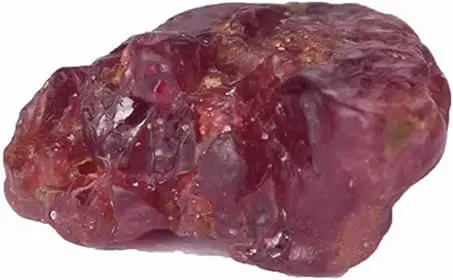
Spinel: history, healing properties and lithotherapy
Spinel properties

Spinel, often mistaken for ruby, is a gemstone of exceptional beauty. Primarily used in jewelry, it has long been undervalued and misunderstood. For centuries, even the most renowned experts were deceived by its intense red hue and vitreous luster, leading it to be misidentified as ruby. Today, it is time to recognize its true value and celebrate its unique allure.
The name spinel originates from the Latin spina, meaning "thorn," in reference to the pointed shape of its crystals. Others believe it derives from the Greek spinos, meaning "spark," highlighting the brilliance and luminosity of this precious stone. Spinel belongs to the oxide group and crystallizes in the cubic system, often resulting in well-formed and symmetrical structures. With a hardness of 7.5 to 8 on the Mohs scale, it is relatively scratch-resistant and well-suited for jewelry.
Spinel is a fascinating mineral that forms under a variety of geological conditions. It is primarily found in metamorphic carbonate rocks, such as marble, where it results from the transformation of aluminum-rich minerals under heat and pressure. Often associated with other gemstones like corundum (ruby and sapphire), spinel can also be discovered in alluvial deposits where erosion has freed the crystals from their original rock matrix. Additionally, spinel can form in igneous environments, particularly in some pegmatites and peridotites, where it crystallizes from magma. Remarkably, traces of spinel have been identified in meteorites and lunar samples brought back by Apollo missions, attesting to its presence in extraterrestrial environments.
Chemically, spinel is a magnesium aluminum oxide (MgAl₂O₄), but it can contain substitutions of elements such as iron, chromium, cobalt, or vanadium. These impurities directly influence its color, creating a wide chromatic range:
- Red, pink, crimson: Due to chromium, these shades have often led to confusion with ruby.
- Light to dark blue: Caused by the presence of iron and sometimes cobalt.
- Purple and violet: Resulting from a mix of iron and chromium.
- Orange and yellow: Caused by a combination of iron and manganese oxides.
- Black: Generally due to a high concentration of iron, giving it an opaque appearance.
Spinel was first scientifically described in 1546 by Georg Bauer, a prominent German mineralogist and metallurgist, better known as Georgius Agricola. Often considered the father of modern mineralogy, his work laid the foundation for the study of minerals and geology. His description of spinel contributed to a better understanding of mineralogical diversity. However, it was not until the 18th century that spinel was definitively distinguished from corundum, thanks to advancements in chemical analysis.
Spinel is known by several names, reflecting its variety of colors and forms:
- Black spinel: Sometimes called akerite, candite, pleonaste, or ceylonite, it is valued in both jewelry and crystal healing.
- Dark red spinel: historically referred to as rubacelle, rubace, or balas ruby, though it is not a true ruby.
- Light red spinel: Known as rubicelle.
- Colorless or pale-colored varieties: Sometimes designated as spinelite.
Since the late 19th century, spinel has been synthesized in laboratories. It is produced in colorless or colored varieties through processes such as flame fusion or the Verneuil method. Synthetic spinels are sometimes used in jewelry as alternatives to natural gems. Some synthetic varieties are marketed under specific names, such as rozircon for pink spinel or white sapphire (a term now prohibited due to its misleading nature) for translucent spinel. Blue-tinted synthetic spinels are also sold as sapphire imitations. However, these trade names, like strongite, are now regulated to prevent confusion with natural stones.
Main deposits: Afghanistan, Burma, Thailand, Canada, Japan, Russia, Myanmar, the United States, Tajikistan, France, Vietnam.
Stories, legends and beliefs about spinel

Spinel, due to its similarities to ruby and sapphire, has often been mistaken for these precious stones—sometimes intentionally to deceive, sometimes by genuine error. As a result, it was frequently used in place of ruby or sapphire in royal and ecclesiastical artifacts, further contributing to the confusion and its absence from historical texts. Despite its beauty and value, spinel was overshadowed by ruby and sapphire in historical accounts, yet its significance in the history of jewelry and gemology cannot be ignored.
The confusion between spinel and ruby persisted until the 18th century, when modern gemology made it possible to distinguish the two minerals based on their chemical composition and crystal structure. Unlike ruby, which is a pure aluminum oxide containing chromium, spinel is a mixed magnesium and aluminum oxide. It was only with the development of scientific analytical methods, such as spectroscopy and the study of refractive indices, that the distinction was clearly established.
Ancient India well recognized spinel, where it was known as the "red diamond." It was considered a symbol of courage and strength and was often worn by warriors of the Kshatriya caste, who were responsible for protecting society and upholding justice. Red spinel was also associated with protection against disease and malevolent spirits and was frequently worn as a talisman to ensure safety and prosperity.
The Romans, in their classification of red gemstones, used the term "carbunculus" to refer to all such precious stones. They attributed similar virtues to these gems, regarding them as talismans of courage and protection against injuries. They also believed that these stones could be used to treat hemorrhages, reinforcing their reputation as stones with medicinal properties.
From the medieval period, particularly between 1000 and 1900, the region of Afghanistan then known as Balascia (modern-day Badakhshan) became the most renowned and important source of "rubies." This deep red spinel, comparable to the finest rubies, is known as "Balas ruby." Marco Polo referred to this region during his travels and described the spinel mines. Many of the gems adorning artifacts from the medieval era originate from these mines.
The Badakhshan mines were so highly esteemed that the spinels they produced were exclusively reserved for Mughal and Persian rulers. It was common for these stones to be engraved with Persian inscriptions detailing their owner or significance. These gemstones were also offered as diplomatic gifts, strengthening alliances between kingdoms.
Spinel was also highly valued in China, particularly under the Ming and Qing dynasties. Some emperors regarded it as a symbol of power and prosperity, using it to adorn their crowns and insignias. In Central Asia and the Ottoman Empire, spinels were often set into the hilts and scabbards of sultans’ swords, granting them both protective and honorary functions.
In certain ancient astrological traditions, red spinel was associated with Mars due to its color and its connection to strength and combativeness. It was believed to be a stone that conferred courage and endurance to warriors and was also thought to have regenerative powers for physical and psychological recovery after battles.
By the 11th century, some varieties of spinel rich in iron were noted for exhibiting slight magnetic properties. However, this characteristic depends heavily on the iron content in its composition. Some iron-rich spinels exhibit slight magnetic responses, but they are not as powerful as magnetite. The idea that spinel was used to magnetize compass needles should be taken with caution, as sailors primarily relied on magnetite for this purpose. However, in certain cultures, it was believed that spinel could aid in navigation and decision-making, further reinforcing its symbolic association with explorers and travelers.
The most beautiful “Ruby” spinel
Here is a non-exhaustive list of the most remarkable spinel gemstones that have deceived people for centuries. These spinels were mistaken for rubies or sapphires due to their exceptional color and brilliance. They adorned the crowns and treasures of many dynasties, becoming emblematic jewels in the history of great civilizations.
The most famous spinel is undoubtedly the one that adorns the crown of Catherine II of Russia. This intense red spinel, weighing over 400 carats, was acquired by the empress in the 18th century and became a symbol of Russian imperial power. Likely of Afghan origin, this jewel was incorporated into the tsarist treasure and is now preserved in the Kremlin, where it remains one of the most admired pieces of the Russian royal collection.
The Black Prince’s Ruby, set in the British Imperial State Crown, is actually a 170-carat spinel, measuring 5 cm (1.97 in) in length. This deep red gemstone is most likely a Balas ruby from Badakhshan, a region in northern Afghanistan renowned for its high-quality spinels.
The first recorded mention of the Black Prince’s Ruby dates back to the 14th century in Spain, then divided into warring kingdoms. It is believed to have belonged to Muhammad IX of Granada before falling into the hands of Abu Said, a Muslim ruler of the region. In 1366, Pedro I of Castile, known as "the Cruel," seized the stone after betraying and assassinating Abu Said.
Forced to flee from his brother Henry of Trastámara, Pedro sought refuge in Bordeaux in 1366, where he requested the protection of the Black Prince, Edward of Woodstock, son of King Edward III of England. In exchange for military support, Pedro gifted him a vast treasure, including the spinel.
The gemstone reappeared in 1415 on the battlefield of Agincourt, set into the helmet of King Henry V of England. It was reportedly struck directly by the sword of the Duke of Alençon but remained undamaged. The spinel then passed through the hands of numerous British monarchs and is now set above the Cullinan II diamond in the British Imperial State Crown, on display at the Tower of London.
Another famous case of mistaken identity between spinel and ruby is the Timur Ruby, also known as the Tamerlane Ruby, a 361-carat spinel.
This gemstone likely originated from the Badakhshan mines and was seized in 1398 by the conqueror Tamerlane following his invasion of India. It was part of an immense war booty that included other legendary jewels.
The spinel later passed into the hands of the Mughal emperors, including Shah Jahan, the famed builder of the Taj Mahal. It was mounted on his throne alongside other precious gemstones.
In 1851, during British colonization of India, the East India Company presented this jewel to Queen Victoria. It was then incorporated into the British royal treasury, where it now adorns a necklace. It was only with the advancement of modern gemology that this stone was identified as a spinel.
The Samarian Spinel is the largest known spinel, with an estimated weight of around 500 carats.
This gemstone is part of the Iranian Crown Jewels and is one of the most impressive jewels in the world. Its exact history remains uncertain, but it is believed to have been acquired during the Persian king Nader Shah’s conquest of India in the 18th century, after the sacking of Delhi in 1739. Today, it is displayed at the National Jewelry Museum in Tehran, where it stands as a testament to Iran’s rich heritage.
The Côte-de-Bretagne Spinel is an iconic gem of the French royal treasury.
Its history dates back to Marguerite de Foix (†1486), Duchess of Brittany, who passed it down to her daughter Anne of Brittany. It later came into the possession of King Francis I and was preserved among the French Crown Jewels.
In the 18th century, it was carved into the shape of a dragon, a symbolic choice that reinforced its association with royal power and the Order of the Golden Fleece. It was subsequently integrated into the royal insignia under King Louis XV.
Today, the Côte-de-Bretagne is displayed at the Louvre Museum, where it remains one of the most admired jewels of French heritage.
The Queen of Spain’s Ruby is part of the Spanish crown jewels. It was likely acquired by Spanish monarchs at an uncertain date, possibly during Spain’s rule over the New World and Asia. Unlike other famous spinels, it has never been removed from the Spanish royal treasury and remains within the royal collections today.
St. Edward’s Crown, used for the coronation of British monarchs, contains several precious stones, including a spinel. While not as famous as the Black Prince’s Ruby, it attests to the frequent use of spinel in royal jewelry before the rise of modern gemology.
Apart from the spinel in Catherine II’s crown, another impressive spinel is part of the Russian imperial treasury. It is said to have been gifted by a Persian merchant to Emperor Paul I of Russia at the end of the 18th century. Its exact weight and origin remain uncertain, but it highlights the tsars’ appreciation for this gemstone.
The Mughal Empire possessed several remarkable spinels, often engraved with Quranic verses or inscriptions in Persian. These stones are now dispersed across various private collections and museums, particularly in India and Iran. One of the most famous, known as the "Mughal Engraved Spinel," bears an inscription dating back to the reign of Jahangir (1605–1627) and weighs over 200 carats.
A large red spinel is also found in the crown of the Kings of Bavaria, housed in the Treasury of the Munich Residenz. Like many others, it was initially identified as a ruby before being correctly recognized as a spinel in the 20th century.
The most beautiful “sapphire” spinel
Although blue spinels are less famous than their red counterparts, their rarity and brilliance have made them highly valuable gemstones. They have often been mistaken for sapphires due to their hue, but their distinct crystal structure and chemical composition set them apart from true sapphires.
The Grand Blue Spinel of Russia is an exceptionally large gemstone that is part of the Russian imperial treasure and was long considered a sapphire. This gem likely originates from the mines of Sri Lanka or Tajikistan. It was incorporated into the tsars’ collection and displayed alongside other precious stones in the Kremlin.
Several blue spinels adorn the Iranian crown jewels, known as the blue spinels of the Persian crown. These stones, sourced from the mines of Badakhshan or Sri Lanka, were mistaken for sapphires for centuries before being correctly identified in the 20th century through advancements in gemology.
The Mughal emperors owned impressive red and blue spinels, some engraved with Quranic verses or royal names. Some of these blue spinels were confused with sapphires and are still found today in private and museum collections.
During the Renaissance and up until the 19th century, many European jewels incorporated blue spinels under the assumption that they were sapphires. As a result, brooches, pendants, and crowns have since been reevaluated, revealing that they contain spinels rather than sapphires.
Healing properties and benefits of spinel
Throughout human history, various societies have attributed to spinel a range of properties, virtues and interpretations of a symbolic or healing nature. The information presented here is shared from a cultural and historical perspective, with the aim of illustrating the symbolic relationship that gradually developed between this stone and human civilizations over the centuries. As with the other stones discussed, these elements stem from a process of observation and transmission of traditional knowledge. They do not constitute any form of therapeutic or medical recommendation and do not reflect personal beliefs.
- Spinel is often associated with a calming effect on the nervous system, contributing to the reduction of stress, anxiety and emotional tension.
- In certain traditions, it is mentioned as supporting the body’s recovery after periods of illness or exhaustion, participating in the restoration of energetic balance and the support of cellular regeneration.
- This stone is also perceived as revitalizing, offering renewed energy and helping to counter chronic fatigue.
- Some ancient sources associate it with blood circulation and a support for the cardiovascular system.
- It has at times been mentioned within belief systems related to fertility.
- Spinel is frequently regarded as a protector, acting as a shield against negative energies and harmful external influences, fostering a sense of inner security and stability.
- Overall, spinel—whether red, blue, black, or violet—is viewed in traditional contexts as a versatile stone, associated with balance, protection and support on physical, emotional and symbolic levels.
Red spinel virtues
- Red spinel is traditionally associated with the stimulation of blood circulation and the strengthening of physical endurance.
- It is linked to willpower, motivation, and perseverance, and is often mentioned as a support for overcoming periods of discouragement.
- In certain cultural traditions, it is also associated with passion, courage, and protection against negative influences.
Healing properties and benefits of blue spinel
- Blue spinel is often perceived as a stone associated with serenity and emotional balance.
- It is traditionally mentioned as supporting concentration and mental clarity, helping to cultivate a calm and focused state of mind.
- In some traditions, blue spinel is linked to the regulation of body temperature and hormonal functions, particularly those associated with the thyroid and the hypothalamus.
- It is also sometimes associated with the protection of eyesight and the improvement of vision, reflecting long-standing beliefs connecting blue stones with visual perception and clarity.
- Certain ancient beliefs additionally evoke blue spinel in relation to the balancing of sexual desires and as a supportive presence in the context of emotional imbalance, illustrating the broad range of meanings attributed to this stone across cultures and periods.
Black spinel
- Black spinel is traditionally recognized for its role as a protective shield against negative influences and environmental stress.
- It is commonly associated with the release of energetic blockages and the strengthening of resilience when facing challenging situations.
- In certain traditions, it is also mentioned as supporting detoxification processes and the body’s overall defensive systems.
Purple spinel
- Violet spinel is often regarded as a stone associated with deep calm and inner soothing, and is traditionally linked to practices of meditation and introspection.
- In various cultural contexts, it has been connected to improved sleep quality and to the realm of dreams, sometimes perceived as supporting a deeper understanding of oneself and one’s inner world.
- Certain traditions also associate violet spinel with the stimulation of intuition and with an enhanced connection to higher symbolic or spiritual dimensions, reflecting its role as a stone of contemplation and inner awareness rather than a source of literal or therapeutic effects.



 Please note that all healing properties attributed to stones come from ancient traditions and various cultural sources. This information is provided for informational purposes only and does not constitute medical advice. In case of any health concerns, it is recommended to consult a qualified professional.
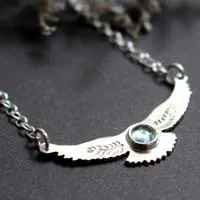
Spinel jewelry samples

Sold
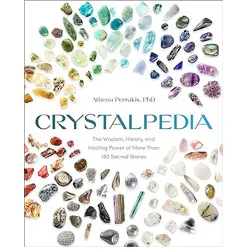
To learn more about litotherapy, we recommend you the following books:


OUR SERVICES
Customer reviews
Custom order
FAQ
Free shipping
Terms and conditions