






Chrysoprase: history, healing properties and uses in lithotherapy
Chrysoprase properties
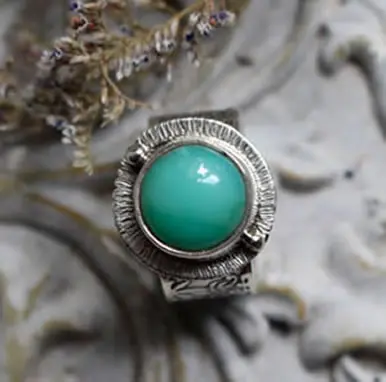
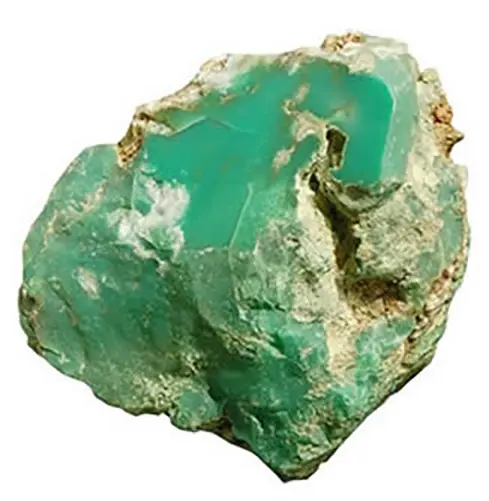
Chrysoprase, often referred to as the "stone of Venus," derives its name from the Greek words "Chrysos," meaning "golden," and "Prason," which refers to "leek," highlighting its unique green glow.
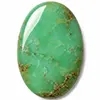
This precious variety of chalcedony, a fibrous form of quartz, owes its characteristic color to micro-inclusions of nickel. Chrysoprase typically displays a vibrant apple-green hue, though it can also appear in darker shades depending on the specific specimen.
With a hardness ranging between 6 and 7 on the Mohs scale, chrysoprase is durable enough to be shaped into cabochons and set in jewelry, although it is more fragile compared to harder stones like sapphire or diamond. Chemically, it is composed primarily of silicon dioxide (SiO2), placing it in the silicate family.
Chrysoprase’s color intensity can vary from light and translucent green to a deeper green, influenced by the amount of nickel it contains and its exposure to light.
One remarkable specimen, discovered in Coolamon, Australia, weighed an astonishing 16,400 kg, underscoring the scale and intrigue surrounding this captivating stone.
History, legends and beliefs about chrysoprase
Chrysoprase, one of the oldest gemstones used by civilizations, has captivated people throughout history with its unique glow and fascinating legends. Cherished by the Greeks, Romans, and Egyptians, this stone was often incorporated into seals, refined jewelry, and valuable objects.
The Egyptians believed that chrysoprase promoted divine protection and good fortune, often including it in royal tombs to accompany pharaohs into the afterlife.
According to the medieval historian Albertus Magnus, Alexander the Great attributed his military successes to a chrysoprase he wore on his belt during battles. Legend has it that while bathing in a river, a snake bit the stone and carried it into the depths. Unable to recover the stone, Alexander’s victories ceased, symbolizing the loss of his talisman of power and luck.
In the Middle Ages, chrysoprase was surrounded by mysterious and intriguing beliefs. Some traditions claimed that placing a chrysoprase in one’s mouth could render a person invisible, enhancing the stone’s reputation as a symbol of mysticism and protection. Other medieval legends asserted that the stone could detect poison by changing color, making it indispensable in royal courts where intrigue and poisoning were common occurrences.
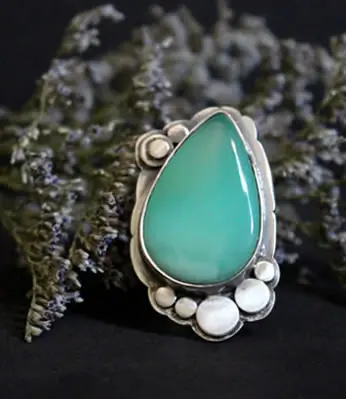
During the Renaissance and later under the reign of Frederick II of Prussia, chrysoprase experienced a resurgence in popularity. The sovereign, captivated by the stone’s natural elegance, chose to use it to decorate his Sanssouci Palace in Potsdam. Chrysoprase details adorned furniture and art objects, enhancing the royal splendor of his surroundings.
In the Victorian era, chrysoprase became a fashionable gemstone, featured in delicate cameos, intricately carved intaglios, as well as refined beads and cabochons. Its soft yet vibrant green hue was particularly prized for symbolic creations, often in jewelry pieces representing floral and natural motifs.
These uses throughout the ages demonstrate the ongoing fascination with chrysoprase, not only for its beauty but also for its mystical and symbolic associations. It remains a source of inspiration, both aesthetically and spiritually, and continues to hold significance today in contemporary lithotherapy.
Main deposits: Germany, Australia, USA, Madagascar.
Healing properties and benefits of chrysoprase
Throughout the long history of humanity, chrysoprase has been attributed a variety of properties, virtues, and healing-related beliefs. The elements presented here are part of a cultural and historical approach, aiming to highlight the symbolic relationship that has gradually developed between this stone and different civilizations over the centuries. As with the stones mentioned previously, this information falls within a scientific and historical framework. It does not constitute medical or therapeutic advice and does not reflect our personal beliefs.
- Chrysoprase is frequently referred to as a stone associated with creativity and personal expression. In certain traditions, it is seen as a support for stimulating imagination, encouraging inspiration, and accompanying periods of creative renewal, while also contributing to the restoration of a form of emotional balance.
- Chrysoprase is also mentioned for its supposed influence on the emotional sphere. Its gentle vibration is described as helping to soothe intense emotions, better manage anxiety, and ease inner tensions, thus offering a context conducive to refocusing and calming accumulated stress.
- From a traditional perspective, chrysoprase is sometimes associated with processes of purification and bodily detoxification. It is evoked as a support for the functioning of the kidneys and the liver, contributing to a perceived sense of physical lightness and more harmonious vitality.
- Chrysoprase is also linked, in certain cultures, to support for the reproductive system. It is associated with the harmonization of natural cycles and the balance of bodily energies, which explains its connection to fertility, vitality, and the continuity of life.
- Some traditions attribute to chrysoprase a role of accompaniment in the face of various discomforts, such as gout, ocular discomfort, emotional or mental imbalances, as well as certain skin or cardiac conditions. It is also mentioned in relation to goiter, always within a symbolic and cultural interpretation.
- Chrysoprase is sometimes evoked for its supposed relationship with the assimilation of vitamin C. This association makes it a stone traditionally linked to the strengthening of the body’s natural defenses, particularly during periods of fatigue or convalescence.
- In connection with internal balances, chrysoprase is described as a stone that may accompany hormonal harmonization and the soothing of the digestive system. It is then associated with better regulation of bodily functions and a more serene relationship with the body’s natural rhythms.
- In other traditions, chrysoprase is also connected to compassion, openness of the heart, and the capacity to forgive. It is perceived as encouraging more balanced relationships, communication imbued with gentleness, and deeper emotional understanding, both toward oneself and toward others.
- Finally, chrysoprase is sometimes considered a stone of accompaniment during periods of transition or personal transformation. It then symbolizes adaptation to change, emotional letting go, and the gradual development of trust in the new cycles of life.



 Please note that all healing properties attributed to stones come from ancient traditions and various cultural sources. This information is provided for informational purposes only and does not constitute medical advice. In case of any health concerns, it is recommended to consult a qualified professional.
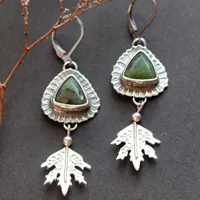
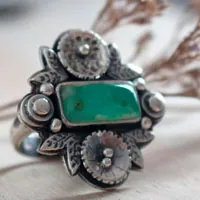
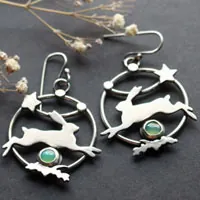
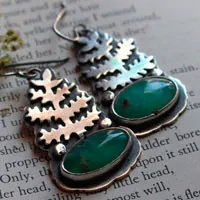
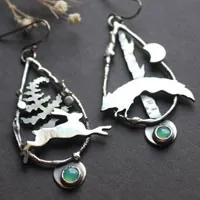
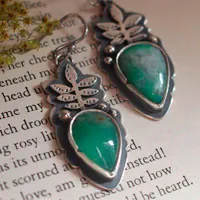
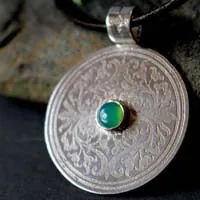
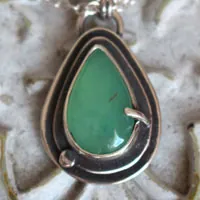
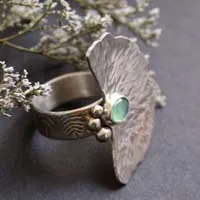
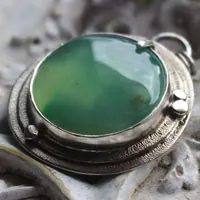
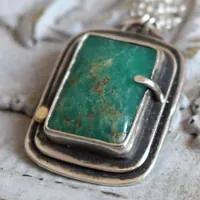
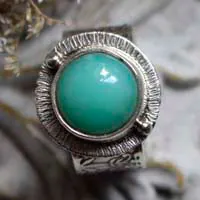
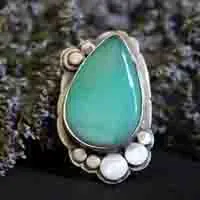
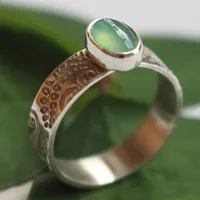
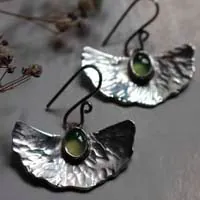
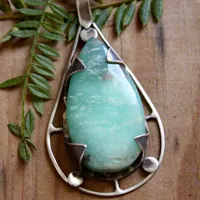
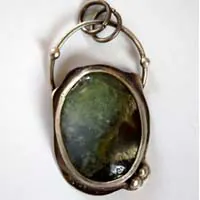
Chrysoprase jewelry samples
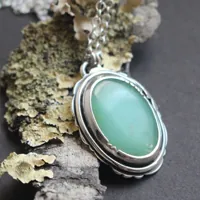
160.00 €
(≈ 179.20 USD)






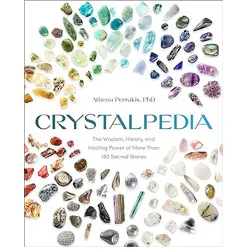
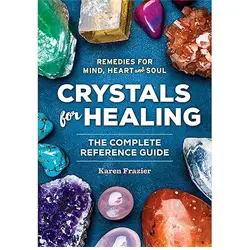
To learn more about litotherapy, we recommend you the following books:

OUR SERVICES
Customer reviews
Custom order
FAQ
Free shipping
Terms and conditions