







Picture jasper: history, healing properties, benefits and lithotherapy
Picture jasper properties
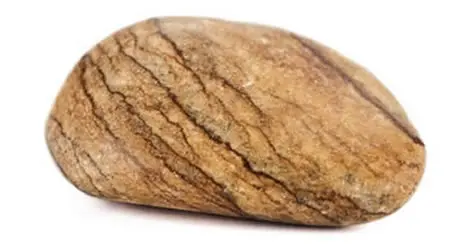
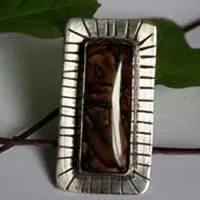
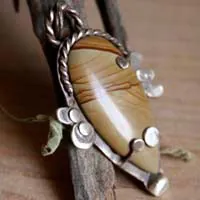
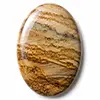
Picture jasper, a brown variety of jasper, is characterized by its bands of varied colors formed by sedimentary deposits or dendritic patterns. This natural phenomenon, resulting from the interplay of minerals over time, gives each stone a unique appearance often compared to natural scenes such as mountains, forests, or valleys. These formations can also evoke desert landscapes or panoramic views, explaining the origin of its name.
Picture jasper is also known by other names, including landscape jasper, scenic jasper, or Kalahari jasper. These names reflect the deep connection between the mineral and the landscapes it depicts. For example, the name "Kalahari jasper" references the arid Kalahari Desert region, where this variety of jasper is occasionally found, emphasizing the dry and natural aesthetic of the stone.
Its hues span a captivating range of tones, from brown, gold, reddish-brown, and black to blue, beige, and ivory. These color variations are often interpreted as representations of natural forces and geological changes, adding a symbolic dimension to its beauty.
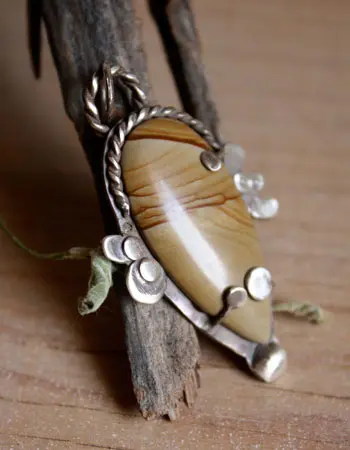
The structure of picture jasper typically consists of quartz combined with other minerals such as calcite or goethite, which provide it with notable hardness and durability. Its texture, often smooth and polished, makes it pleasing to the touch while remaining robust enough for use in ornamental creations or jewelry.
History, legends and beliefs about picture jasper
Picture jasper has been revered since ancient times, often associated with civilizations that possessed a deep understanding of the Earth’s energies. Its patterns, reminiscent of natural landscapes like mountains, valleys, or deserts, have led it to be perceived as a reflection of the Earth’s primordial forces. In many cultures, landscape jasper was considered a conduit between humanity and Mother Earth, a sacred entity embodying the planet’s creative and nurturing energies.
Ancient civilizations such as the Egyptians, Greeks, and Romans believed that stones like landscape jasper held protective and healing powers. Landscape jasper, in particular, was frequently used in amulets and talismans for its ability to establish a spiritual connection with the Earth and promote harmony with the natural environment. The Egyptians valued it for its protective and restorative properties, while the Romans used it to bolster their physical and mental strength during battles and trials.
In Native American traditions, picture jasper symbolized unity with nature and was regarded as a spiritual guide for those seeking personal transformation. North American tribes believed this stone could aid in communication with the spirits of the Earth and nature. It was often used in purification rituals and meditation, enabling practitioners to connect with the Earth’s unseen forces.
In Africa, picture jasper also held significant spiritual importance. Indigenous peoples associated it with the cycles of nature, including the seasons and soil fertility. It was sometimes worn as a talisman for fertility and growth, symbolizing prosperity and a connection to the natural elements.
The beliefs surrounding this stone have transcended time and cultures, and picture jasper continues to captivate with its beauty and the richness of the legends it carries. It is seen as a stone deeply rooted in the physical world while offering the wearer a connection to the invisible forces that govern the universe. Thus, picture jasper is more than just a mineral; it serves as a spiritual bridge to the mysteries of the Earth and a guide during moments of transformation and the search for meaning.
Main deposits: picture jasper can be found all around the world but mainly in Brazil, Madagascar, Egypt, Uruguay, and the United States.
Healing properties and benefits of picture jasper
Throughout human history, people have attributed various properties, virtues and curative interpretations to picture jasper. The elements presented here are part of a cultural and historical approach, intended to illustrate the symbolic relationship that has gradually developed between this stone and human civilizations over the centuries. As with previous examples, these readings follow a descriptive and interpretative perspective, grounded in traditional uses and ancient representations. They do not constitute medical or therapeutic advice and do not reflect personal beliefs.
- In certain ancient traditions, picture jasper is mentioned as a stone associated with phases of recovery following injury or illness. It is linked to the restoration of bodily balance and the gradual revitalization of physical strength, within a holistic vision of well-being and convalescence.
- In lithotherapy, picture jasper is frequently referred to for its connection with the immune system. It is sometimes presented as a support for the body’s natural resistance, within a traditional reading that associates this stone with defensive capacity and adaptability in the face of external imbalances.
- Picture jasper also appears, in some cultural contexts, as a stone linked to processes of purification. It is described as a detoxifying stone, associated with the elimination of toxins and the improvement of overall bodily functioning. This role is traditionally connected to the organs of elimination, such as the kidneys, stomach and intestines, to which it is believed to offer support. Within this framework, it is sometimes mentioned in relation to chronic digestive discomforts, such as constipation, or in contexts involving hernias and metabolic imbalances, particularly those associated with excess weight.
- In certain traditional interpretations, picture jasper is mentioned as a stone that may accompany individuals prone to allergies, especially those related to chemical substances or environmental irritants. It is then perceived as a support aimed at soothing bodily reactions and strengthening tolerance to external aggressions.
- Picture jasper is often described as a grounding stone. It is associated with emotional stabilization and the emergence of a sense of calm and security, particularly in situations perceived as stressful or uncertain. This dimension makes it a stone traditionally evoked during periods of transition, change or personal challenge, where it is thought to help overcome fears and maintain inner clarity.
- It is also presented as encouraging deeper reflection and a stronger connection to oneself. In certain readings, picture jasper is associated with introspection and decision-making aligned with one’s core values. Through its link to the balance of mind and emotions, it is sometimes mentioned as a support for strengthening self-confidence and resilience in the face of life’s trials.
- In several traditions, picture jasper is recognized for its capacity to establish a close bond between its wearer and the Earth. It is associated with a form of protection against influences perceived as negative, while fostering a more harmonious energetic environment. This stone is often mentioned by those seeking to reconnect with nature or to rediscover a sense of unity with their natural surroundings.
- As a stone used in certain meditative practices, picture jasper is sometimes described as a support for mental centering and access to a state of deep calm. It is then associated with a clearer understanding of life cycles, time and transformation, offering a framework conducive to contemplation and the integration of lived experiences.
- Finally, like all varieties of jasper, picture jasper inherits the qualities traditionally attributed to this family of stones. It is thus associated with the harmonization of physical, emotional and inner dimensions, within a holistic vision of balance. Its stabilizing and nurturing character makes it a stone frequently mentioned by those seeking grounding, inner coherence and a sense of personal renewal, in connection with the natural rhythms of the Earth.



 Please note that all healing properties attributed to stones come from ancient traditions and various cultural sources. This information is provided for informational purposes only and does not constitute medical advice. In case of any health concerns, it is recommended to consult a qualified professional.
Picture jasper jewelry collection
To learn more about litotherapy, we recommend you the following books:


OUR SERVICES
Customer reviews
Custom order
FAQ
Free shipping
Terms and conditions