






Rhyolite: history, healing properties and lithotherapy
Rhyolite properties
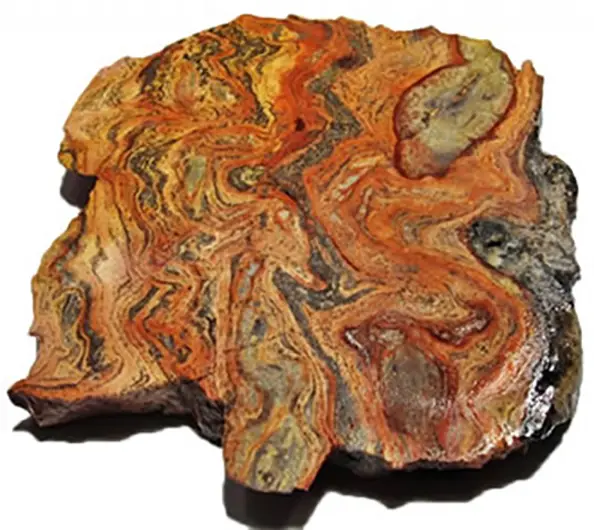
Rhyolite is a silica-rich volcanic rock related to granite but formed by faster cooling at the surface. Its name comes from the Greek words Rhein (to flow) and lithos (stone), a designation given by the German geologist, Ferdinand von Richthofen, in the 19th century.
Mineralogically, rhyolite is primarily composed of quartz, alkali feldspar (orthoclase and plagioclase), and amphibole, sometimes containing inclusions of biotite or pyroxene. This composition gives it a hardness of 6 to 7 on the Mohs scale, making it relatively resistant to erosion.
Rhyolite is often associated with explosive volcanic eruptions due to its highly viscous, silica-rich magma. This viscosity leads to gas accumulation, resulting in spectacular volcanic explosions. When it solidifies quickly, it can form glassy rocks such as obsidian or pumice, whereas slower cooling promotes crystallization and the development of intricate patterns.
Rhyolitic lava flows exhibit a wide variety of textures and structures, ranging from massive formations to pahoehoe lava flows, as well as rhyolitic tuffs (consolidated ash deposits) and volcanic breccias formed from welded fragments.
The color palette of rhyolite is highly diverse:
- Green and yellow, often linked to the presence of chlorite, epidote, or iron oxides.
- Caramel, orange, and brown, resulting from iron and manganese oxidation.
- Ochre and red, characteristic of rocks rich in hematite and iron oxides.
Some types of rhyolite display striking patterns, such as:
- Flow banding, formed by the alignment of crystals during magma movement.
- Spherical inclusions, like spherulites, which are small crystalline structures formed during solidification.
- Mineral-filled cavities, creating quartz geodes or other secondary crystallizations.
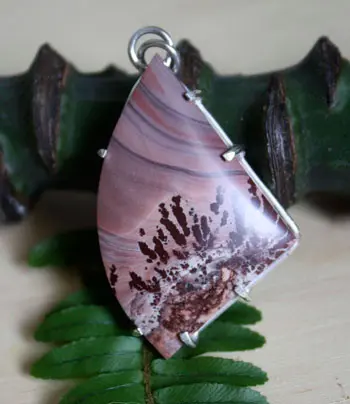
Famous varieties of rhyolite include rainforest jasper, which features patterns resembling fossilized foliage, and Apache rhyolite, known for its warm tones reminiscent of desert landscapes.
Finally, certain highly porous rhyolites, such as pumice, result from rapid cooling in which trapped gases leave cavities, making the rock extremely lightweight.
Major deposits: United States, Mexico, Australia, Germany, Italy, France, China, Indonesia.
Rhyolite, history, stories, legends and beliefs
The history and traditional use of rhyolite remain largely unknown, although it is evident that this stone has been exploited since ancient times. Its role in early cultures remains a subject of research and debate among archaeologists and historians.
In some regions, rhyolite was used for making sharp tools, arrowheads, and blades due to its ability to be finely knapped, although it is less sharp than obsidian. Rhyolite artifacts have been discovered at several prehistoric sites in North America and Europe, demonstrating its use by nomadic peoples and early agricultural societies.
In North America, some Native American tribes used rhyolite to craft weapons and ritual objects. Notably, Apache rhyolite, sourced from Arizona and New Mexico, was sometimes carved into amulets or talismans believed to protect warriors and enhance clairvoyance.
In ancient beliefs, rhyolite, formed within volcanic depths, was associated with the power of telluric forces and transformative energy. Some cultures may have regarded it as a stone of renewal and regeneration, symbolizing the perpetual cycle of destruction and rebirth of the Earth.
Although rhyolite was rarely used as a building material, some natural rhyolitic formations, such as those in Yellowstone National Park, served as places of reverence and ritual for local tribes. In Europe, rhyolitic domes sometimes acted as spiritual landmarks for pagan cults associated with mountains and volcanoes.
Healing properties and benefits of rhyolite
Throughout the long history of humanity, different societies have attributed to rhyolite a variety of properties, qualities and interpretations of a curative or symbolic nature. The elements presented here follow a cultural and historical approach, intended to illustrate the symbolic relationship that has gradually developed between this volcanic stone and human civilizations over the centuries. As with the previous examples, this information is part of a scientific, historical and descriptive perspective. It does not constitute a therapeutic or medical recommendation and does not reflect personal beliefs.
- In certain traditions, rhyolite has been associated with support for vitality and physical endurance. It was sometimes evoked as a stone accompanying the body during periods of fatigue, prolonged effort or exposure to external stresses, within a symbolic reading linked to resistance and vital energy.
- By promoting internal balance in a holistic approach, rhyolite has also been associated with the strengthening of the immune system. Some traditional interpretations mention it as a form of support during recovery phases after illness or times of physical fragility, contributing to a gradual return to overall equilibrium.
- Within traditions related to elimination functions, rhyolite has been linked to the drainage of toxins. It was associated with purifying organs such as the liver and kidneys, and sometimes mentioned in contexts aiming to prevent or limit the formation of kidney stones, within a broader interpretation of organic well-being.
- On a symbolic level related to the skin, rhyolite has been connected with certain skin conditions. It was sometimes associated with inflammatory or viral skin disorders, such as eczema or chronic irritations, symbolizing soothing, regeneration and protection of the tissues.
- Some traditions have also attributed to rhyolite a link with the slowing of cellular aging. This association was based on its connection with tissue renewal, transformation and natural cycles, evoking an ability to accompany processes of regeneration and adaptation within the body.
- In several traditional interpretations, rhyolite has been associated with improved assimilation of essential vitamins and minerals. It then symbolized an optimization of the body’s internal resources, contributing to more stable overall health and greater efficiency of physiological functions.
- On a symbolic and psychological level, rhyolite is often considered a stone of renewal and change. It has been associated with accompanying periods of transition, personal transformation or reassessment, encouraging a more flexible, open and constructive attitude toward life’s changes.
- It has also been evoked as a support for emotional stabilization. In certain traditions, rhyolite symbolized the easing of internal tensions, the regulation of mood fluctuations and the search for a more lasting emotional balance.
- Its gentle influence has been mentioned in contexts related to relaxation and the reduction of anxiety. Rhyolite was then perceived as a stone helping individuals navigate periods of intense stress, fostering mental release and a sense of inner calm.
- In cultural readings focused on personal development, rhyolite has been associated with the releasing of emotional blockages. It symbolized support in overcoming doubts, strengthening self-assertion and gradually rebuilding confidence in one’s abilities and choices.
- Rhyolite has also been linked to clarity and reflection. Some traditions evoked it as a stone promoting mental clarity, concentration and decision-making, helping to analyze situations with greater discernment and perspective.
- In symbolic approaches inspired by energetic centers, rhyolite has been associated with grounding while encouraging openness of mind. It represented a balance between stability and curiosity, allowing one to remain rooted while welcoming new perspectives.
- It has also been described as promoting a more harmonious circulation of energy within the body, contributing to an overall sense of inner balance and coherence between the physical, emotional and mental dimensions.
- Finally, associated with the present moment, rhyolite has been evoked as a stone that helps foster harmony with one’s environment. It encouraged greater acceptance of life events, a more peaceful relationship with change, and a greater ability to adapt to the natural cycles of existence.



 Please note that all healing properties attributed to stones come from ancient traditions and various cultural sources. This information is provided for informational purposes only and does not constitute medical advice. In case of any health concerns, it is recommended to consult a qualified professional.
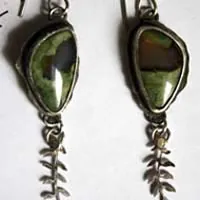
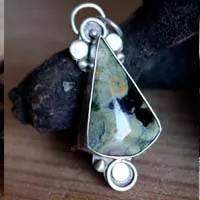
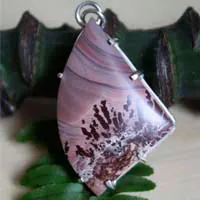
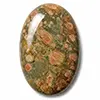
Rhyolite jewelry samples
To learn more about litotherapy, we recommend you the following books:


OUR SERVICES
Customer reviews
Custom order
FAQ
Free shipping
Terms and conditions