







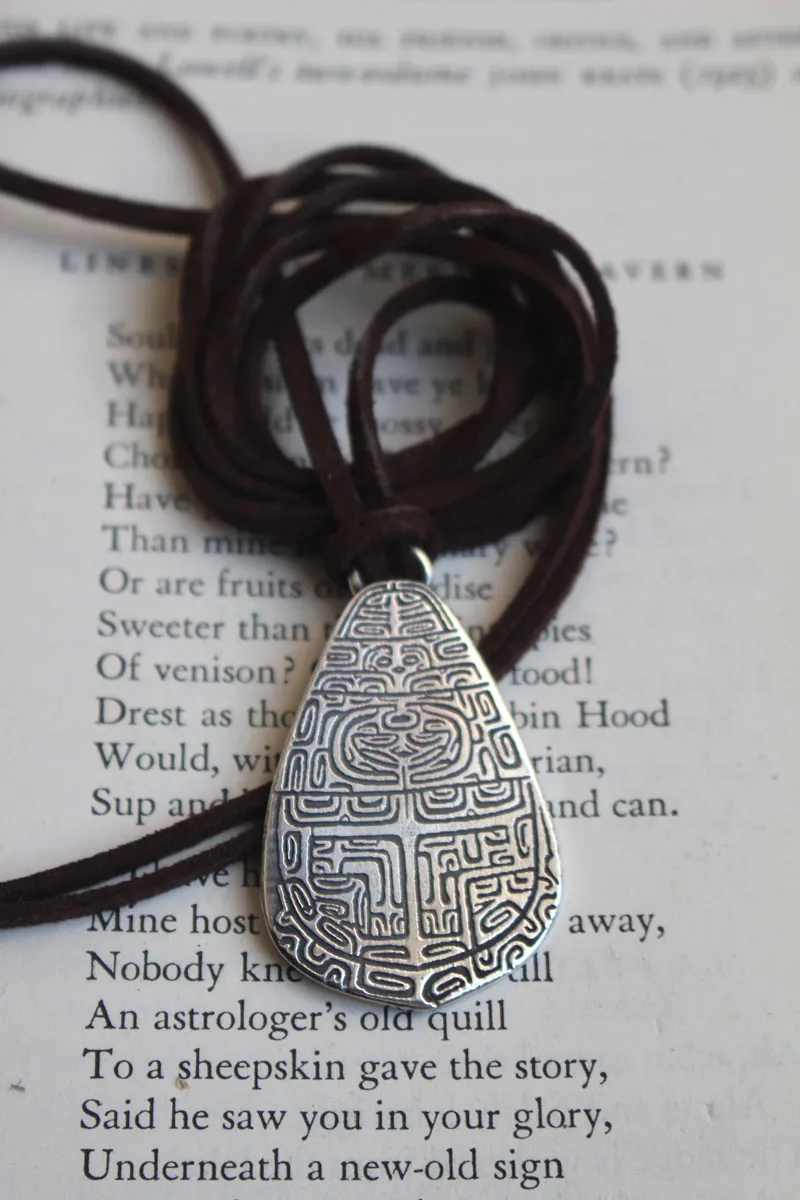
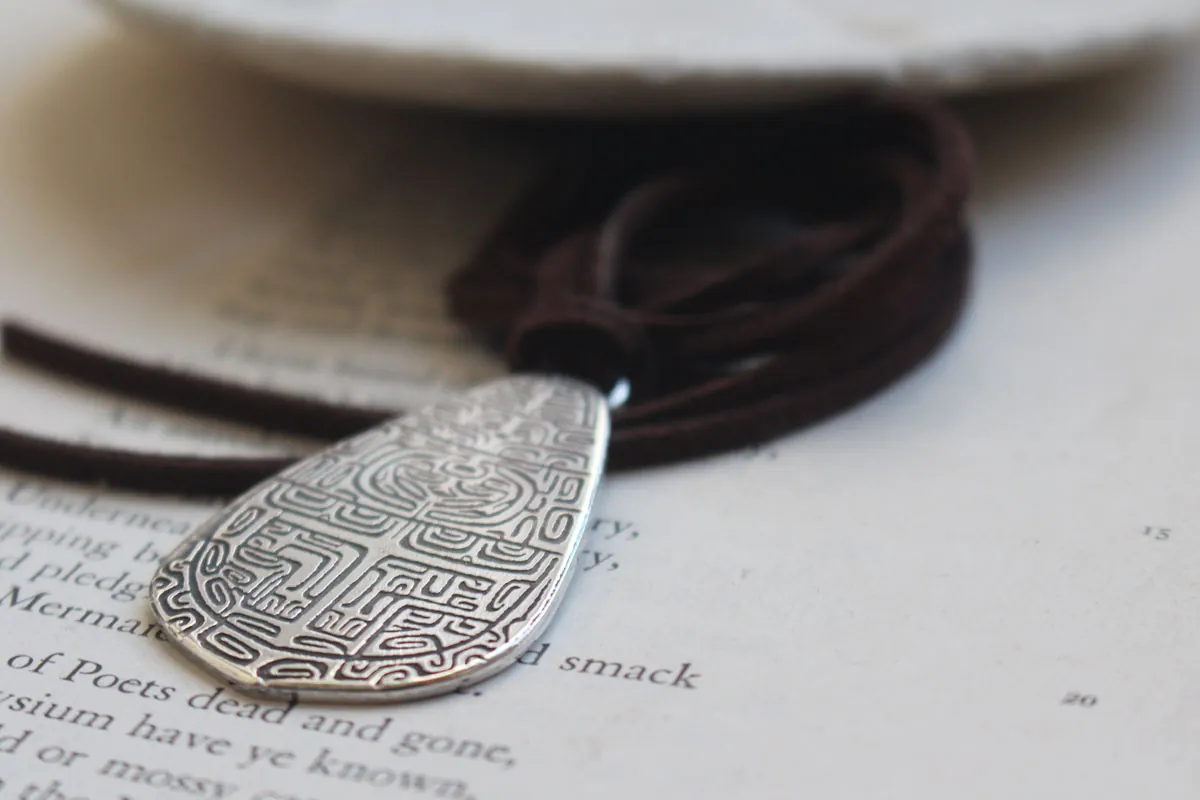
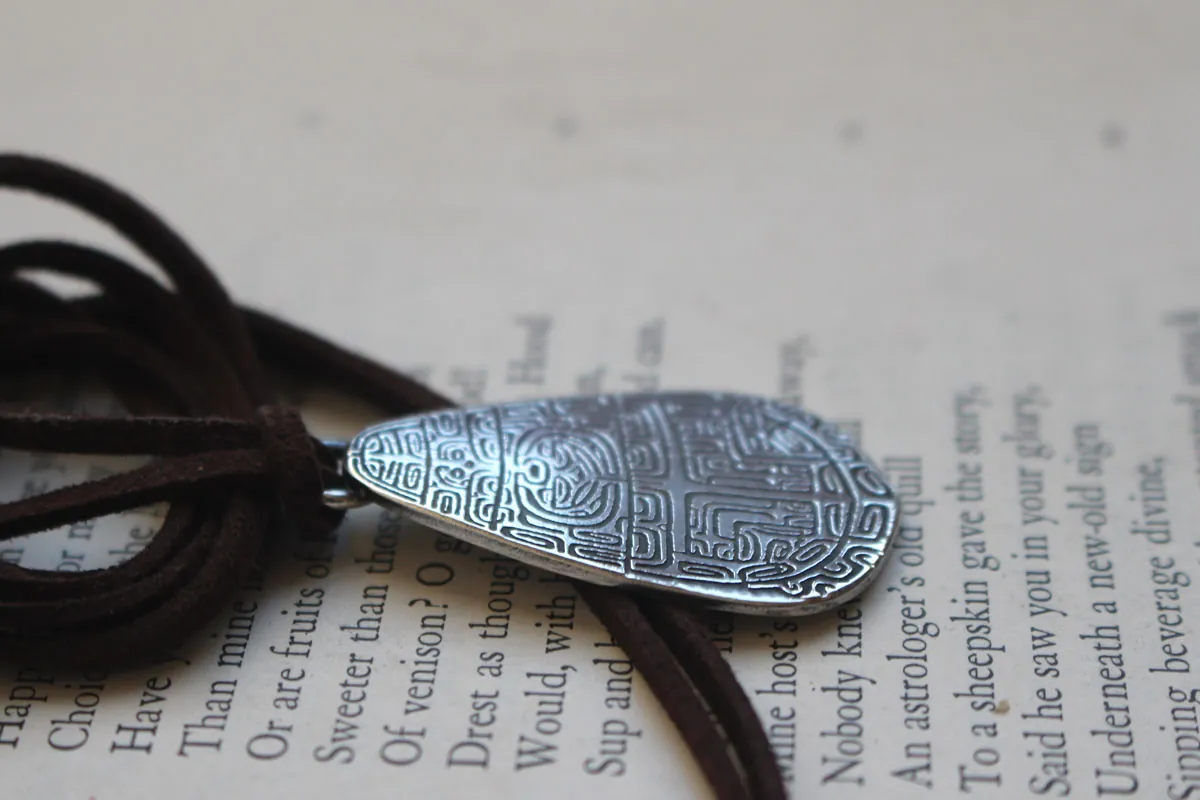
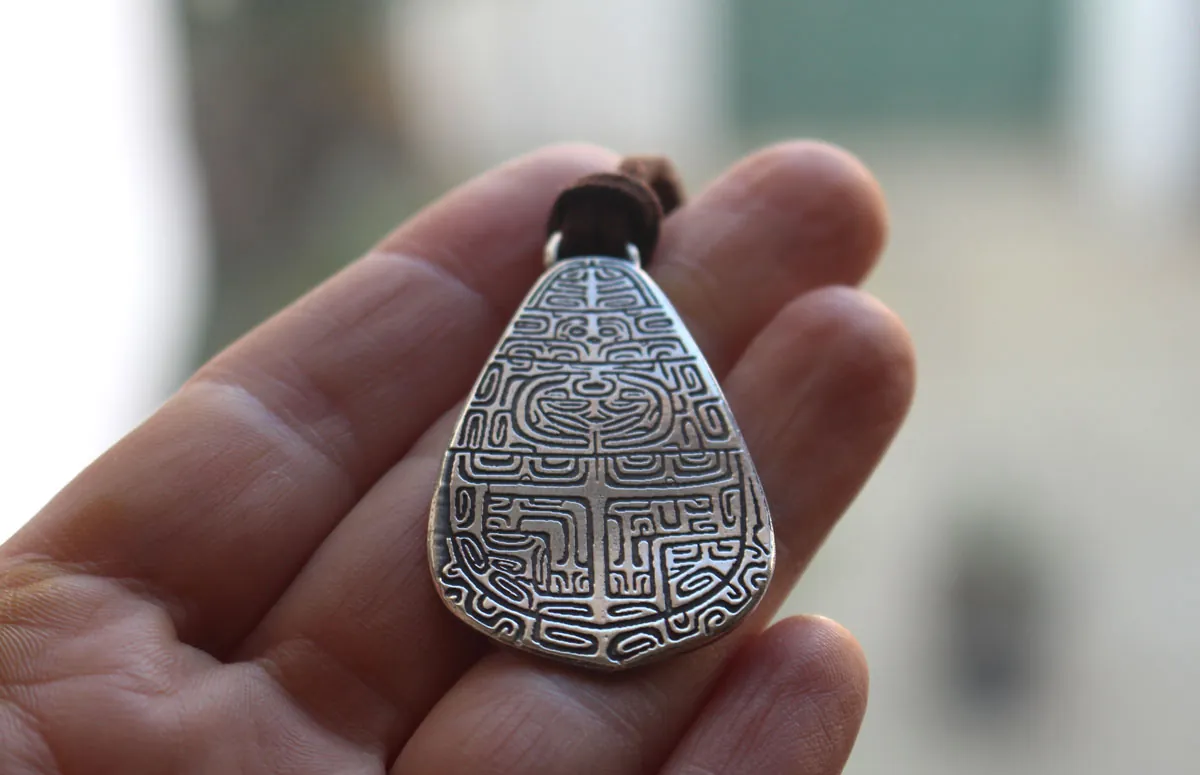
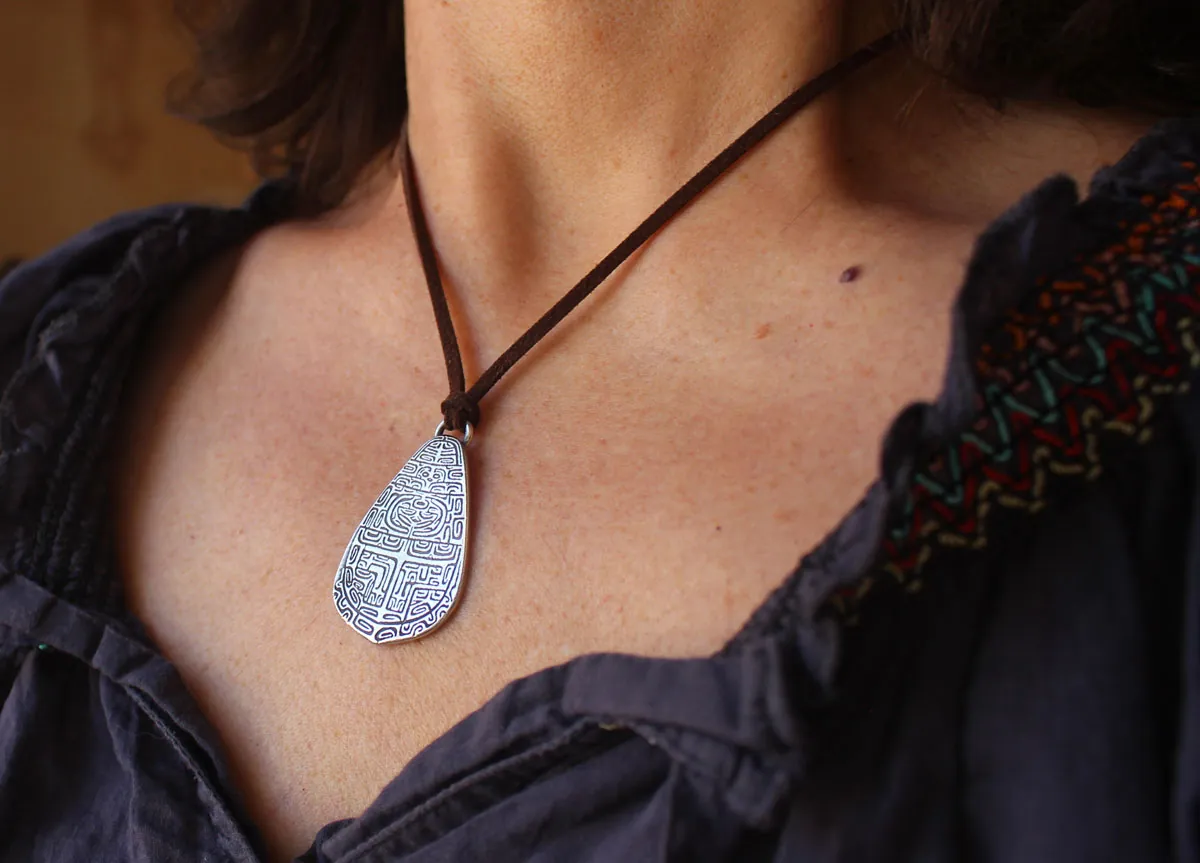
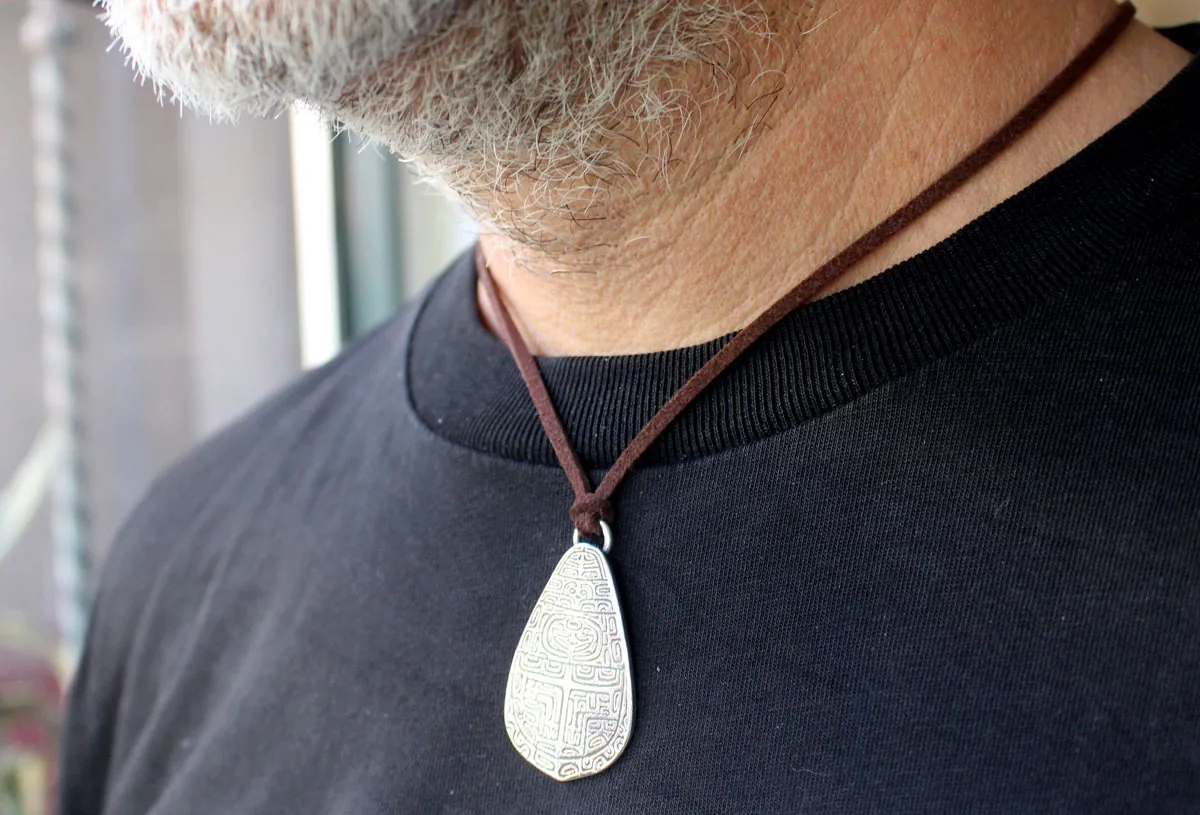
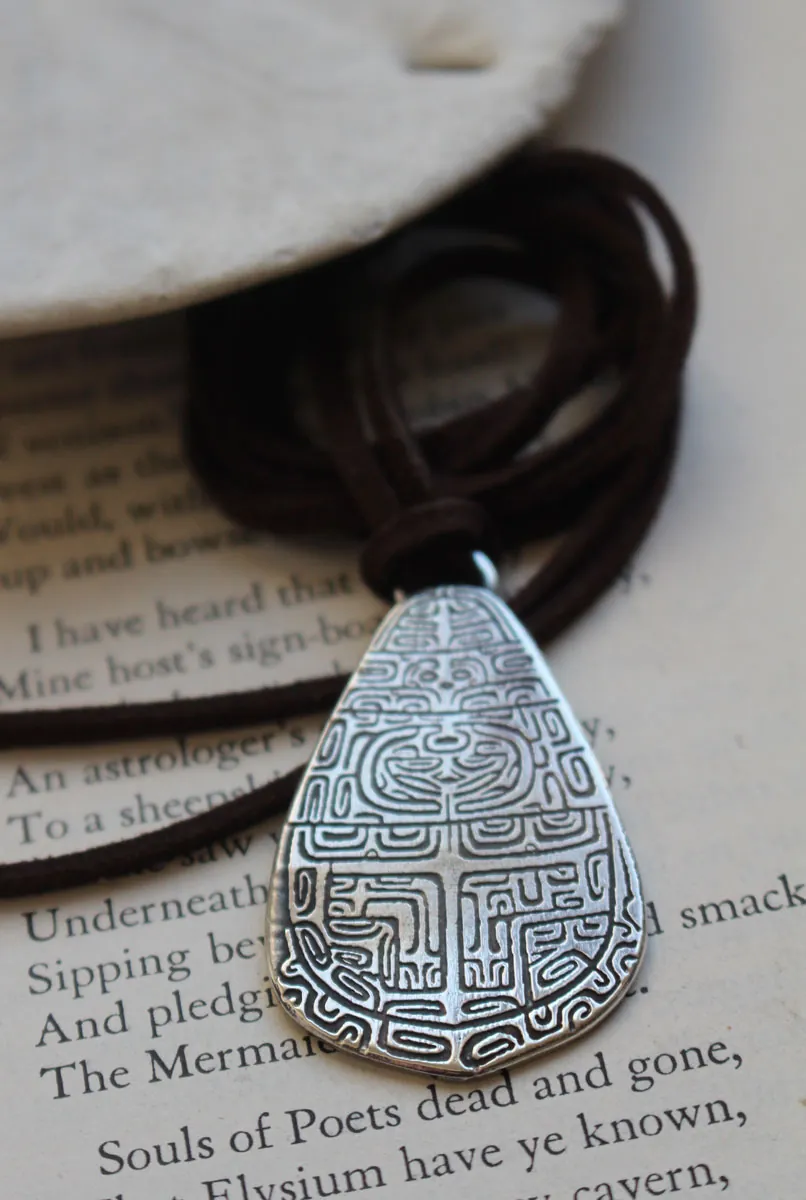



Tapa, Polynesian art silver necklace
Tapa is a soft vegetal cloth made from the inner bark of certain trees, especially the paper mulberry tree. The plant fibers are beaten for a long time on a wooden or stone anvil until they form a kind of natural felt. This ancestral textile is entirely handmade.
Tapa was used both for clothing and household linen. It also served as wall hangings, partitions, or blankets. Tapa accompanied men and women throughout their lives, from birth to death, in the form of swaddling cloths, pareos, cloaks, or shrouds. Tapa was therefore an everyday fabric but also a sacred fabric.
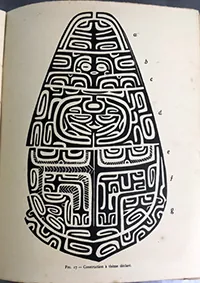
The tapa used here to create this silver pendant comes from an illustration of an ancient tapa taken from the book L'art des îles Marquises by Willowdean Chatterson Handy. Marquesan motifs tell a story, a lineage, and a sense of belonging.
Tapa was the social bond of its time. Ancient Polynesians were dressed in ‘ahu tapa from birth to death. On tapa, social rank, family origins, alliances, legends, and ancestral stories were displayed. Tapa was a support of identity and memory.
The practice of embalming was carried out using oils and also tapa, placed around and inside the body of the deceased. Its spiritual dimension is therefore undeniable. Some tapa cloths were reserved for ceremonies, rituals, and sacred moments.
It was common for ti’i, representations of deified ancestors, or pahu, traditional drums, to be adorned with tapa for specific occasions. Tapa thus connected the living to the ancestors, the visible to the invisible, and the human world to the spiritual world.
Today, tapa is still present in Polynesia. It is used as a support for fine craftsmanship, decorated with geometric patterns, tribal symbols, and representations of tikis. Tapa remains a symbol of identity, tradition, transmission, and cultural pride.
This silver tapa necklace pays tribute to this ancestral Polynesian art. The silver highlights the geometric lines of the motif and recalls the sunlight reflecting on the ocean.
Metal: sterling silver (925).
Dimensions: 1.69 x 1.06 in (4.3 x 2.7 cm).
Production time: 5 business days.
A 35.43 in (90 cm) vegan suede cord is included with the pendant.
As we are based in Mexico, please allow 3 to 6 weeks for delivery to receive your order for free with standard postal service. Thank you for taking this information into account before ordering in our shop. At checkout, you will also have the option of choosing an express shipping. (please read the full shipping terms here).
You have a question? Contact us.
I hope you will love this jewel as much as I enjoyed creating it.
By Emmanuelle Guyon.
Tags: Polynesian, Polynesia, Māori, tattoo, Marquesan, Marquesas, fabric, tapa, island, ocean, tradition, ancestor, ritual, sacred, art, geometry, geometric, tribal, tiki, memory, identity, bark, nature, plant, family, birth, death, history
Inspired by your search: polynesian, necklace, art
OUR SERVICES
Customer reviews
Custom order
FAQ
Free shipping
Terms and conditions