






White labradorite or rainbow moonstone: history, healing properties and lithotherapy
White labradorite properties
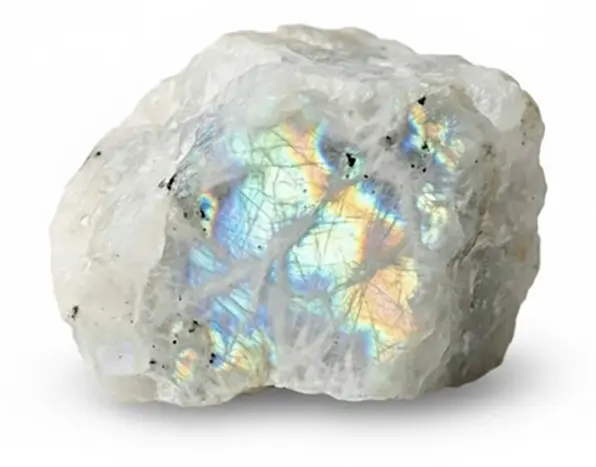
White labradorite, a variety of feldspar known as peristerite, closely related to albite, reveals a mesmerizing play of colors known as adularescence, characterized by blue and multicolored reflections. This gemstone, composed of aluminum, calcium, and sodium silicate, intrigues with its unique structure and brilliance.
Its triclinic crystal structure enhances this optical phenomenon, where light interacts with microscopic internal layers, creating a soft, diffused glow reminiscent of moonlight. Unlike classic labradorite, white labradorite stands out with a transparent or milky base, highlighted by luminous flashes of varying colors, ranging from blue to green, with shades of orange, purple, and sometimes pink.
This gem is often marketed as Rainbow Moonstone. Although it shares some resemblance with moonstone, another feldspar variety, white labradorite distinguishes itself with a richer and more diverse color spectrum, evoking the appearance of a rainbow when viewed from certain angles. This distinction arises from its specific chemical composition and the unique arrangement of its internal crystals.
Primarily mined in Madagascar, white labradorite is also found in other regions, such as India and Sri Lanka, although these deposits are less abundant. Specimens from Madagascar are particularly prized for their transparency and spectacular reflections.
Beyond its central role in jewelry—adorning pendants, rings, and earrings—white labradorite is also valued in decorative arts. Its luminous properties make it a sought-after material for sculptures and decorative objects, capable of capturing and reflecting light in a strikingly beautiful way.
Main deposits: Australia, Russia, Burma, United States, India, Madagascar, Sri Lanka and Tanzania.
History, legends and beliefs about rainbow moonstone
White labradorite, often referred to as rainbow moonstone, is shrouded in an aura of mystery, though its history is sometimes entangled with misconceptions related to true moonstone. Much of the information surrounding this stone appears to pertain to moonstone. This confusion is further compounded when examining its sources, which are often remote or inaccessible to the cultures mentioned in these accounts.
The ancient Greeks and Romans, captivated by stones with shimmering reflections, attributed divine qualities to these gems. However, it is likely that their accounts referred more to classic moonstone, which was more widely available in their time, rather than to white labradorite. In their myths, luminous stones were often associated with lunar goddesses such as Artemis or Selene, symbolizing femininity, fertility, and intuition.
In Asian cultures, particularly in India and Sri Lanka, rainbow moonstone has been highly valued for its milky hue and multicolored reflections. These accounts are more historically plausible, as this stone is indeed found in these regions. Its qualities evoke spiritual notions of purity and connection with lunar cycles. In India, the stone was used in rituals dedicated to the goddess Chandra, the deity of the moon, and was considered a symbol of protection for nighttime travelers and lovers. Sri Lanka, renowned for its gemstone deposits, played a crucial role in the distribution of this stone through trade with Europe and Asia.
In the early 20th century, during the Art Nouveau period (1890–1925), rainbow moonstone gained popularity in Western jewelry. Jewelers, inspired by the natural motifs and organic forms of this artistic movement, incorporated the stone into intricate designs. Its iridescent reflections were particularly prized for their ability to capture and diffuse light, enhancing its mystical and aesthetic allure. Artists such as René Lalique and Louis Comfort Tiffany used stones with similar luminous effects, including rainbow moonstone, to create jewelry that evoked dreams and visions.
Despite these historical and artistic associations, it is important to note that white labradorite, as a distinct stone, gained recognition more recently. Its primary deposits, especially those in Madagascar, have helped distinguish this gem from its counterparts and reveal its unique qualities.
Healing properties and benefits of white labradorite
Throughout the long history of humanity, different societies have attributed various properties, virtues, and healing-related interpretations to white labradorite, often referred to as rainbow moonstone. The elements presented here are part of a cultural and historical approach, intended to illustrate the symbolic relationship that has developed between this stone and human civilizations over the centuries. As with the stones discussed previously, these interpretations stem from a descriptive and heritage-based perspective. They do not constitute any form of therapeutic or medical recommendation and do not reflect established beliefs.
- In certain traditions, rainbow moonstone is associated with the balance of hormonal functions. It is mentioned as a support for accompanying imbalances related to the thyroid, menstrual cycles, or transitional phases such as menopause, echoing its cultural connection to natural and cyclical rhythms.
- White labradorite is also associated, in several cultures, with notions of fertility and creative potential. It is sometimes mentioned as a support in situations of sterility, reflecting a traditional reading of the stone as a vector of renewal and continuity of life.
- In some ancestral practices, this stone is evoked as a companion to motherhood. It is associated with supporting lactation and accompanying women during pregnancy, fitting into a broader vision of protection and gentleness during this particular period.
- White labradorite is sometimes mentioned in popular traditions for its supposed connection with skin balance and regeneration. It is associated with the easing of certain imperfections, such as acne, within an approach linked to harmonization and renewal.
- Rainbow moonstone is also cited in certain traditional accounts for soothing mild irritations, particularly those caused by insect bites. It is perceived as a calming stone in cases of discomfort or minor pain, consistent with its image as a gentle and soothing stone.
- In several traditions, this stone is associated with the elimination of toxins and the purification of the body. It is evoked as a support for the liver and kidneys, organs often linked in ancient cultures to functions of filtration and internal balance.
- Its symbolism of soothing and calm also explains why white labradorite is sometimes mentioned as a support against insomnia. It is associated with calmer, more restorative sleep, encouraging mental relaxation and the release of accumulated tensions.
- White labradorite is often described as an emotionally stabilizing stone. It is associated with the reduction of negative emotions and the search for inner peace, accompanying periods of emotional fragility or mental overload.
- Rainbow moonstone is traditionally linked to intuition and openness of mind. It is mentioned as a support for refining subtle perceptions, which explains its frequent association with meditation and introspective practices.
- In certain traditions, this stone is perceived as a shield. It is associated with the dissipation of influences perceived as negative and with the protection of the aura, a cultural notion referring to the idea of energetic boundaries and the preservation of personal balance.
- White labradorite is also evoked for fostering mental clarity and openness to spiritual or introspective dimensions. It is associated with a deeper understanding of oneself and with a broader perspective on inner experiences.
- Within the framework of traditional lithotherapy, white labradorite is often used as a tool for energetic transformation. It is evoked during periods of change or transition, as it is associated with adaptability and the strengthening of resilience in the face of challenges. Placed under a pillow, some traditions attribute to it the ability to support the balance of sleep cycles and to encourage lucid or meaningful dreams.
- To further explore the cultural, historical, and symbolic dimensions of so-called “classic” labradorite, dedicated resources are available that examine in greater depth the uses and interpretations associated with this stone over time.



 Please note that all healing properties attributed to stones come from ancient traditions and various cultural sources. This information is provided for informational purposes only and does not constitute medical advice. In case of any health concerns, it is recommended to consult a qualified professional.
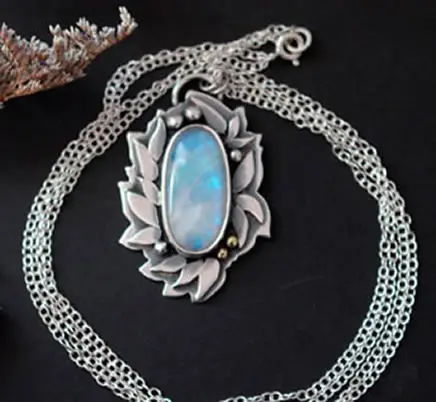
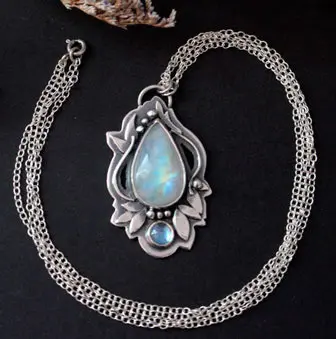
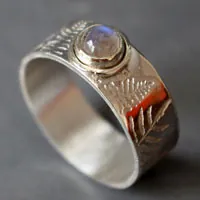
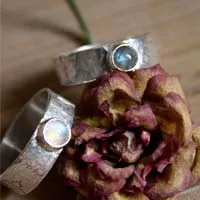
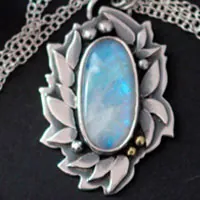
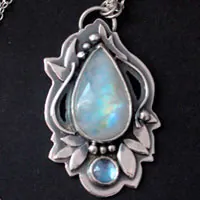
White labradorite jewelry samples
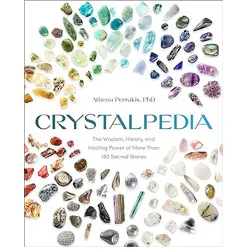
To learn more about litotherapy, we recommend you the following books:


OUR SERVICES
Customer reviews
Custom order
FAQ
Free shipping
Terms and conditions